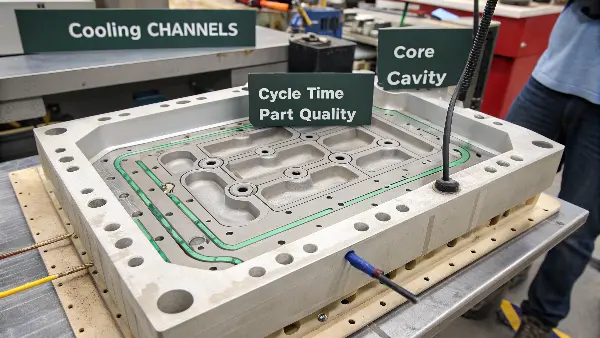
Core and Cavity Design Fundamentals for Injection Molds
Key takeaway: Core and cavity design starts with parting direction, draft, shutoffs, slides, cooling, ejection, steel, inspection, and a controlled correction plan. Set parting direction

Key takeaway: Core and cavity design starts with parting direction, draft, shutoffs, slides, cooling, ejection, steel, inspection, and a controlled correction plan. Set parting direction

Key takeaway: High-pressure injection molding quality depends on material preparation, DFM, mold design, machine selection, filling, packing, cooling, inspection, and traceability. Design the process around

Key takeaway: Injection molding jetting occurs when melt enters the cavity without stable wall contact, so gate design, flow direction, speed, temperature, and trials must

Key takeaway: High-pressure injection molding capability should be demonstrated with verified equipment, mold design, process control, inspection, traceability, and capacity evidence. Ask for evidence, not

Key takeaway: Thin-wall high-pressure injection molding requires coordinated control of flow length, wall transitions, gates, vents, clamp force, cooling, ejection, and validation. Treat thin wall

Key takeaway: Troubleshooting high-pressure injection molding problems starts by separating material, mold, machine, process, design, measurement, and maintenance evidence. Freeze the evidence first When a

Key takeaway: High-pressure injection molding investment is justified when volume, repeatability, tooling, cycle, material, quality, and change risk support the total cost of approved parts.

Key takeaway: High-pressure injection molding equipment must match clamp force, injection pressure, shot size, speed, temperature control, repeatability, mold fit, and safety to the part.

Key takeaway: High-gloss food-contact plastic parts require compliant material and process controls, suitable mold polish, clean handling, controlled molding, inspection, and traceability. Start with the

High-pressure injection molding material selection must balance strength, flow, shrinkage, temperature, chemical exposure, reinforcement, drying, and processing risk with the part design. The best resin