
Home / Equipment & Capacity
Equipment and Capacity for Injection Mold Projects
Equipment should be evaluated by the feature, tolerance, material, surface, quantity, and schedule it must support. A machine count alone does not prove capacity for a particular mold or part.
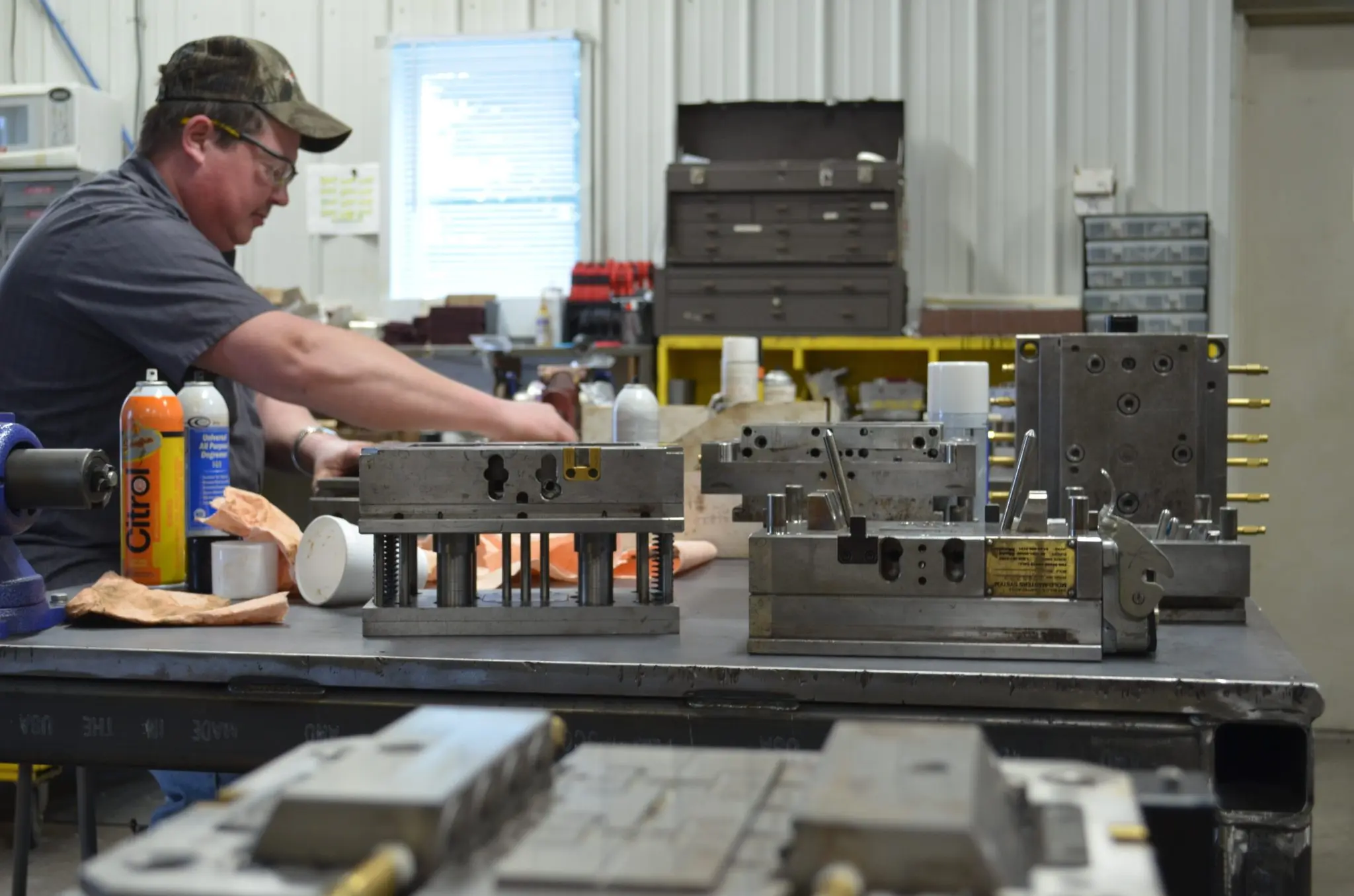
Publicly stated equipment scope
CNC
The company website states a capacity of 15 CNC machines for mold components, precision details, fixtures, and related machining work.
EDM
The company website states 8 EDM machines; wire and sinker or ram EDM are discussed according to feature geometry and material.
Finishing
Grinding, deburring, polishing, nitriding, laser marking, vibratory finishing, and other selected operations may be included when agreed for the project.
Fitting and assembly
Cores, cavities, inserts, slides, lifters, ejector systems, and mold bases are fitted and assembled against the approved construction.
Injection-molding support
Machine fit, clamping force, shot requirement, cavity count, cycle, ejection, material, and handling are reviewed from the actual part and mold.
Capacity is a scheduling and process question
The practical question is whether the required process, inspection, finishing, assembly, trial, and approval windows fit the target schedule. Share the feature list, steel or material, tolerance, surface finish, quantity, and timing so the team can identify the relevant equipment path and any outside-process boundary.

Injection machine selection is project-specific
Machine selection depends on projected area, clamping force, shot weight, mold size, resin, cavity count, cycle time, ejection, automation, and handling requirements. The site does not publish a universal tonnage promise for every project; confirm the suitable machine after the part, mold, resin, and quantity are reviewed.
How capacity is checked
01
Map features
Separate CNC, EDM, grinding, polishing, assembly, trial, inspection, and outside processes.
02
Check constraints
Review work envelope, access, material, tolerance, finish, fixture, electrode, and measurement requirements.
03
Sequence
Arrange machining, finishing, fitting, inspection, approval, and trial milestones around the target date.
04
Confirm handoff
Identify who owns each outside process, document, approval, packing, and shipping step.
05
Monitor
Use milestone updates and change records to keep the capacity plan aligned with the approved scope.
Need to check equipment fit for a project?
Send the part or component drawing, material, critical features, quantity, finish, inspection needs, and target timing.