
Home / Engineering
Injection Mold Engineering and DFM for Production Decisions
Engineering support connects a plastic part with the mold and process that must produce it. Cavity Mold reviews the available CAD, drawing, resin, volume, surface requirements, tolerances, timing, and assembly concerns before tooling is released.
The first review: what could prevent a stable mold?
The useful question is not simply whether a part can be molded. It is whether the design can be filled, cooled, ejected, inspected, maintained, and repeated at the intended volume. The review may identify draft and shutoff risk, wall-thickness transitions, ribs and bosses, parting-line constraints, gate and weld-line concerns, cooling access, ejection forces, shrinkage, warpage, and tolerance relationships.
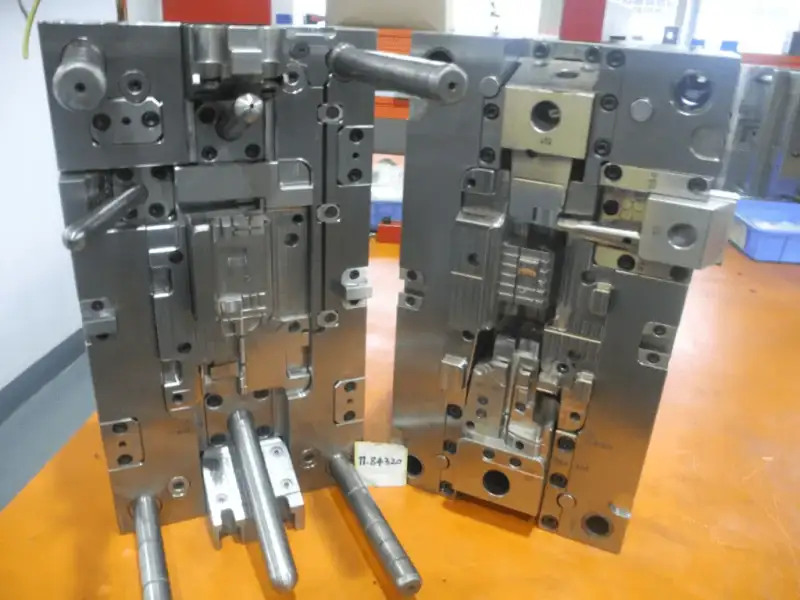
Engineering topics that affect tooling
Part and parting line
Draft, shutoffs, undercuts, appearance surfaces, split lines, and the effect of sliders, lifters, or inserts.
Filling and venting
Gate and runner options, weld-line and air-trap risk, flow length, and the evidence needed for a process decision.
Cooling and ejection
Cooling balance, temperature control, ejector layout, release, deformation, access, and maintenance considerations.
Tolerance and finish
Critical dimensions, datum relationships, texture, polish, fit, function, shrinkage assumptions, and inspection method.
Tool life and upkeep
Resin wear or corrosion, cavity count, steel choice, replaceable details, cleaning, lubrication, and future change access.
Production handoff
How approved design decisions become machining, assembly, T1 evidence, part inspection, change control, and repeat production.
Engineering checkpoints
01
Input review
Confirm the current 3D model, 2D drawing, resin, color, volume, critical features, finish, timing, and assembly requirements.
02
Risk discussion
Explain the manufacturability issue, the affected requirement, the likely tooling consequence, and the decision that is needed.
03
Mold layout
Review cavity layout, parting lines, gates, cooling, ejection, slides, lifters, inserts, steel, and maintenance access.
04
Approval package
Record the approved design version, open assumptions, customer feedback, and the release point for machining.
05
Trial evidence
Use T1 samples, inspection, appearance, fit, and process observations to decide whether a change is required.
When Moldflow or prototyping adds value
Flow analysis can be useful when gate location, filling, weld lines, air traps, cooling, shrinkage, or warpage cannot be resolved confidently from geometry alone. Prototype machining or 3D printing can help check form, fit, function, and assembly before final tooling. Analysis and prototypes support engineering judgment; they do not replace T1 sampling and production validation. See prototype and bridge tooling for an early-launch path.
Send one file for an initial engineering review
A current STEP file, 2D drawing, material note, and target volume are enough to begin identifying the next questions.