
Injection Molding Switchover Position: How to Set and Validate It
Answer in one sentence: Switchover position marks the transition from velocity-controlled filling to pressure-controlled packing, so it should be tied to cavity fill, cushion, pressure, and part evidence.
How to use this guide: This guide treats switchover as a measurable process transition rather than a machine number copied from another mold. Use the controls and evidence below to compare the actual part, resin, mold, machine, and production requirement.
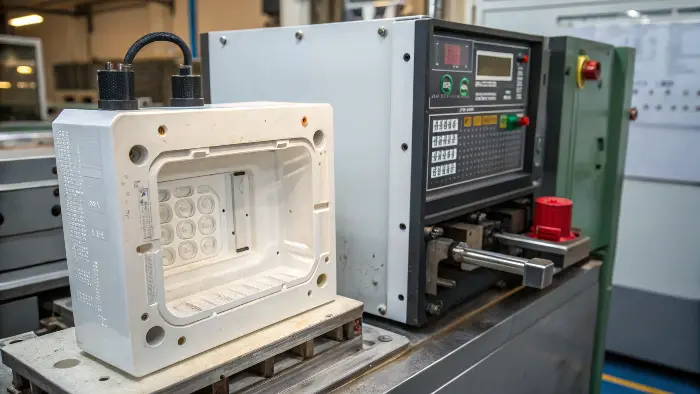
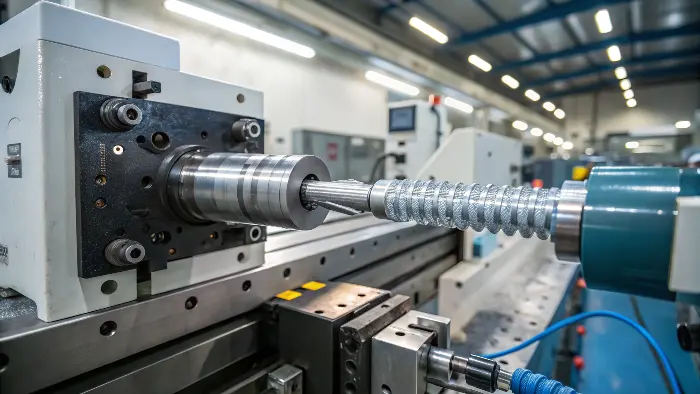
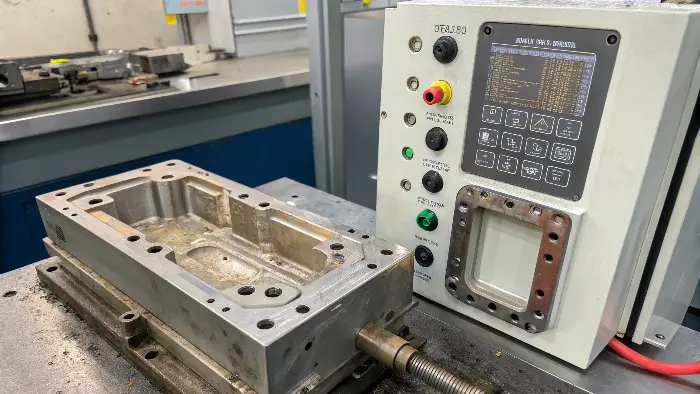
What switchover position controls
During filling, screw movement and injection speed determine how the cavity is filled. At switchover, the machine changes to pressure control for packing and holding. The useful setting is the one that places the transition at a repeatable, defensible point in the actual cavity, not a universal percentage.
- Position may be expressed as screw position, shot volume, or a calculated fill percentage.
- The correct value depends on gate location, runner volume, part thickness, resin behavior, machine response, and the selected fill profile.
- Back pressure is a plasticizing setting; it is not the same as the velocity-to-pressure switchover.
How to choose a starting method
A position-based setting is easy to transfer when the machine, screw, mold, and material are stable. A volume or percentage setting can help compare studies, but it must be reconciled to the real shot size and cushion. Pressure-triggered or automatic switchover can be useful when the process is modeled and instrumented well.
- Use cavity fill studies or short shots to identify the transition zone.
- Use actual machine inputs and confirm what the controller means by position, volume, and zero point.
- Do not infer cavity fill from screw position alone when runner volume or decompression changes are significant.
Symptoms of an early or late transition
If switchover occurs too early, the cavity may be underfilled before adequate packing begins. If it occurs too late, the cavity can experience a pressure spike, flash, overpacking, gate stress, or unnecessary machine load. The same symptom can also have other causes, so confirm it with a controlled comparison.
- Early transition: short shot, weak knit-line strength, low part weight, or incomplete detail.
- Late transition: flash, excessive part weight, high peak pressure, gate blush, or dimensional growth.
- A drifting cushion or changing transfer point can point to check-ring wear, feedstock variation, or unstable filling rather than a single bad setpoint.
A practical setup and validation workflow
Start with a safe, conservative fill profile and a partially filled study. Record screw position, fill time, peak pressure, cushion, part weight, and cavity appearance. Move the transition in small increments, then confirm the selected point across repeated cycles and normal material lots.
- Document the machine, screw, resin lot, mold temperature, melt temperature, and cooling conditions.
- Compare short-shot progression and packed-part evidence; weigh parts only after the process has reached steady state.
- Set alarm limits for cushion, fill time, pressure, and weight so a successful trial is not mistaken for a stable process.
- Revalidate after resin grade, colorant, gate, check-ring, screw, or mold-cooling changes.
Frequently Asked Questions
Is switchover position the same as 99 percent fill?
No. A 99 percent value is only a starting convention in some studies. The correct transition depends on the actual runner and cavity, the filling profile, and evidence from short shots, pressure, cushion, weight, and quality results.
What happens when switchover is too early?
The machine starts packing before the cavity is adequately filled. Typical risks include short shots, poor knit-line performance, incomplete features, low part weight, and larger dimensional variation.
Can pressure switchover improve repeatability?
It can, when the pressure signal, machine response, and cavity process are well characterized. The setting still needs a controlled study because pressure thresholds can shift with material, temperature, and flow resistance.
What should be recorded during a switchover study?
Record fill time, transfer position or volume, peak injection pressure, cushion, part weight, mold and melt temperatures, resin lot, and the visual or dimensional result of each trial.
Related Cavity Mold Services
For design review, mold engineering, tooling, and production planning, see our mold engineering service, mold-making service, and injection molding service.
Need a part-specific recommendation? Contact Cavity Mold with the part drawing, resin, annual volume, tolerances, and target application.