
How to Design Plastic Parts for Injection Molding
Answer in one sentence: Good injection molded part design balances function, material, wall thickness, draft, radii, ribs and bosses, gates and vents, ejection, tolerances, finish, and inspection.
Engineering scope: This guide separates design assumptions, process controls, inspection evidence, and buyer decisions so the recommendation can be verified on the actual resin, mold, machine, and production requirement.
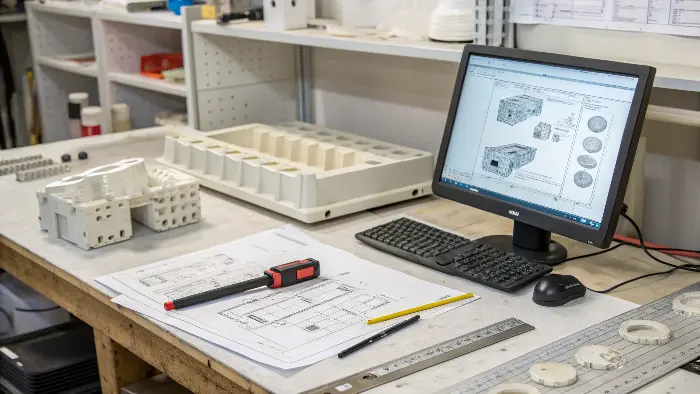

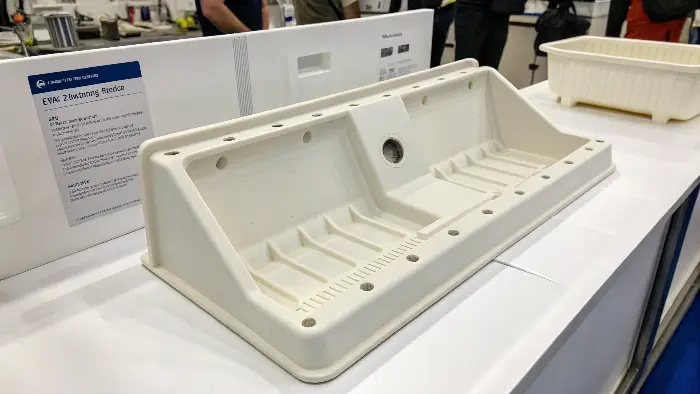
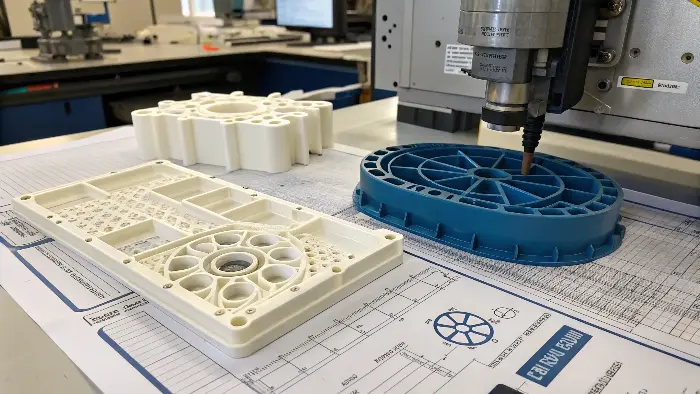
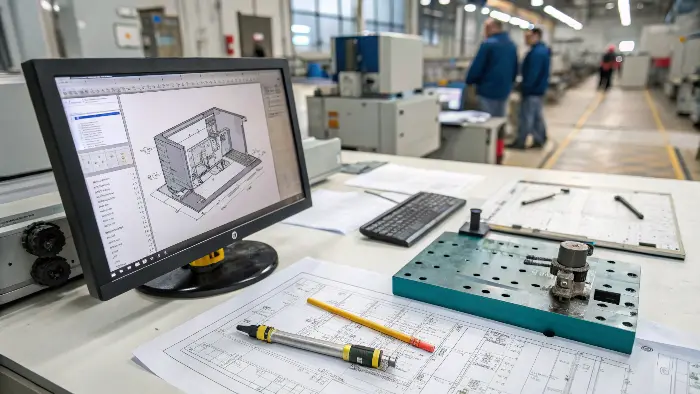
Start with function and the manufacturing direction
Define loads, fit, assembly, environment, appearance, material, volume, and critical dimensions before choosing the parting line and pull direction. Many tooling problems begin when a functional feature is added without considering draft, ejection, gate placement, or access for inspection.
Build robust geometry
Keep walls as uniform as the function allows, core out thick sections, use radii at internal corners, and use ribs or gussets for stiffness instead of adding mass. Bosses, clips, hinges, windows, and snap features need local rules for draft, wall ratio, stress, and ejection.
Draft should be specified with the surface finish and depth in mind. Textures and deep cores generally need more release allowance than smooth, shallow surfaces; the exact value depends on resin, texture, geometry, and tool condition.
Connect part design to the mold
Review parting line, gates, runners, vents, cooling, ejectors, inserts, side-actions, and maintenance access with the tool designer. Use flow or cooling analysis when a feature, tolerance, cosmetic zone, or cavity layout creates meaningful risk.
Design the inspection plan early
Mark datums, critical characteristics, visual zones, sampling, and functional tests on the drawing or specification. A design that cannot be measured consistently is difficult to release, improve, or defend during a supplier review.
Frequently Asked Questions
What is the most important injection molded part design rule?
Start with the function and keep the geometry moldable: practical walls, draft, radii, ejection, gates, vents, cooling, and measurable tolerances.
Why should thick sections be cored out?
Thick plastic cools and shrinks differently, increasing sink, voids, warp, cycle time, and dimensional risk. Coring can preserve function with less mass.
When are side-actions needed?
They may be needed for undercuts or side features that cannot release in the main mold-opening direction, but reorientation, draft, shutoffs, inserts, or lifters may be alternatives.
What should be included in a DFM review?
Include resin and shrinkage, walls, draft, radii, parting line, gates, vents, cooling, ejection, undercuts, finish, tolerances, inspection, and expected volume.
Related Cavity Mold Services
Engineering and DFM; Mold making; Plastic injection molding; Contact Cavity Mold.
For a drawing, resin, tolerance, finish, cavity-count, or process-window review, contact Cavity Mold.