
Hot Runner vs. Cold Runner Molds: Selection Guide
Answer in one sentence: Hot-runner and cold-runner selection balances material waste, cycle, color change, thermal sensitivity, maintenance, gate requirements, cavitation, tool cost, and validation.
Engineering scope: This guide separates design assumptions, process controls, inspection evidence, and buyer decisions so the recommendation can be verified on the actual resin, mold, machine, and production requirement.

How the two systems differ
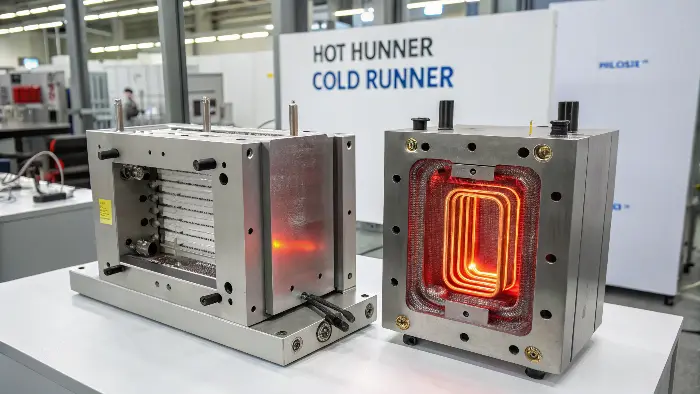
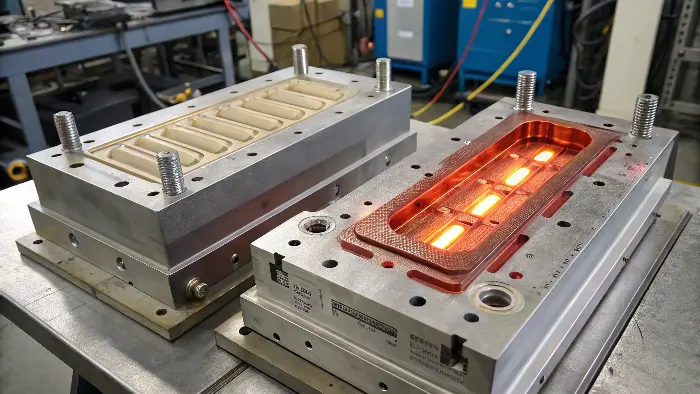
A cold runner solidifies with the part and is ejected or reprocessed. A hot runner keeps material molten through heated components so the part can be gated with less cold-runner material. Hybrid layouts can combine both approaches.
The system is part of the feed, gate, thermal, and maintenance design. Runner cross-section, gate location, cooling, pressure, color, material sensitivity, and cavity balance still determine whether the tool fills and runs repeatably.
When a hot runner may help
Potential benefits include lower cold-runner mass, less degating, more direct gating options, and efficient high-cavitation production. The trade-offs include higher tool and controls cost, start-up stabilization, thermal expansion, color-change complexity, maintenance, and sensitivity to material or temperature control.
When a cold runner may be appropriate
Cold runners can be simpler to build, service, change between colors or materials, and validate for some programs. The trade-off is runner material, possible regrind or disposal, gate vestige, cycle and runner cooling, and runner balance.
Make the selection with evidence
Compare annual mass and waste, cycle, shot size, machine fit, color changes, resin thermal history, gate quality, maintenance access, spare parts, start-up loss, and expected tool life. Use flow and cooling analysis when runner balance, pressure, weld lines, or cavity variation are material risks.
Frequently Asked Questions
Is a hot runner always better?
No. It may reduce cold-runner waste or support certain gating and cavity layouts, but cost, thermal control, color change, maintenance, material sensitivity, and validation can favor a cold or hybrid system.
Do cold runners always create waste?
They create runner material that may be reprocessed or discarded, but the actual waste depends on runner design, regrind policy, part-to-runner ratio, and quality requirements.
Which system is easier to change color?
A cold system may be simpler for some color changes, while a heated system can retain material and require purge and thermal management. The material and color sequence must be planned.
What should a runner comparison include?
Include tool cost, runner mass, cycle, fill and pack balance, gate, machine fit, start-up, color change, maintenance, spare parts, material limits, and quality evidence.
Related Cavity Mold Services
Engineering and DFM; Mold making; Plastic injection molding; Contact Cavity Mold.
For a drawing, resin, tolerance, finish, cavity-count, or process-window review, contact Cavity Mold.