
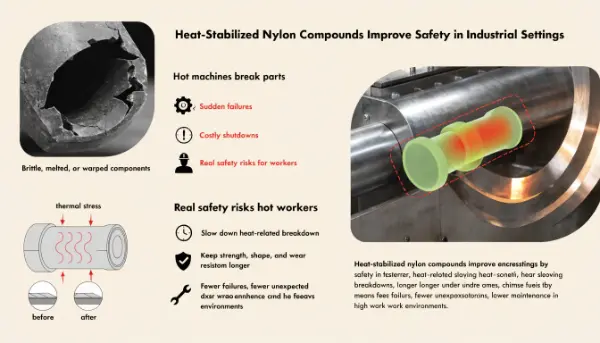
Hot machines break parts. Brittle, melted, or warped components cause sudden failures, costly shutdowns, and real safety risks for workers. I have seen it happen. The good news? Heat-stabilized nylon compounds fix many of these heat-related problems before they start.
Heat-stabilized nylon compounds improve safety in industrial settings by slowing heat-related breakdown. Parts keep their strength, shape, and wear resistance longer under high temperatures. This means fewer failures, fewer unexpected shutdowns, and lower maintenance risk in hot work environments.
I work with engineers and project managers every day. They all ask the same thing. "How do I make my parts last in heat without risking failure?" Let me break this down in simple terms, one question at a time, so you can choose the right material with confidence.
What Is Heat-Stabilized Nylon?
Standard nylon is strong. But it has a weakness. It gets brittle and discolors when it sits in heat too long. That makes it a risky choice for hot machines. So how do we fix that?
Heat-stabilized nylon is regular nylon mixed with special additives. These additives slow down oxidation and thermal breakdown. The result is a plastic that holds its strength, color, and shape much longer at high temperatures than standard nylon.
The Simple Science Behind It
Think of nylon like an apple. Cut it open and leave it out. It turns brown and soft. That is oxidation. Heat speeds it up. Heat stabilizers act like a coating that keeps the apple fresh much longer.
In real terms, the additives stop oxygen from attacking the polymer chains. This keeps the material from becoming brittle. Parts stay tough and reliable over time.
Why This Matters for Safety
When I help a client pick this material, I focus on long service life. Here is what heat stabilization protects:
| Property | Standard Nylon in Heat | Heat-Stabilized Nylon |
|---|---|---|
| Strength | Drops fast | Stays strong |
| Color | Turns brown | Stays stable |
| Brittleness | Gets brittle | Stays tough |
| Shape | Warps | Holds form |
A part that stays strong does not crack mid-shift. That keeps your machines running and your people safe. For me, that reliability is the whole point of choosing the right grade from the start.
What Are the Industrial Applications of Nylon?
You might think nylon is just for clothes or fishing line. Not true. In factories, nylon does heavy work. But where exactly does it fit? And why do engineers trust it for tough jobs?
Nylon is used in gears, bushings, bearings, wear pads, conveyors, pumps, and valves. Heat-stabilized grades are common in under-hood automotive parts and industrial machinery. These areas combine heat, friction, and load, so a durable plastic is a smart choice.
Where I See It Used Most
Let me share what I notice across my projects. Nylon shows up in the places that take the most stress. Here is a quick view:
| Application | Why Nylon Works |
|---|---|
| Gears | Low friction, quiet, tough |
| Bushings & bearings | Resists wear, self-lubricating |
| Pumps & valves | Handles oils and chemicals |
| Conveyor parts | Lasts under constant motion |
| Auto under-hood | Survives engine heat |
Why Heat Matters Here
All these parts get hot. Gears rub and heat up. Engine bays bake parts every day. Pumps move warm fluids. Standard nylon would soften or warp in these spots. Heat-stabilized nylon does not.
I once worked with a client whose conveyor bushings kept failing. They swapped to a heat-stabilized grade. The failures stopped. Maintenance trips dropped. Their team spent less time near risky moving equipment. That is the kind of real-world win this material brings. It is not just about the part. It is about the people and the process around it.
What Good and Bad Traits of Nylon Make It Useful for Industry?
No material is perfect. Nylon has clear strengths. It also has limits. So how do you know when it is the right pick? Knowing both sides helps you avoid costly mistakes.
Nylon is strong, wear-resistant, low-friction, and resistant to oils and solvents. These traits make it great for industrial parts. Its main weaknesses are moisture absorption and a temperature limit, which heat stabilization and proper grade selection help manage.
The Good Traits
I love nylon for a few key reasons. It glides well, so it cuts friction. Less friction means less heat and less wear. It also fights oils, greases, and solvents. That is huge in messy factory settings where chemical splashes are normal.
The Bad Traits
Here is the honest part. Nylon soaks up moisture. This can change its size and strength a little. It also has a heat ceiling. Push past it, and the part fails.
Here is a simple breakdown:
| Trait | Type | Impact |
|---|---|---|
| Low friction | Good | Less wear and heat |
| Chemical resistance | Good | Survives oils, solvents |
| Wear resistance | Good | Long part life |
| Moisture absorption | Bad | Slight size change |
| Heat limit | Bad | Needs right grade |
How I Balance These
The trick is matching the grade to the job. I always check operating temperature, chemical exposure, and load. Heat stabilization handles the heat weakness. The right design handles moisture. When you balance these, nylon’s good traits win and the bad traits stay small.
What Is the Heat Stabilizer in Nylon?
We keep saying "heat stabilizer." But what actually goes into the nylon? And does it change how safe or clean the material is? This part is more important than people think.
Heat stabilizers in nylon are additives like copper-based compounds, hindered phenols, and other antioxidants. They block oxidation at high temperatures. This keeps the polymer chains intact, so the part stays strong, stable, and safe over a long service life.
The Main Types
Different stabilizers do different jobs. I think of them as a defense team. Each one guards against a kind of heat damage.
| Stabilizer Type | What It Does |
|---|---|
| Copper-based | Strong long-term heat protection |
| Hindered phenols | Stops oxidation |
| Phosphites | Protects during processing |
Why It Affects Safety
This matters for more than just strength. When nylon breaks down in heat, it can release fumes. Stabilized nylon breaks down far less. That means cleaner air around hot equipment. It also means the material keeps its insulation value. For electrical parts, that lowers the chance of short circuits.
My Advice on Picking a Grade
Do not guess here. I always tell clients to share their real conditions with me. How hot? How long? Any chemicals? With those answers, we pick the right stabilizer package. A copper-based grade fits long-term high heat. A phenol-based grade may fit lighter duty. The right match keeps your parts safe and your costs in check. This is exactly the kind of detail my team at CavityMold sweats over for every mold project.
Conclusion
Heat-stabilized nylon makes industrial parts safer and more reliable. It fights heat damage, holds strength and shape, and cuts failures. Pick the right grade for your heat, load, and chemical needs. Do that, and you protect both your equipment and your people.