
How to Evaluate a Precision Injection Molding Supplier
Answer in one sentence: Evaluate a precision molding supplier by evidence of design review, material control, tool capability, machine and process stability, metrology, traceability, corrective action, and change control – not marketing claims.
How to use this guide: Supplier qualification is a structured evidence review: the question is what the supplier can repeatedly demonstrate for your part, not what a brochure says in general. Use the controls and evidence below to compare the actual part, resin, mold, machine, and production requirement.


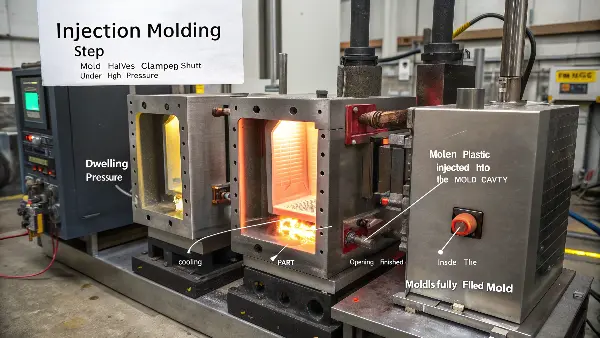

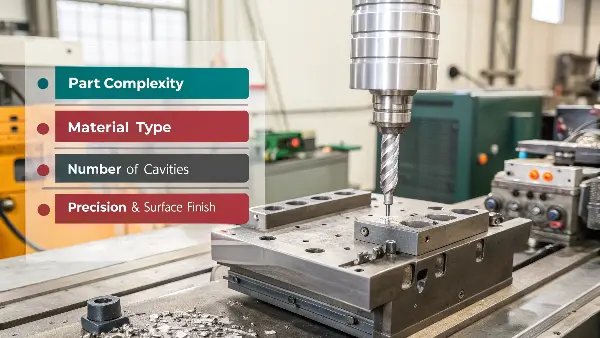
Start with the supplier's evidence chain
Ask how the supplier moves from customer requirement to DFM, tool design, process window, inspection, release, and change control. The answer should identify people, records, equipment, and decision points rather than only listing machines.
- Request a sample quality plan and redacted inspection report.
- Ask how CTQs are reviewed before tool release and how deviations are approved.
- Check whether the same records follow a part through tooling, trial, production, and corrective action.
Audit material, tooling, and process controls
Review resin identification, drying, storage, regrind, tool steel and heat treatment, cavity and insert control, machine capability, mold temperature, process alarms, and preventive maintenance. Link each control to a part risk.
- Confirm material lot traceability and approved grade or supplier.
- Review tool drawings, cooling, venting, wear inserts, and spare-parts planning.
- Ask how process windows are established and how an out-of-window cycle is handled.
- Confirm equipment calibration and measurement-system controls.
Metrology, capability, and corrective action
A supplier should explain how it measures critical features, checks the measurement system, analyzes variation, and contains nonconforming parts. Capability indices can help, but they should be interpreted with the actual sampling plan, distribution, and process stability.
- Tie reports to drawing revisions and controlled datums.
- Review examples of root-cause analysis and verified corrective action.
- Check how tool wear, cavity-to-cavity differences, and material changes are separated.
Make the qualification decision
Use a weighted scorecard covering technical fit, evidence, communication, capacity, service, compliance, cost, and contingency. Validate the supplier with a representative trial and sample approval before treating a capability statement as proven.
- Define acceptance criteria, escalation, and change notification in the quality agreement.
- Keep an approved supplier file with evidence expiry and review dates.
- Requalify after major tool, material, machine, process, or site changes.
Frequently Asked Questions
What is the first document to request from a precision molding supplier?
Request a representative quality and inspection plan tied to a drawing, plus the supplier's DFM, process-control, material-traceability, and corrective-action approach. This reveals how claims are converted into evidence.
Do more machines prove a supplier is more capable?
No. Capability depends on the fit between equipment, tool, material, measurement, process controls, people, and the part's CTQs. The supplier should demonstrate relevant results, not only equipment count.
Should a molding supplier provide capability indices?
Capability data can be useful when the process and measurement system are stable and the sampling plan is clear. Review the underlying distribution, special causes, cavity differences, and acceptance criteria as well.
What changes should trigger supplier requalification?
Material or source, tool or cavity, machine, site, process, software, inspection equipment, or design changes that may affect a CTQ should have a documented impact review and requalification decision.
Related Cavity Mold Services
For design review, mold engineering, tooling, and production planning, see our mold engineering service, mold-making service, and injection molding service.
Need a part-specific recommendation? Contact Cavity Mold with the part drawing, resin, annual volume, tolerances, and target application.