
Future Trends in Precision Injection Molding: What to Watch
Answer in one sentence: Credible precision-molding trends combine better simulation-to-machine correlation, data-driven process control, metrology, thermal management, automation, and material evidence – not hype or unverified promises.
How to use this guide: The most useful future trends are the ones that turn process assumptions into measurable evidence and controlled decisions on the production floor. Use the controls and evidence below to compare the actual part, resin, mold, machine, and production requirement.
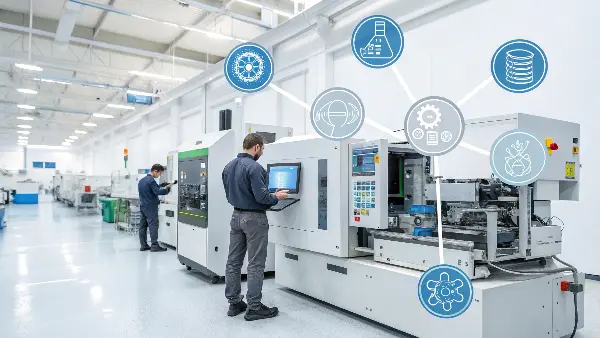
Simulation that is tied to real machines
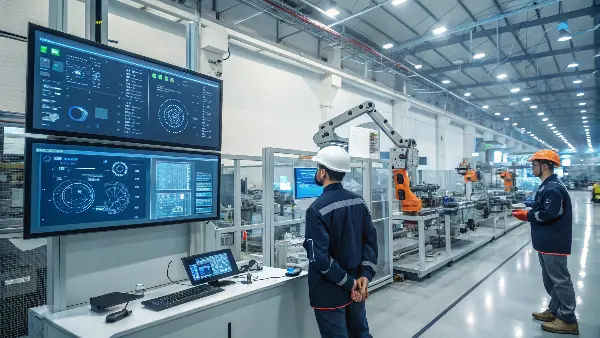
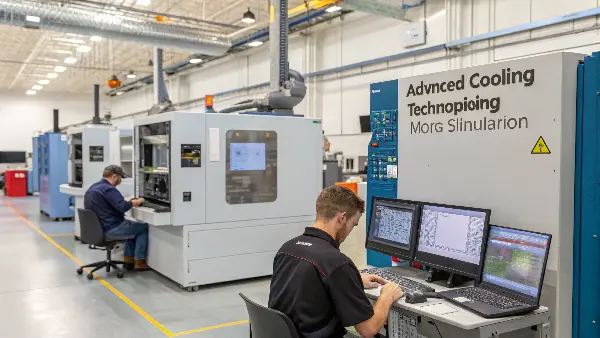
Simulation becomes more useful when it uses actual machine inputs, feed and cooling geometry, material data, and measured results. The future opportunity is not a perfect virtual prediction; it is a shorter loop between model, trial, deviation, and corrected design or process.
- Capture actual machine response, not only nominal settings.
- Correlate fill, pressure, cooling, warpage, and part data under controlled conditions.
- Keep material and model assumptions visible so a result is not treated as a universal truth.
More useful process data and metrology
Sensors, machine histories, in-line checks, and faster metrology can help identify drift earlier. Data only creates value when the signal is linked to a CTQ, an alarm limit, an action, and a retained record.
- Prioritize signals that explain variation in weight, dimensions, defects, or function.
- Use measurement-system checks so false precision does not drive decisions.
- Define who reviews alarms and how a process is released after an intervention.
Thermal control and material evidence
Tighter thermal management, conformal or improved cooling, and better material characterization can support dimensional stability and cycle decisions. The evidence still needs to be part- and grade-specific, especially for filled, recycled, moisture-sensitive, or high-temperature materials.
- Measure thermal behavior and correlate it to the part, not only the mold setpoint.
- Track resin lot, drying, regrind, additives, and conditioning.
- Validate sustainability claims alongside performance, supply, and repeatability needs.
Automation with human qualification
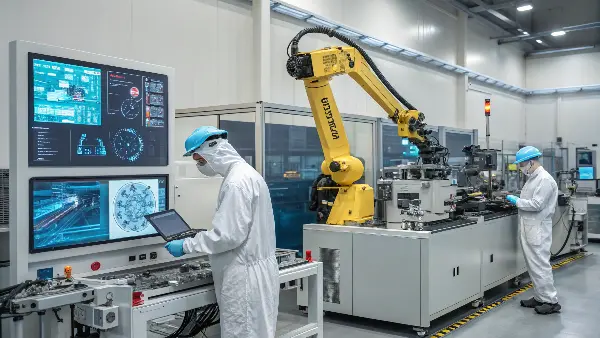
Automation, robotics, vision, and closed-loop control can reduce handling variation and improve traceability. They do not replace a process window, capable measurement, or engineering review. The trend to watch is integrated decision support with clear human responsibility.
- Validate grippers, vision thresholds, and data links as production equipment.
- Build fallback and alarm procedures for sensor or communication failure.
- Keep the process qualification tied to the automated state, not only manual trials.
Frequently Asked Questions
What is the most realistic trend in precision molding?
A practical trend is better correlation between simulation, machine data, metrology, and process control. It can reduce trial-and-error when the underlying material, machine, tool, and part data are reliable.
Will AI replace molding engineers?
Automation and analytics can help detect patterns and recommend actions, but engineers still need to define CTQs, validate data, judge tradeoffs, approve changes, and understand failure modes.
How can simulation become more trustworthy?
Use actual machine and tool inputs, current material data, measured process results, and a documented correlation loop. Treat simulation as decision support with assumptions, not as a guarantee.
Are recycled materials compatible with precision molding?
They can be, but variation in source, additives, moisture, contamination, and melt behavior must be characterized and controlled for the specific grade and critical features.
Related Cavity Mold Services
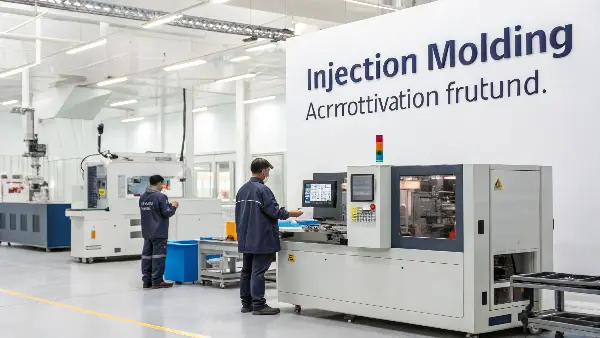
For design review, mold engineering, tooling, and production planning, see our mold engineering service, mold-making service, and injection molding service.
Need a part-specific recommendation? Contact Cavity Mold with the part drawing, resin, annual volume, tolerances, and target application.