
Are you struggling to pick the right material for your next device? Pick the wrong one, and your product might break easily or feel cheap. You lose money and customers. But knowing the right material makes your product safe and strong.
Rigid materials like polycarbonate (PC) and ABS offer high impact resistance and structural support for internal parts. Flexible materials like silicone and TPU provide shock absorption and comfortable grips. The best choice depends on your product’s daily use. Hard plastics protect core electronics from crushing, while soft rubber guards against drops.
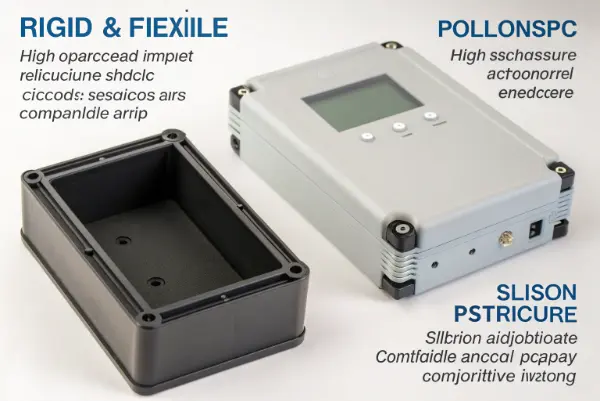
Choosing between hard and soft plastics is a big choice for project managers. Let us look at why each type matters and how they help your designs win.
Why Choose Rigid Materials for Your Electronic Enclosures?
Worried about your circuit boards getting crushed? Thin plastic cases can bend and snap. This ruins the electronics inside. Hard materials fix this by keeping a firm shape under pressure.
Rigid materials like ABS, Polycarbonate (PC), and PC/ABS blends are the best choice for electronic enclosures. They provide a tough outer shell that stops internal parts from moving. They also handle heat well and block dust. Use hard plastics when your device needs strong structural support and impact resistance.
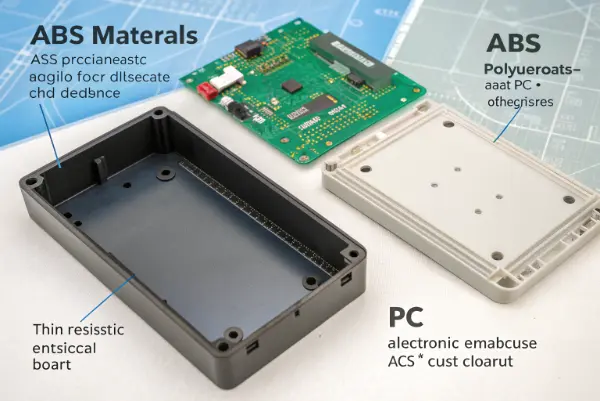
To understand hard plastics, we need to look at what they do best. Hard plastics keep everything safe inside. I remember a project a few years ago. We made a hard case for a smart home hub. We used cheap plastic first. It cracked when people dropped it. We changed to Polycarbonate (PC). The problem went away.
What Makes Rigid Materials Strong?
Rigid plastics have tight molecular chains. They do not stretch. When you drop a hard case, it spreads the force across the whole shell. This stops the force from hitting the delicate chips inside. At CavityMold, we use hard plastics every day to protect expensive screens and batteries.
Top Rigid Materials Used
Here is a quick look at the best hard plastics:
| Material | Strength | Cost | Best Use |
|---|---|---|---|
| ABS | Medium | Low | Basic consumer electronics, TV remotes. |
| Polycarbonate (PC) | Very High | High | Heavy-duty tools, transparent parts. |
| PC/ABS Blend | High | Medium | Laptops, smart home devices. |
When you design a hard case, you must think about heat. Electronics get hot. Hard plastics can handle high heat. But you must design air vents. Hard plastics are easy to mold. We can make very exact shapes. This helps us fit tiny screens and buttons perfectly. Hard plastics also hold screws very well. This makes putting the device together fast and easy. If your device sits on a desk or goes in a bag, you need a hard plastic shell. Hard materials are the backbone of your product.
When Should You Use Flexible Materials for Device Accessories?
Is your device slipping out of people’s hands? Hard plastics can be too slick. Drops happen, and screens shatter. Soft materials stop this by giving a great grip and bouncing when dropped.
Flexible materials like Silicone, TPU (Thermoplastic Polyurethane), and TPE (Thermoplastic Elastomer) are perfect for device accessories. They absorb shock when a device falls. They also seal gaps to keep water out. Use flexible materials for phone cases, smart watch bands, and waterproof seals.
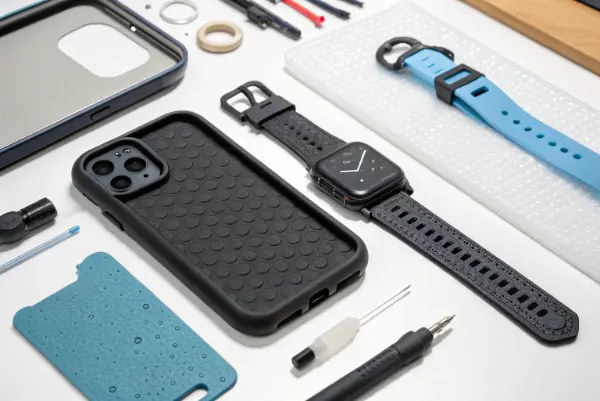
Soft materials do things hard plastics cannot do. They bend, stretch, and bounce back. Think about a phone case. If you drop your phone, you want it to bounce. Soft rubber takes the hit so the screen does not crack. I worked on a smartwatch project once. The hard plastic strap hurt the user’s wrist. We switched to a soft silicone strap. Customers loved it.
How Soft Materials Absorb Shock
Soft materials have loose molecular bonds. They act like tiny springs. When they hit the floor, they compress. This eats up the energy from the fall. The energy does not reach the glass screen. This is why we use them on the corners of devices.
Common Flexible Materials
Here are the most common soft materials we mold:
| Material | Flexibility | Durability | Common Uses |
|---|---|---|---|
| Silicone | High | Very High | Watch bands, medical devices, gaskets. |
| TPU | Medium | High | Phone cases, bumper guards. |
| TPE | High | Medium | Soft grip handles, cable jackets. |
Soft materials are not just for dropping things. They keep water away. We use soft rubber rings inside hard cases. When you close the hard case, the soft ring squishes flat. This stops water and dirt from getting in. This is how we make waterproof electronics. Soft materials also feel nice. We call this "soft-touch." People like holding soft things. It makes the product feel expensive. When you need grip, safety, and water protection, soft materials are your best friend.
How Do You Combine Flexible and Rigid Materials for Maximum Protection?
Want the best of both worlds? Picking just one material leaves weak spots. Hard parts can slip. Soft parts lack shape. Combining them stops both problems and makes a perfect product.
You can combine flexible and rigid materials using overmolding or two-shot injection molding. This process molds a soft rubber layer directly onto a hard plastic shell. This gives the device a strong core for electronics and a soft outer bumper for drop protection and comfort.
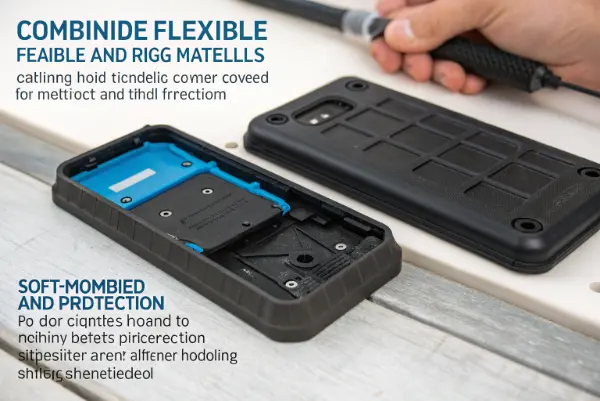
Sometimes one material is not enough. You need the strong shell of a hard plastic. You also need the soft grip of rubber. We solve this by putting them together. We call this overmolding. I love overmolding. It is like giving a suit of armor a soft rubber jacket.
The Magic of Overmolding
Overmolding uses two steps. First, we mold the hard plastic part. This is the strong frame. Next, we put this hard part into a second mold. We shoot soft liquid rubber over it. The soft rubber melts into the hard plastic. They stick together forever. You do not need any glue.
Why Combine Materials?
Here is why mixing them works so well:
| Benefit | How It Works | Real-World Example |
|---|---|---|
| Shock Proofing | Hard core stops bending. Soft edge bounces. | Rugged tablets for factory workers. |
| Better Grip | Rubber is added only where hands hold it. | Power drill handles. |
| Water Sealing | Rubber buttons molded into hard shells. | Underwater cameras. |
At CavityMold, we do this a lot. It takes good engineering. The hard plastic must melt at a higher heat than the soft rubber. If they melt at the same heat, the hard part turns to soup. We map out the mold flow carefully. When done right, the product looks great. There are no gaps. There is no glue to fall apart. You get a strong, safe, and beautiful device. It protects your electronics completely. This method makes your product stand out in the store.
What Are the Cost Differences Between Flexible and Rigid Molding?
Are high molding costs eating your budget? Choosing the wrong material can make your tool costs jump. Money is wasted. Knowing the cost differences helps you plan better and keep more profit.
Rigid material molding is generally cheaper and faster. Materials like ABS are low-cost, and standard molds are simple to make. Flexible molding, especially silicone, costs more because it requires special heating and cooling systems. Overmolding both materials together is the most expensive due to complex mold tooling.
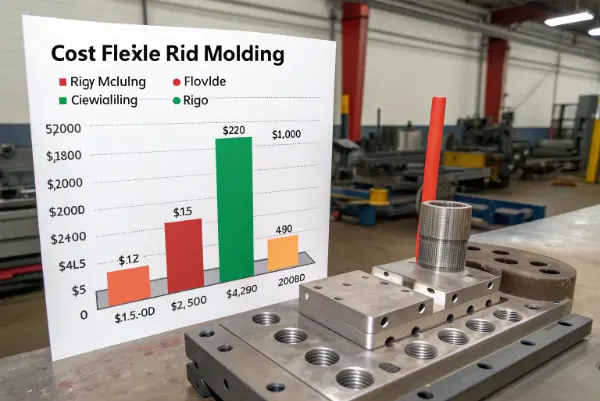
Money matters a lot in manufacturing. I talk to project managers like you every day. Everyone wants to know the price. The material you pick changes the price of the mold and the price of the part. You must look at the whole picture before you start.
Rigid Material Costs
Hard plastics are usually the cheapest way to start. ABS plastic is very cheap. The molds for hard plastics are basic. They use water to cool down fast. Fast cooling means we can make parts quickly. Faster time means lower cost per piece. This is great for making lots of parts on a tight budget.
Flexible Material Costs
Soft materials cost more. Silicone is a good example. Liquid Silicone Rubber (LSR) needs a different kind of machine. The mold must be heated, not cooled. This takes more energy. TPU is cheaper than silicone but still costs more than simple ABS.
Comparing the Costs
Here is a simple look at how costs stack up:
| Molding Type | Tooling Cost | Part Cost | Production Speed |
|---|---|---|---|
| Single Rigid (ABS) | Low | Low | Very Fast |
| Single Flexible (TPU) | Medium | Medium | Fast |
| Liquid Silicone (LSR) | High | High | Medium |
| Overmolding (Both) | Very High | Medium | Slow |
Overmolding costs the most up front. You pay for two molds instead of one. You also pay for more time on the machine. But think about the final value. An overmolded part might cost two dollars more to make. But you can sell it for ten dollars more because it feels premium. You must balance the cost with what your customer wants to pay. Good materials build trust.
Conclusion
Choosing between hard and soft materials changes how your device works and feels. Hard plastics give strength. Soft materials give grip and bounce. Mixing them gives you the best protection. Pick the right material early to save money and make a product your customers will love.