
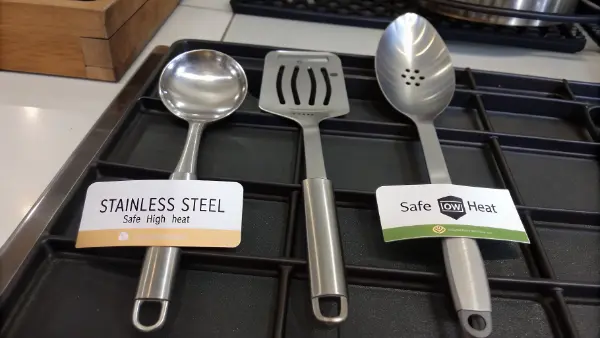
Do you worry about the safety of your kitchen tools? Many people fear their cooking spoons might leak bad chemicals into their food. It is a real problem. You need to know which materials keep your family safe during meals.
Stainless steel is the safest material for kitchen tools. It handles very high heat and does not leak chemicals into your food. Nylon tools are safe for everyday cooking on low heat. However, nylon can melt or bend if it gets too hot. Stainless steel is a stronger and safer choice for almost all cooking tasks.
Let us look closer at these materials so you can cook with peace of mind.
What is the safest material for kitchen tools?
Cooking at high heat can ruin bad utensils. A melting spoon ruins your dinner and your pan. This creates a big mess and health risks. Choosing the right material stops this from happening.
Stainless steel is the safest choice for kitchen tools. It is very strong and will not melt in a hot pan. It is non-reactive, which means it will not put bad chemicals in your food. It lasts a long time and is very easy to clean in the dishwasher.
I have worked with many materials in my job as a project manager. I oversee how products are made. I see how heat changes different things. When you cook, you use fire and hot oil. Stainless steel handles this heat very well. It is a hard metal. It does not break or melt easily. You can use it for high-heat tasks. Searing meat or scraping pans is safe.
Stainless steel is non-reactive. This means the metal does not mix with your food. Some materials change when they touch acid. Tomato sauce is acidic. Stainless steel stays exactly the same. It does not leak chemicals. This makes it a great choice for safe cooking.
In my factory, we value materials that do not degrade. Stainless steel fits this rule. It is very strong.
Here is a simple look at why stainless steel is safe:
| Feature | Stainless Steel | Benefit |
|---|---|---|
| Heat limits | Very high | Will not melt in the pan |
| Chemical leaks | None | Keeps food safe to eat |
| Cleaning | Very easy | Kills all germs fast |
| Lifespan | Many years | Saves you money |
I use stainless steel for almost all my cooking at home. It is highly durable. You buy it once, and it lasts for years. You do not have to worry about the heat deforming your tool during long cooking sessions. It is also very easy to clean. You can put it in the dishwasher safely. The hot water cleans it perfectly. There are no small cracks for bacteria to hide in. If you want the safest all-around kitchen tool, choose stainless steel. It is the best choice for safety and durability in your home.
Are nylon kitchen tools safe to use?
Scratched pans are frustrating. Hard metal tools can ruin your nice non-stick pans. You need something softer to protect your cookware. But is a softer tool safe for your food?
Nylon kitchen tools are safe if you use them correctly. They are soft and will not scratch non-stick pans. But you must use them only on low or medium heat. If nylon gets too hot, it can melt or warp. Poor-quality nylon might release bad chemicals if overheated.
Nylon is a type of plastic. In my work, I help design plastic molds for different products. I know that different plastics have very specific limits. Nylon is great because it is light and soft. It is the best tool to use if you have non-stick pans. Metal tools will scratch the coating off those pans. Nylon protects the pan surface. This stops metal and pan coating from getting into your food.
But nylon has clear limits. You must understand these limits to stay safe. Nylon cannot handle high heat. If you leave a nylon spoon in a hot frying pan, it will melt. When nylon melts, it changes shape. It can also release bad chemicals into your food. Some cheap nylon tools might have BPA or melamine. These are things you do not want in your dinner.
I always tell my team to respect material limits. We must do the same in the kitchen.
Here is how you should use nylon tools safely:
| Task | Safe with Nylon? | Reason |
|---|---|---|
| Stirring soup | Yes | Heat is very low |
| Frying eggs | Yes | Medium heat is fine |
| Searing thick steak | No | Heat is much too high |
| Leaving in hot pan | No | Tool will melt fast |
Use nylon only when you need a gentle tool. Keep the cooking temperature low. If you notice the nylon tool is changing shape, stop using it. If it gets rough edges, throw it away. Nylon tools are lighter. This can help people with weak hands. But a simple rule is to use nylon only for non-stick protection and low heat.
Do nylon utensils give off microplastics?
You might see tiny pieces missing from your old cooking spoons. Where do those pieces go? They often end up in your meal. Eating tiny bits of plastic is scary and unhealthy.
Yes, nylon utensils can give off microplastics. This happens when the tool gets old, worn out, or overheated. The heat and scraping break the plastic down. Tiny pieces flake off into your food over time. If your nylon tool has rough edges or cracks, it is shedding microplastics.
Microplastics are very small pieces of plastic. They are a big topic today. In manufacturing, we study how materials wear down over time. We use special tools to check for stress. Nylon tools degrade with heat and heavy use. Every time you stir a hot pot, the nylon gets a little weaker. Over time, the edge of the spoon gets rough and soft. Tiny bits of the nylon break off. These are microplastics.
Because you are cooking, these tiny plastic pieces fall right into your food. You eat them without knowing it. Heat makes this happen faster. High heat breaks the bonds in the plastic material. This makes it shed more microplastics into your meal.
There is another big problem with worn nylon tools. As they break down, they get tiny cracks. Bacteria love to hide in these micro-cracks. Even if you wash the tool very well, the bacteria can stay inside the cracks.
| Material state | Microplastic risk | Bacteria risk |
|---|---|---|
| Brand new nylon tool | Low | Low |
| Worn out nylon tool | High | High |
| New stainless steel | None | Low |
| Old stainless steel | None | Low |
You can avoid this by checking your tools often. Look at the edges of your nylon spatulas. Are they rough? Are they peeling? If they are, they are putting microplastics into your food. This is a big difference from stainless steel. Metal does not break down like this. It stays smooth and safe for many years. Stainless steel keeps your food free from hidden plastics.
What kitchen item do cardiologists recommend you throw away?
Keeping bad habits can hurt your heart and health. Using broken kitchen tools is a hidden danger. Doctors worry about things that put unseen toxins in your body. It is time to clean out your kitchen drawers.
Many doctors say you should throw away old, scratched plastic or nylon cooking utensils. When these tools get damaged, they release harmful chemicals and microplastics into your food. They also trap dangerous bacteria in their scratches. It is much safer to replace them with stainless steel tools.
Doctors care about what goes inside your body. Damaged plastic and nylon tools are a big risk. When I test plastic parts at work, I know that a cracked part is a failed part. We throw failed parts away. The same is true for your kitchen spoons. If a nylon spoon is scratched, melted, or peeling, it is failing.
When nylon fails, it leaks things you cannot see. It leaks chemicals that might hurt your body over a long time. It also drops those tiny microplastics I talked about. Doctors warn against eating these things. They can cause swelling in your body and hurt your organs. You do not want to feed these things to your family.
Also, old nylon tools are not clean. As I said before, they get tiny scratches. Food and germs get stuck in these scratches. You cannot wash them out completely. You end up putting yesterday’s bacteria into today’s fresh soup.
| Tool Condition | Action to Take | Reason |
|---|---|---|
| Melted tip | Throw away now | Leaks bad chemicals |
| Rough edges | Throw away now | Sheds microplastics |
| Deep scratches | Throw away now | Hides old bacteria |
| Smooth and new | Keep using safely | Safe for low heat |
You should check your kitchen drawers today. Find any nylon or plastic tool that looks old or damaged. Throw it in the trash right now. Replace it with a new one. Or better yet, buy a stainless steel tool. Stainless steel does not scratch or melt like nylon. It keeps your food clean and your body safe. Throwing away old plastic is a fast way to make your kitchen safer.
Conclusion
For safe cooking, stainless steel is the best choice. It handles high heat and never leaks chemicals. Nylon tools are okay for low heat and non-stick pans. Always throw away old, worn nylon tools to avoid eating microplastics and bacteria. Stay safe and cook smart.