
Key takeaway: Insert molding tool design must coordinate insert location, retention, loading, thermal behavior, flow, venting, ejection, wall thickness, inspection, and cycle control.
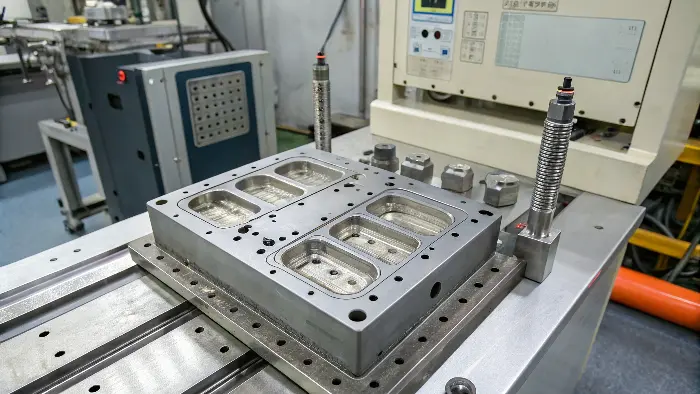
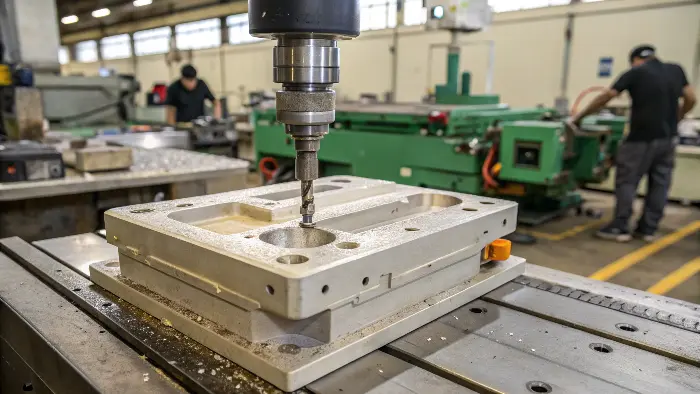
Design around the insert and the plastic together
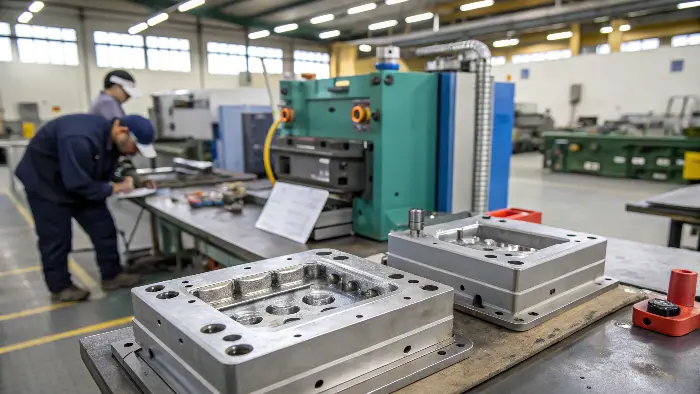
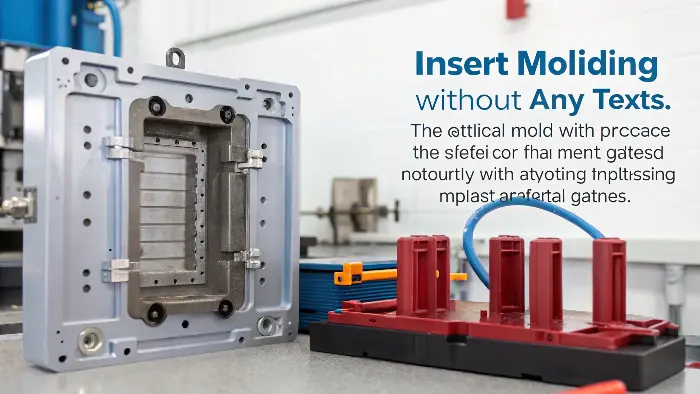
Insert molding places a preformed component in the mold and forms plastic around it. The tool must locate the insert repeatably, retain it against injection forces, protect functional surfaces, and allow the finished part to eject without damaging the insert or overmold.
Confirm insert material, tolerances, plating, thermal expansion, cleanliness, and allowable deformation. Design plastic flow, wall thickness, ribs, bosses, and draft so the insert is supported without creating sinks, voids, weld-line risk, or stress concentrations.
Tool features that control repeatability
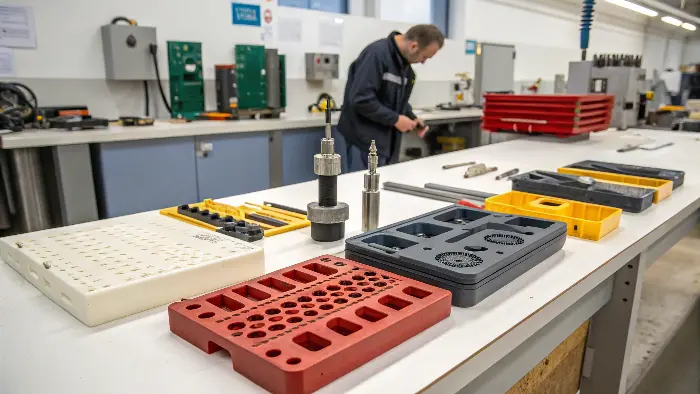
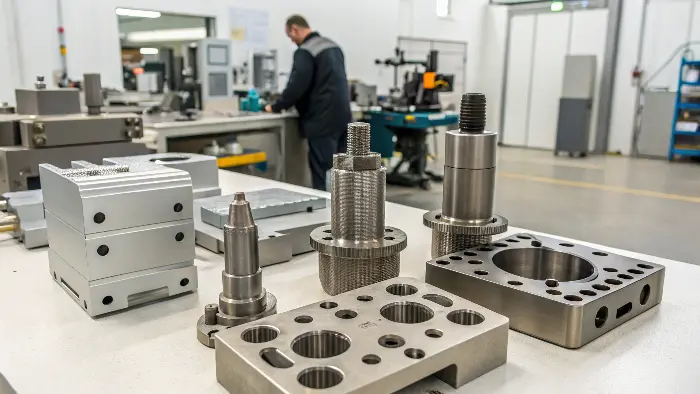
The loading method, nest, sensors, shutoffs, vents, gates, cooling, and ejection should be reviewed as one system. Manual loading needs clear poka-yoke and access; automated loading needs datum strategy, part presentation, presence detection, and recovery from a misload.
Use simulation or trial planning to review filling and pressure around the insert, then verify actual parts with dimensional and functional checks. Account for insert temperature and heat transfer because the insert can change local cooling and shrinkage.
Inspection and production readiness
Define how insert position, pull-out or torque performance, flash, encapsulation, cosmetic zones, and critical dimensions will be checked. Trial parts should represent production loading, material, mold temperature, cycle, and inspection—not only a hand-built setup.
Frequently Asked Questions
What is the most important insert molding design decision?
A repeatable datum and retention strategy is fundamental. The insert must stay in the correct position through loading, closing, injection, cooling, and ejection.
How can insert molding create defects?
Mislocation, insufficient retention, trapped air, flash, insert movement, thermal mismatch, poor venting, excessive pressure, and inadequate plastic support can cause defects.
What should an insert molding trial prove?
It should prove loading, presence detection, insert position, fill and encapsulation, ejection, dimensional stability, functional strength, cosmetic quality, and cycle repeatability.
Related Cavity Mold Services
Engineering and DFM; Mold making; Plastic injection molding; Contact Cavity Mold.
Have a drawing, resin, finish, volume, or quality requirement to review? Contact Cavity Mold for a project discussion.
Reference material
Design the tool around the insert and the operator
An insert mold must locate the component, resist movement, manage heat and air, protect critical surfaces, support loading, release the part, and leave a repeatable inspection path. Cavity geometry is only one part of that system.
| Decision | Evidence to review | Boundary |
|---|---|---|
| Location and retention | Define datums, nests, preload, anti-rotation, clearance, and tolerance stack. | A tight-looking fit is not automatically a repeatable location. |
| Thermal behavior | Check insert heat sink, preheat or temperature condition, flow around the insert, and cooling. | Thermal assumptions must be verified on the actual insert. |
| Venting and shutoffs | Provide air escape while protecting insert edges, seals, and parting surfaces. | Flash or trapped air can be an insert-interface problem. |
| Loading and ejection | Design poka-yoke, access, sensors, ejection, and part protection. | The operator or automation must see whether the insert is present and correct. |
Insert-tool design review
- Freeze insert datums and allowed variation.
- Build the nest, retention, vent, and safety concept.
- Trial the highest-risk insert and loading condition.
- Validate location, encapsulation, part function, and inspection.
Bring the insert drawing and loading method to engineering before the insert-tool scope is quoted.