
Key takeaway: Injection molding serves more than consumer gadgets; the right application depends on material, geometry, volume, performance, and quality requirements.
Where injection molding is used
Injection molding is a repeatable way to turn a moldable material into a defined geometry. That makes it useful wherever a product needs consistent features, controlled cosmetics, repeatable assembly interfaces, and a production plan that justifies tooling.
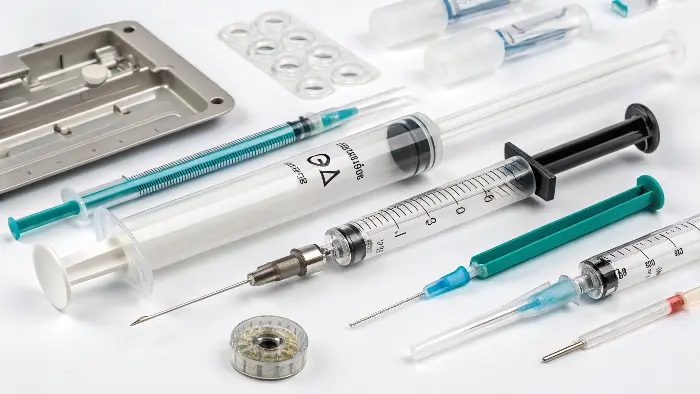
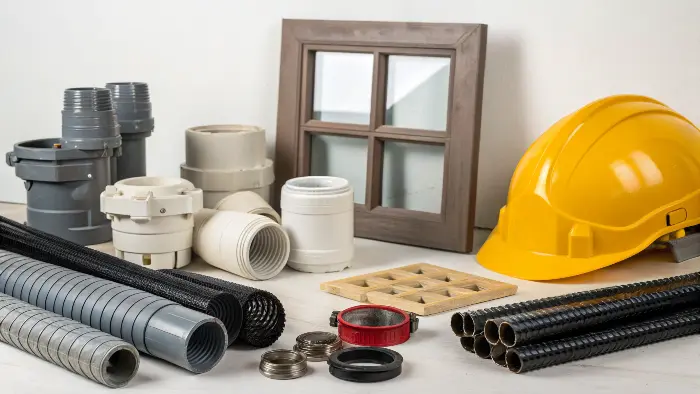
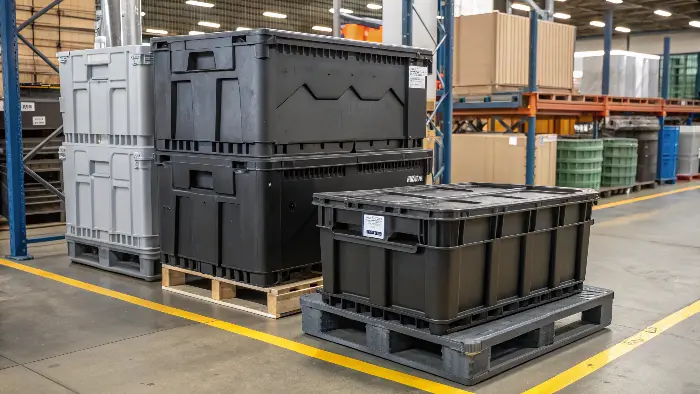
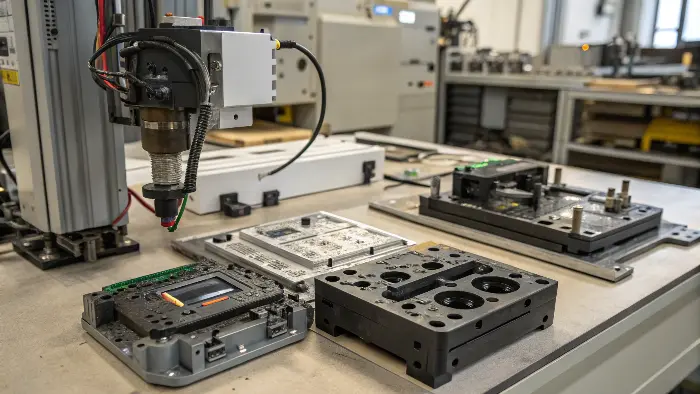
Common application groups include medical and healthcare components, automotive and mobility parts, electrical housings and connectors, industrial equipment, packaging, appliances, consumer products, and durable hardware. The process is selected from the part requirements—not from the product category alone.
What changes from one application to another
A small consumer housing may prioritize appearance, texture, and assembly. An industrial or automotive part may emphasize temperature, chemical exposure, stiffness, impact, dimensional stability, or long-term traceability. A healthcare part adds material suitability, clean handling, risk management, and the customer’s regulatory pathway.
The same mold concept cannot be transferred blindly between applications. Define the resin and grade, load cases, environment, tolerances, cosmetic zones, production volume, inspection method, and downstream assembly before committing to cavities and process parameters.
A buyer’s application-screening checklist
A useful feasibility review connects product function to tooling and quality evidence before quoting. It should identify the risks that affect cost, cycle, tool life, and release schedule.
- Part geometry: wall thickness, draft, ribs, bosses, undercuts, and ejection.
- Material and performance: shrinkage, drying, temperature, chemical exposure, and reinforcement.
- Production: annual volume, cavity strategy, machine fit, cycle target, and maintenance.
- Quality: critical dimensions, visual standard, sampling, traceability, and change control.
Frequently Asked Questions
Is injection molding only suitable for high-volume consumer products?
No. It can support prototypes, bridge tooling, low- to high-volume production, and many industries when the tooling investment and quality plan fit the program.
Which industries commonly use injection molded parts?
Medical and healthcare, automotive, electrical, industrial, packaging, appliance, consumer, and many other sectors use injection molding, each with different material and validation requirements.
What should be checked before choosing injection molding?
Check geometry, resin, performance, volume, tooling investment, machine fit, finish, tolerances, inspection, and the required production evidence.
Related Cavity Mold Services
Engineering and DFM; Mold making; Plastic injection molding; Contact Cavity Mold.
Have a drawing, resin, finish, volume, or quality requirement to review? Contact Cavity Mold for a project discussion.
Reference material
Map the application to a manufacturable requirement
Injection molding can support many products, but the useful question is not whether an industry uses plastic. It is whether this part’s function, volume, material, geometry, tolerance, finish, and quality evidence fit the process.
| Decision | Evidence to review | Boundary |
|---|---|---|
| Function | Define load, enclosure, sealing, motion, wear, appearance, or assembly role. | A sector label does not define the part requirement. |
| Demand and economics | Estimate demand pattern, tool life expectation, variants, and launch volume. | A high tool investment may not fit uncertain demand. |
| Material and environment | Map temperature, chemicals, moisture, regulatory, and electrical needs. | Select and verify the exact grade for the use. |
| Quality evidence | Define CTQs, measurement, traceability, validation, and change control. | The quality route must be designed with the part. |
Application-fit sequence
- Write the part’s job in measurable terms.
- Screen geometry and material for molding risk.
- Choose the tool and process route against the demand case.
- Create an RFQ only after the open assumptions are visible.
Use engineering for feasibility and review relevant project context without treating an example as a guarantee.