
Key takeaway: Injection molding color masterbatch selection should match the base resin, let-down ratio, pigment, heat history, dispersion, regulatory needs, and appearance target.
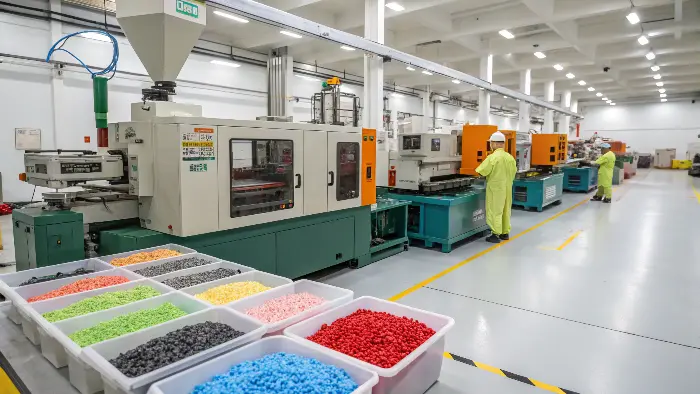
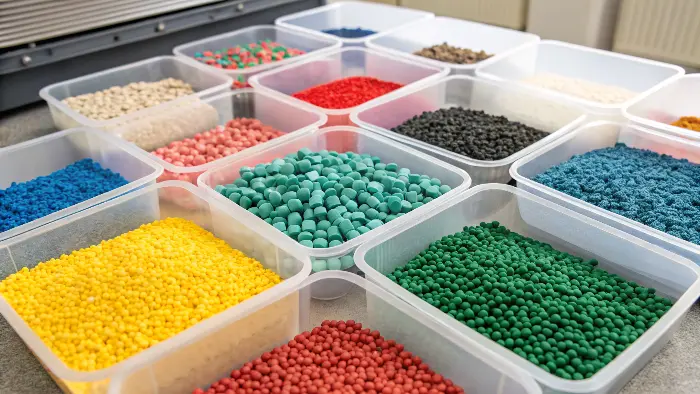
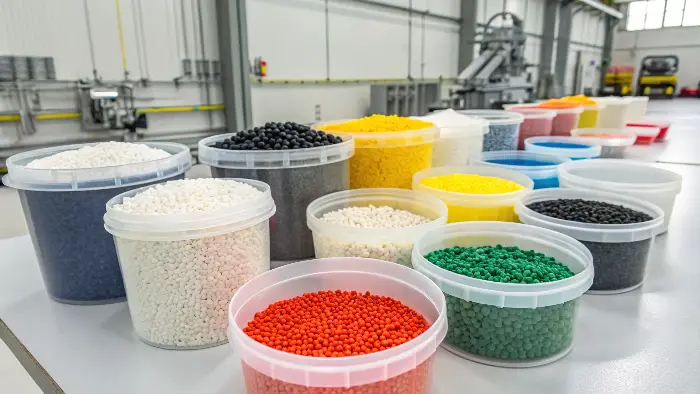
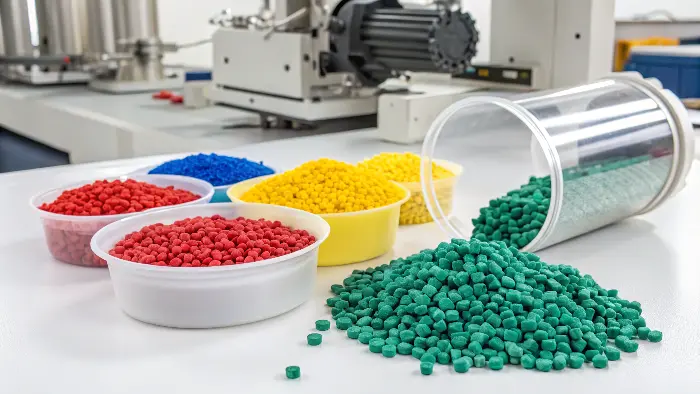
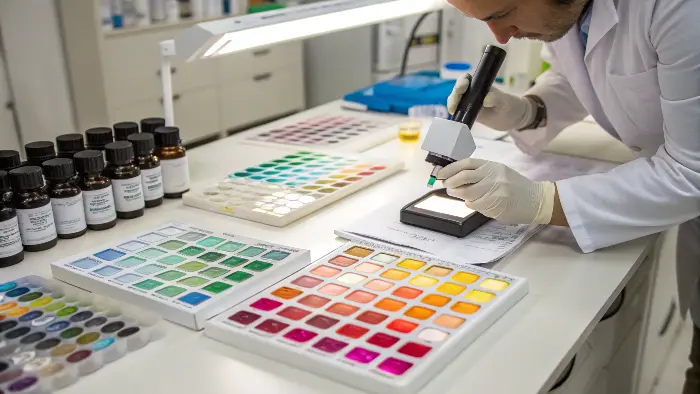
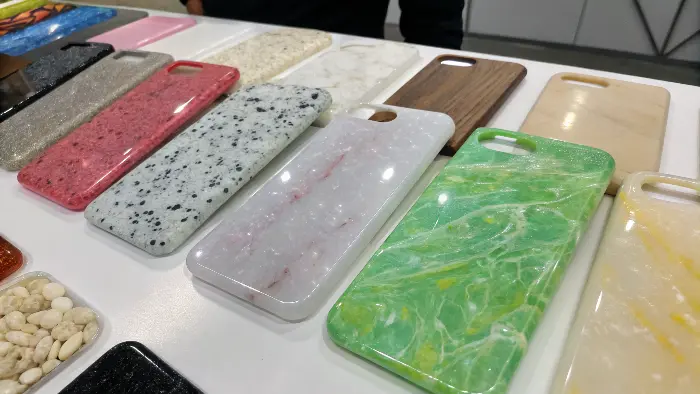
What color masterbatch does
A color masterbatch is a concentrated carrier system containing pigment or dye, introduced into a specified polymer to achieve a repeatable color. The carrier and pigment package must work with the base resin, melt temperature, shear, residence time, and end-use requirements.
Masterbatch is not a universal recipe. A color that works in one resin or machine may disperse differently in another. Treat the color target, carrier compatibility, dosage, and measurement method as a combined specification.
Useful masterbatch categories
Teams commonly evaluate black, white, solid color, effect, fluorescent, and additive concentrates. The meaningful distinction is not only the color family, but also pigment stability, dispersion, opacity, weathering, compliance, carrier, and process window.
- Solid colors for repeatable visual targets and brand standards.
- Black and white concentrates where opacity, undertone, and dispersion are critical.
- Effect concentrates for pearlescent, metallic, sparkle, or other controlled visual effects.
- Additive concentrates for functions such as UV stabilization, slip, antistatic, or processing support when appropriate.
Selection criteria that prevent rework
Confirm the base resin and grade, target dosage or let-down range, pigment heat history, drying requirements, regrind policy, food or medical contact needs, outdoor exposure, and color measurement tolerance. Run a representative trial and approve molded samples at production-relevant settings.
Frequently Asked Questions
Is color masterbatch compatible with every plastic?
No. Carrier compatibility, pigment stability, processing temperature, shear, additives, and end-use requirements must be checked against the selected resin and grade.
What is more important than choosing a color name?
Define a physical color standard, measurement method, tolerance, gloss or texture condition, resin, dosage range, and approved molded sample.
Can the same masterbatch be used with regrind?
Only after a controlled review. Regrind can change color strength, contamination risk, thermal history, and lot-to-lot consistency, so the policy should be validated for the product.
Related Cavity Mold Services
Engineering and DFM; Mold making; Plastic injection molding; Contact Cavity Mold.
Have a drawing, resin, finish, volume, or quality requirement to review? Contact Cavity Mold for a project discussion.
Reference material
Treat masterbatch as a process input
A masterbatch is not only a pigment package. Carrier compatibility, pigment or additive chemistry, let-down ratio, dispersion, thermal exposure, regrind, surface, and measurement all affect the finished color.
| Decision | Evidence to review | Boundary |
|---|---|---|
| Carrier compatibility | Confirm the concentrate carrier and base resin can mix and process together. | A visually close color can still create flow, weld-line, or property risk. |
| Color system | Define pigment, additive, effect, gloss, texture, and customer standard. | A color name is not a measurable acceptance standard. |
| Thermal history | Check melt temperature, residence, shear, purge, and machine cleanliness. | Color drift can be process history rather than pigment quality. |
| Approval method | Use a reference, instrument method, lighting, angle, sample thickness, and conditioning. | Compare like with like before changing the concentrate. |
Masterbatch approval sequence
- Freeze the resin and color standard.
- Select a compatible concentrate and target dose.
- Run a representative trial and measure the result.
- Record the approved combination and change boundary.
Use engineering to define the color and material boundary before the masterbatch RFQ.