
CNC Aluminum vs. Injection Molded PEEK for Automotive Parts
Answer in one sentence: CNC aluminum and injection molded PEEK solve different automotive problems; compare temperature, chemical exposure, stiffness, mass, wear, tolerance, volume, and development stage.
How to use this guide: The meaningful comparison is a metal prototype or production component versus a high-performance polymer part under a defined automotive duty cycle. Use the controls and evidence below to compare the actual part, resin, mold, machine, and production requirement.
Start with the duty cycle
Map temperature peaks and dwell, fluids, pressure, vibration, wear, electrical behavior, stiffness, mass, and service life. Aluminum and PEEK differ in thermal expansion, conductivity, density, strength retention, and processing route, so the application cannot be selected by room-temperature tensile data alone.
- Define the highest continuous and transient temperatures.
- List oils, fuels, coolants, cleaners, humidity, and exposure duration.
- Identify load direction, clamp or press fit, wear contact, and failure consequence.
What CNC aluminum offers
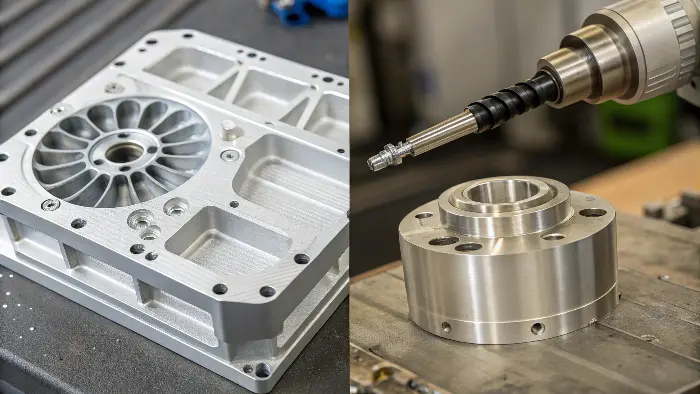
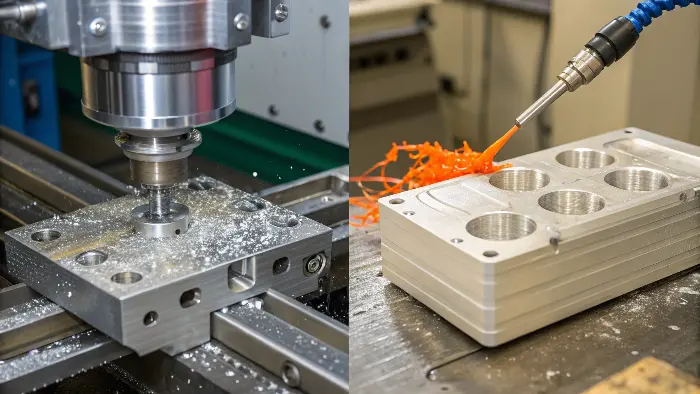
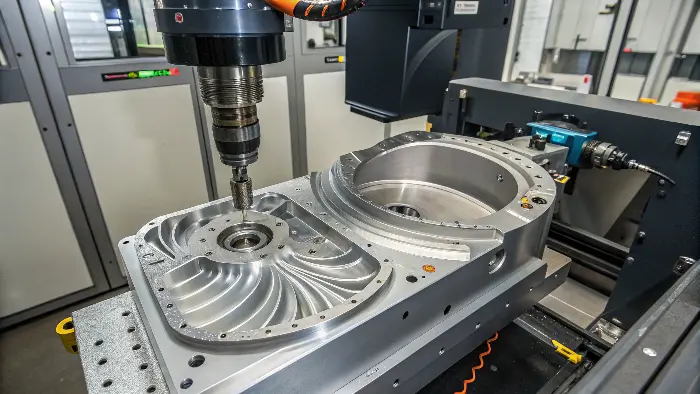
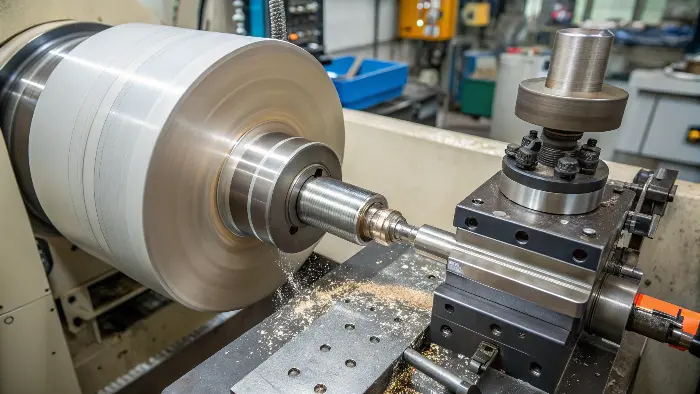
CNC aluminum can provide a rigid, conductive, readily inspected component with no injection mold. It is useful for prototypes, low volume, large stock forms, and parts whose geometry or revision risk does not justify a mold. Machining time, tool access, burrs, and surface treatment still need control.
- Check thin walls, deep pockets, internal radii, fixturing, and inspection datums.
- Include anodizing, coating, thread repair, burr removal, and galvanic compatibility.
- Validate that the machined prototype represents the production interface and stiffness requirement.
What injection-molded PEEK offers
PEEK can support demanding temperature, chemical, wear, and weight requirements when the exact grade and process are appropriate. Injection molding can integrate features at production volume, but PEEK requires controlled drying, melt and mold temperature, tooling, shrinkage, and post-mold dimensional verification.
- Choose unfilled or reinforced grade by stiffness, wear, thermal, and anisotropy needs.
- Check fiber orientation and weld-line location around loaded features.
- Define drying, residence-time, mold-temperature, and process-window controls.
- Do not assume a PEEK part is interchangeable with aluminum without testing the full assembly.
Development-stage decision
Use prototype builds to validate load paths and interfaces, then recheck material and process behavior before a production switch. Compare tooling amortization, cycle, material cost, scrap, secondary operations, tolerance, and service requirements at realistic volume.
- Test both candidates under representative thermal and chemical aging.
- Measure the assembled system, including inserts, fasteners, seals, and mating surfaces.
- Document material grade and process changes as controlled engineering changes.
Frequently Asked Questions
Is PEEK always a better automotive material than aluminum?
No. PEEK can provide high-temperature and chemical performance at low mass, but aluminum may be better for stiffness, heat spreading, conductivity, or a mature machined design. The right choice depends on the duty cycle and assembly.
Why does PEEK require more process control than ordinary plastics?
PEEK has demanding melt and mold-temperature requirements and is sensitive to drying, residence time, shrinkage, and orientation. The exact grade and tool design must be matched to the required dimensions and performance.
Can a CNC aluminum prototype qualify a molded PEEK part?
It can validate some geometry and assembly questions, but it does not prove polymer stiffness, creep, thermal expansion, wear, chemical aging, or molded orientation behavior. Those risks need representative PEEK testing.
What should be specified when ordering PEEK parts?
Specify the exact grade, reinforcement, color, drying and processing requirements, critical dimensions, orientation-sensitive features, inspection method, surface condition, and the automotive environment to be validated.
Related Cavity Mold Services
For design review, mold engineering, tooling, and production planning, see our mold engineering service, mold-making service, and injection molding service.
Need a part-specific recommendation? Contact Cavity Mold with the part drawing, resin, annual volume, tolerances, and target application.