
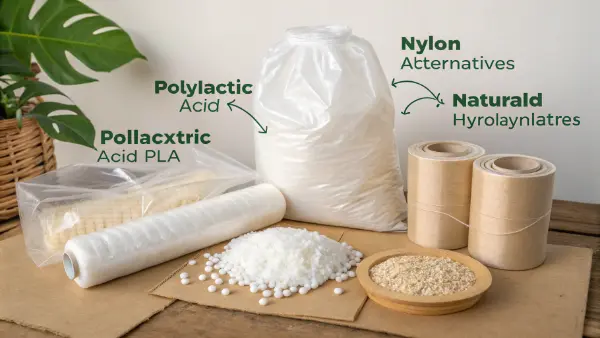
Nylon makes strong parts. But traditional nylon harms our earth. It stays in the dirt for hundreds of years. You need better materials for your products. Let us fix this problem together.
Biodegradable nylon alternatives exist for many manufacturing needs. Polylactic acid (PLA) and Polyhydroxyalkanoates (PHA) replace nylon in packaging. Natural fibers replace nylon in textiles. The best choice depends on your product. You must choose between a textile replacement, a packaging material, or a molded industrial part.
I have worked in product and mold design for 10 years. I manage big projects every day. I always look for ways to make parts better. We use nylon a lot. But my clients want green parts now. I partner with CavityMold to find new ways to make these parts. We want to stop using bad plastics. We want materials that break down. Let us look at the best choices we have today.
What qualifies as an eco friendly alternative to nylon?
Traditional nylon does not break down. This causes huge trash problems. You want to make green parts. But you do not know which materials are truly safe. We can clear this up right now.
An eco-friendly alternative to nylon falls into three groups. These are biodegradable biopolymers, renewable natural fibers, and recycled synthetics. Bio-based nylons use renewable things like castor oil. Recycled nylon reuses old waste. Biodegradable options break down fully in nature. The right choice depends on your exact part needs.
Different Kinds of Green Materials
We must understand what makes a material green. I look at this every day in my job. I help make plastic parts for electronics. We try to use the best materials. Manufacturers should evaluate four things before switching materials. You must look at performance. You must look at processing rules. You must look at how it breaks down. You must look at supply stability.
A material might break down in a lab. But it might melt in your factory. It must survive your production temperatures. It must survive moisture. It must handle wear and tear. You must know if the material needs an industrial compost place. You must know if it breaks down at home. You must know if it is just a bio-based plastic. Those things are all very different.
Bio-based nylon comes from plants. Castor oil is a common source. But bio-based nylon is still nylon. It does not break down in the dirt. Recycled nylon is better than virgin nylon. It uses less new oil. But it also does not break down. To get real breakdown, we need biodegradable biopolymers. We need natural fibers. These things return to the earth.
Material Types
| Material Type | Source | Breaks Down in Dirt? | Example |
|---|---|---|---|
| Recycled Nylon | Old waste | No | Recycled fishing nets |
| Bio-based Nylon | Plant oils | No | Castor oil nylon |
| Biopolymers | Plants or bacteria | Yes | PLA, PHA |
| Natural Fibers | Plants or animals | Yes | Hemp, Wool |
You must think about heat, moisture, and load. Bio-based polymers often beat natural fibers for hard parts. They act more like real plastics. We use them a lot at CavityMold. They fit well in our injection machines. They make strong parts.
What material is 100 percent biodegradable?
Finding a plastic that fully disappears is hard. Many plastics leave tiny bad pieces behind. You need parts that melt away harmlessly. We have some great fully biodegradable options today.
Materials like Polylactic acid (PLA), Polyhydroxyalkanoates (PHA), and Polybutylene succinate (PBS) are completely biodegradable. Bacteria make PHA using organic food. Plants like corn make PLA. Starch-blended polymers also break down fully. These materials replace nylon in many packaging and molding jobs. They leave no bad waste behind.
The Best Biodegradable Plastics
I test many plastics in my mold design work. We want materials that vanish when thrown away. PLA is very popular. We get PLA from corn starch or sugarcane. It is a great alternative to nylon for packaging. PLA and bio-PET are common plant-based options. They work well for formed parts. But you must watch out. Heat resistance and durability can limit PLA use. It can melt if it gets too hot.
PHA is another amazing choice. It is biocompatible. It is fully biodegradable. Bacteria produce PHA naturally. They eat organic waste and make this plastic. PHA is great for compostable parts. We use PHA when end-of-life breakdown matters more than high strength. It returns to nature very fast.
Polybutylene succinate (PBS) is a biodegradable polyester. It looks and acts a lot like nylon. It has good strength. It has good versatility. Starch-blended polymers also work well. We mix starch with other green plastics. This makes an eco-friendly replacement for nylon. It keeps similar physical properties. Biodegradable elastomers exist too. Thermoplastic starch is getting better every day. We improve it to mimic nylon properties. We use it for many different applications.
Biodegradable Plastics Compare
| Material | Made From | Best Use | Heat Resistance |
|---|---|---|---|
| PLA | Corn starch | Packaging, simple parts | Low |
| PHA | Bacteria | Compostable items | Medium |
| PBS | Bio-sources | Strong parts | Medium |
| Starch Blends | Plant starch | Flexible parts | Low to Medium |
These materials work inside our standard molds. They help us make green products. They solve the trash problem.
What is a good substitute for nylon fabric?
Nylon fabric is strong and stretchy. But it pollutes water every time you wash it. You need a fabric that performs well but protects the earth. Natural and bio-based fibers can fix this.
Good substitutes for nylon fabric include cellulose-based materials like rayon and lyocell. Natural protein fibers like silk and wool also work well. Hemp and organic cotton are great natural choices. For pure stretch and strength, recycled nylon or bio-based nylon offer the closest match.
Greener Fabric Choices
I mostly deal with hard plastic molds. But my electronic products need soft cases too. We use textiles for covers and straps. Traditional nylon is bad for this. Natural fibers give us great green choices. Organic cotton, hemp, wool, silk, linen, and bamboo textiles are fully biodegradable. They fit many apparel needs. They work well for filtration. They work well for soft-goods uses.
Cellulose-based materials are very smart substitutes. We make rayon and lyocell from wood pulp. They are completely biodegradable. They are renewable. They replace nylon in many textiles. Hemp fibers are highly sustainable. Hemp grows fast. It needs little water. Hemp resembles nylon in flexibility. It has great durability for certain uses.
Natural protein-based fibers are wonderful. Silk and wool come from animals. They break down in the earth easily. They can serve as sustainable replacements for nylon. They feel good and last a long time. If you need the exact same stretch as nylon, you have to look at synthetics. Recycled nylon is the closest functional substitute. Bio-based nylon is also very close.
Fabric Options Compare
| Fabric | Source | Biodegradable? | Strength Match to Nylon |
|---|---|---|---|
| Lyocell | Wood pulp | Yes | Medium |
| Hemp | Plant | Yes | High |
| Wool | Animal | Yes | Medium |
| Recycled Nylon | Old plastic | No | Very High |
If your product can use a natural fiber, try hemp or wool. They deliver a better environmental profile. They use less harsh chemicals. They protect our rivers and oceans.
What is the most environmentally sustainable fabric and material?
Picking the absolute best green material is confusing. There are too many claims out there. You do not want to make the wrong choice. Let us find the most sustainable options for your products.
The most environmentally sustainable materials include mycelium-based composites, bamboo-fiber composites, and algal bioplastics. Mycelium grows from mushroom roots. Bamboo grows extremely fast. Algae grows in water. These natural options offer amazing strength. They protect our earth much better than any traditional plastic.
The Future of Sustainable Materials
We always look for the next big thing in manufacturing. We want the best materials for the earth. Mycelium-based composites are amazing. They offer a biodegradable alternative for many uses. We use them for applications requiring lightweight materials. They are very durable. Mycelium materials can be grown into custom shapes. We just let the mushroom roots fill a mold. This makes them attractive for protective packaging. They work great for structural inserts.
Bamboo-fiber composites are another top choice. They offer great strength. They use a highly renewable feedstock. Bamboo grows very fast. Research shows bamboo-based materials can be engineered well. We use them for industrial packaging. They replace hard nylon parts.
Algal bioplastics represent an innovative bio-based option. We make plastic from sea algae. It has huge potential as a sustainable nylon alternative. It cleans the water while it grows. Paper-based alternatives and seaweed-based materials are also strong sustainability candidates. They work perfectly for packaging.
Top Sustainable Materials Compare
| Material | What It Is | Best Application | Growth Speed |
|---|---|---|---|
| Mycelium | Mushroom roots | Custom packaging | Fast |
| Bamboo Composite | Bamboo grass | Hard structural parts | Very Fast |
| Algal Bioplastic | Sea algae | Flexible packaging | Fast |
| Seaweed Material | Ocean plants | Thin films | Fast |
If you want the closest substitute to nylon with better sustainability, start with recycled nylon for hard performance. Test PLA or PHA where compostability matters most. Try mycelium or bamboo for pure green power. These choices change the world.
Conclusion
Finding biodegradable alternatives to nylon is very possible today. You can use PLA, PHA, or mycelium for packaging. You can use hemp, wool, or lyocell for fabrics. You must match the material to your specific part needs to protect our earth and maintain high product quality.