
Acrylic applications depend on matching PMMA grade, optical or mechanical requirements, environment, processing route, surface finish, and regulatory evidence. PMMA is not one universal material: a clear display, light guide, automotive lens, medical component, and industrial cover can need different grades and validation.
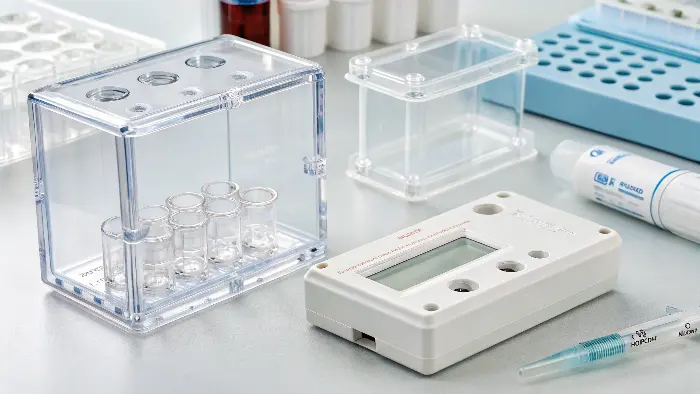

Common PMMA application groups
- Lighting and optics: prioritize transmission, haze, color, birefringence, surface, and geometry.
- Automotive: add UV, weathering, heat, impact, assembly, and optical requirements.
- Displays and consumer products: balance clarity, scratch appearance, color, surface finish, and cost.
- Medical and laboratory: define biocompatibility, sterilization, chemical exposure, traceability, and regulatory evidence.
- Industrial covers and equipment: match impact, temperature, chemicals, fasteners, and long-term dimensional stability.
Application questions
What does the part see during service? Which surfaces are cosmetic or optical? What is the required life, test method, grade, color, and allowable recycled content? Does the application require injection molding, extrusion, machining, or a combination?
Turn the application into a specification
Define material, grade, drawings, optical or mechanical tests, surface standard, inspection method, packaging, and change-control requirements before selecting a supplier. Case studies are useful examples, not proof that the same grade or process suits a new part.
Plan the next step
Share your part, resin, annual volume, critical dimensions, finish, and timing with the Cavity Mold team through our contact page. We can review the manufacturing risks and recommend a practical next step.
Related Cavity Mold resources
- Injection mold engineering services
- Plastic injection molding services
- Injection mold making services
- Contact Cavity Mold