
Picking the wrong plastic for car interiors leads to cracked parts and angry customers. It ruins your brand reputation and wastes money. At CavityMold, we help you choose the right material, like TPU or traditional plastics, to make perfect parts every time.
TPU (Thermoplastic Polyurethane) offers better flexibility, soft touch, and scratch resistance compared to traditional plastics like ABS or PVC. Traditional plastics are usually cheaper and easier to mold in mass production. The best choice depends on whether you need premium quality and feel or a low-cost, rigid part for your car interior.
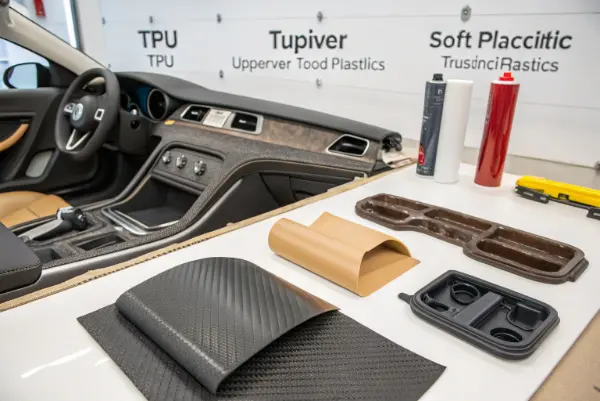
You might wonder how these materials really compare on the factory floor. Let us look closer at how they work and why your choice matters so much for your next project.
What Are the Main Differences Between TPU and Traditional Plastics?
Mixing up your materials can stop your whole assembly line. It causes bad molds and delayed shipments. Knowing the exact differences between TPU and standard plastics keeps your project running smoothly and safely.
TPU is a flexible elastomer that feels soft and resists oil, wear, and cold temperatures. Traditional plastics, like ABS or Polypropylene (PP), are rigid, cheap, and very easy to shape. TPU is best for soft grips and armrests, while standard plastics work best for hard dashboards and hidden structural parts.
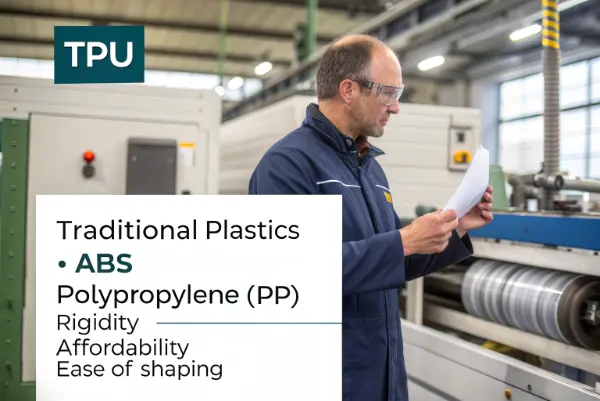
I remember working with a client from Australia. He needed a material for a steering wheel cover. We had to break down the choices carefully to find the exact right fit.
Chemical Makeup and Feel
TPU stands for Thermoplastic Polyurethane. It bridges the gap between rubber and plastic. It feels soft and bends easily without breaking. Traditional plastics like ABS (Acrylonitrile Butadiene Styrene) are hard. If you push on ABS, it does not give. It stays firm. This makes a big difference when a driver touches the car door or dashboard. People like soft things in their cars.
How They React to Heat and Cold
Cars get very hot in the summer sun and freezing cold in winter. TPU handles these big changes well. It does not crack when frozen. Many traditional plastics can become brittle in extreme cold. They might snap if hit hard. They also melt or warp if the sun is too hot.
Quick Comparison Table
| Feature | TPU | Traditional Plastics (ABS/PP) |
|---|---|---|
| Feel | Soft and rubbery | Hard and stiff |
| Flexibility | High | Low |
| Cold Weather | Will not crack | Can become brittle |
| Common Use | Armrests, grips | Dashboards, hard trim |
When you design a part, you must think about the person driving the car. A soft touch makes the car feel expensive and nice. A hard plastic is good for keeping the shape of the car interior safe and strong. We test both at CavityMold. We want to make sure your mold fits the exact material you choose. This saves you from bad parts later.
How Do TPU and Traditional Plastics Compare in Durability?
Parts that scratch or break quickly ruin the look of a new car. Customers will complain, and warranty costs will go up. Choosing a highly durable material stops these problems before they even start.
TPU is much more durable against scratches, wear, and chemical spills than traditional plastics. It bounces back from impacts without taking damage. Traditional plastics can scratch easily and may fade under strong sunlight, but they are very strong for holding heavy loads inside the car frame.
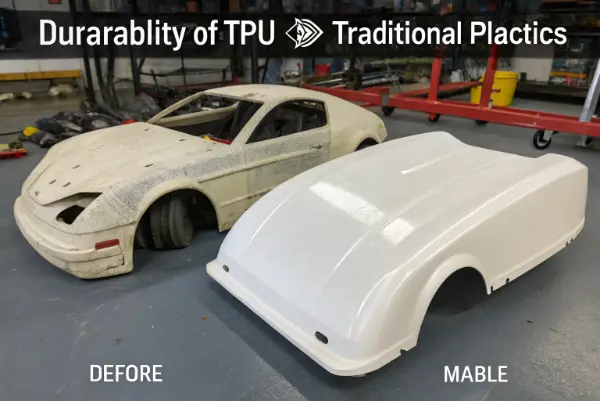
Durability means how long a part lasts before it looks bad or breaks. In a car, parts face coffee spills, sharp keys, and heavy bags every single day.
Scratch and Wear Resistance
TPU is like a strong, invisible shield. If you drag a key across a TPU surface, it often leaves no mark. The soft material absorbs the scrape and bounces back. Traditional plastics like PP or ABS are not as lucky. A key will leave a deep, white scratch on them. Over time, a hard dashboard made of cheap plastic can look very old and worn out. This makes the whole car look cheap.
Handling Spills and Sunlight
People eat and drink in their cars all the time. TPU stops oils and chemicals from soaking in. You can wipe it clean easily with a wet cloth. Some standard plastics stain if you spill oil or harsh cleaners on them. Also, the sun beats down on the dashboard every day. We often use special additives to help standard plastics survive UV rays. But TPU naturally holds up very well against fading and cracking from the hot sun.
Durability Breakdown
| Durability Type | TPU Performance | Traditional Plastic Performance |
|---|---|---|
| Scratch Resistance | Excellent | Fair to Poor |
| Impact Strength | High (bounces back) | Good (but can break) |
| Chemical Spills | Very strong | Can stain or melt |
| Sunlight (UV) | Good | Needs extra protection |
In my years making molds, I always ask clients about the life of the part. If the part gets touched a lot, TPU is the clear winner. It keeps the car looking brand new for years.
Which Material Is Better for Cost-Effective Manufacturing?
Going over budget on materials kills your profit margins. If the plastic is too hard to mold, your scrap rate goes up. Picking a cost-effective material keeps your boss happy and your business making money.
Traditional plastics are the best choice for cost-effective manufacturing because the raw material is cheap and cycles through machines very fast. TPU is more expensive to buy and requires longer cooling times in the mold, which makes the final parts cost more to produce.
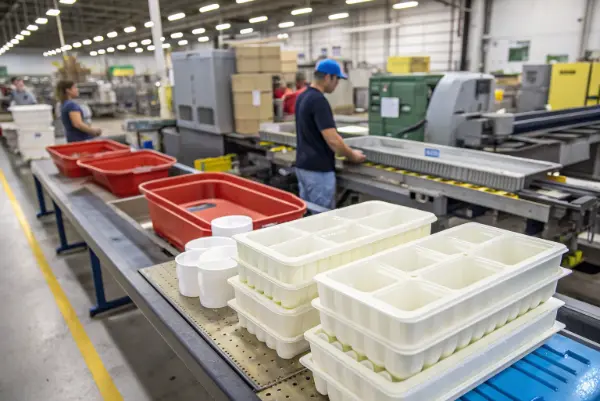
Let us talk about money. As a project manager, you have to watch every penny. The material cost is a very big part of the final price of the car part.
Raw Material Costs
Standard plastics like Polypropylene (PP) are made in huge amounts all over the world. Because of this, they are very cheap to buy. You can buy tons of it for a very low price. TPU is a special, advanced material. The chemicals needed to make it cost a lot more. So, the raw pellets of TPU will always cost more than PP or ABS. You have to pay more up front.
Molding Cycle Times
Time is money in a big factory. Traditional plastics melt easily and cool down very fast in the mold. We can make a hard part every few seconds. TPU is sticky when it gets hot. It needs much more time to cool down and take its final shape inside the mold. This longer cycle time means we make fewer parts in a single day.
Cost Comparison Table
| Cost Factor | TPU | Traditional Plastics |
|---|---|---|
| Raw Material Price | High | Low |
| Tooling/Mold Cost | Medium to High | Low to Medium |
| Production Speed | Slower | Very Fast |
| Overall Part Cost | Expensive | Very Cheap |
If you are making a hidden part under the seat, do not spend money on TPU. Use cheap traditional plastic. But if you are making a luxury gear shift knob, the extra cost of TPU is totally worth it. It gives the driver a premium feel that matches the high price of the car.
How Does Molding Performance Differ Between These Materials?
Sticky materials can ruin a great mold design. Parts get stuck, and the machine has to stop working. Understanding how these plastics flow and cool helps you design perfect molds that run without any stress.
Traditional plastics flow easily into molds and shrink very little, making them perfect for large, complex shapes. TPU is thicker when melted and can stick to the mold walls, requiring special mold coatings and exact temperature control to release the part safely without stretching or warping it.
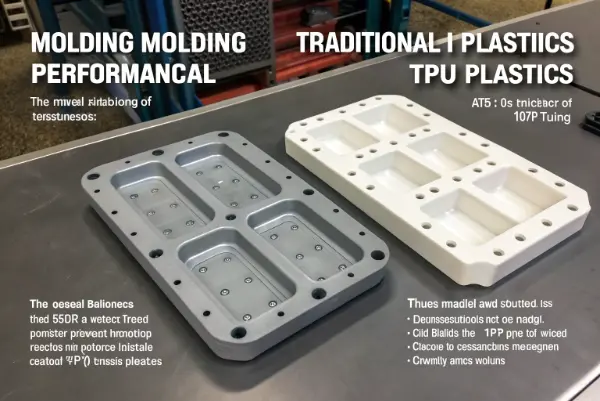
At CavityMold, we live and breathe injection molding. How a plastic acts inside a hot steel mold is everything to us. It changes how we build the tools.
Flow and Shrinkage
When traditional plastic melts, it flows just like water. It easily fills up all the tiny corners of a mold. When it cools, it shrinks just a little bit. This makes it very easy to predict the final size. TPU is very different. When melted, it flows more like thick honey. It needs much more pressure to fill the mold fully. When TPU cools, it shrinks more than rigid plastics. We have to design the mold slightly larger to account for this big shrinkage.
Releasing the Part
Taking a hard plastic part out of a mold is easy. Metal pins push it out, and it pops right off into a box. Because TPU is soft and rubbery, it likes to hold onto the warm metal. If the pins push too hard, they can stretch or poke holes right through the soft TPU part.
Molding Differences Table
| Molding Feature | TPU | Traditional Plastics |
|---|---|---|
| Melt Flow | Thick (like honey) | Thin (like water) |
| Shrinkage Rate | Higher | Lower |
| Ejection Difficulty | Hard (can stick) | Easy (pops right out) |
| Temperature Control | Must be exact | Very forgiving |
We fix this by using special coatings on our molds. We also add more cooling lines inside the steel. This drops the temperature fast so the TPU gets firm enough to push out safely. We have spent years learning these tricks so your parts come out right every single time.
Why Is Eco-Friendliness Important for Automotive Interiors?
Toxic plastics hurt the earth and make cars smell bad inside. This makes buyers sick and turns them away from your brand. Using safe, green materials protects the planet and keeps drivers healthy and happy.
Eco-friendliness matters because clean materials do not release bad smells or harmful gases into the closed car cabin. TPU is often safer and easier to recycle without losing its quality compared to some older traditional plastics like PVC, making it a better choice for modern, green car designs.
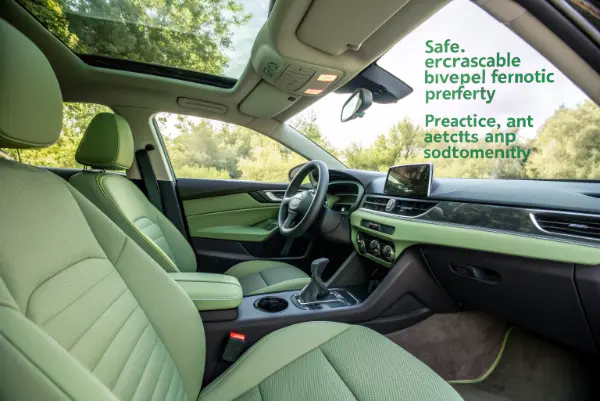
When you buy a brand new car, you notice the famous "new car smell". Sometimes, that smell is actually bad chemicals leaking from cheap plastics. This is bad for your lungs and health.
Safe Air Inside the Car
As a project manager, you want to make safe, healthy products. TPU is a very stable plastic. It does not leak harmful gases into the hot car cabin. Families with children want to know the air inside their car is clean. Many older traditional plastics, especially PVC, have a bad reputation. They can release toxins when the car gets very hot in the summer sun. This is why many smart car makers are moving away from them today.
Recycling and the Earth
We all want to keep our planet clean for the future. When a car is old and goes to the junkyard, what happens to all the plastic? TPU is a true thermoplastic. This means you can melt it down again and again. You can make brand new parts from old TPU parts easily. Some traditional plastics are very hard to recycle. They end up sitting in the trash forever.
Eco-Friendly Table
| Green Feature | TPU | Traditional Plastics (like PVC) |
|---|---|---|
| Off-Gassing (Smells) | Very low | Can be high |
| Health Safety | Very safe | Sometimes risky |
| Recyclability | Easy to melt and reuse | Can be hard to reuse |
| Earth Impact | Good | Poor |
I always tell my clients to think about the long future. Using green materials like TPU might cost a little bit more money today. But it builds a very strong, trusted brand. People love companies that care about the earth and their families. At CavityMold, we fully support using clean and safe materials for all your molding projects.
Conclusion
Choosing between TPU and traditional plastics depends on your budget and the part’s job. TPU gives a premium, soft, and safe touch for luxury interiors. Traditional plastics give strong, cheap solutions for hidden parts. Pick the one that fits your exact project needs best.