
Key takeaway: Injection molding supplier selection should go beyond price and location to compare technical fit, mold ownership, quality evidence, lead time, capacity, risk, and lifecycle cost.

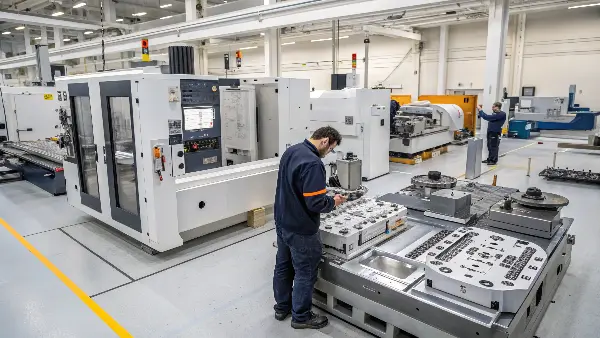
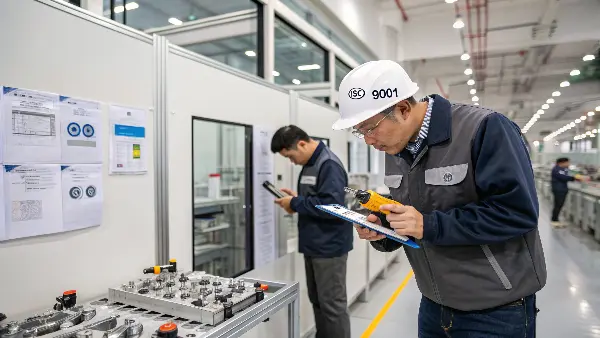

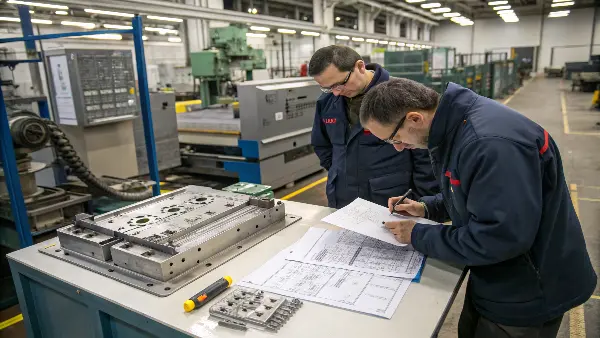
Use a weighted selection matrix
Price is easy to compare and easy to overvalue. Score the criteria that affect approved-part cost and continuity: DFM quality, mold design and ownership, material control, machine and tool fit, inspection, traceability, capacity, lead time, communication, logistics, risk, and lifecycle service.
Make assumptions explicit. A quote may exclude validation, inspection, packaging, maintenance, freight, engineering changes, secondary operations, or corrective work. Normalize those items before comparing suppliers.
- Weight criteria according to part and business risk.
- Record evidence and confidence for each score.
- Separate confirmed facts from supplier commitments.
Check ownership and continuity
Clarify who owns the mold, CAD, drawings, inspection records, approved samples, and process data. Define access, revision control, maintenance responsibility, spare parts, and what happens if volume, location, or supplier changes. These terms can be more important than a small initial price difference.
Review capacity at launch and at peak demand, including bottlenecks such as tooling, inspection, materials, or secondary operations. A supplier needs a practical continuity plan, not only installed capacity.
- Document tool custody and release conditions.
- Review backup, maintenance, and recovery plans.
- Check logistics routes, packaging, and inventory assumptions.
Make the decision auditable
Keep the matrix, quotations, sample results, inspection evidence, assumptions, approvals, and open risks together. A clear record helps purchasing and engineering revisit the decision when the design, volume, or supply environment changes.
- Set a requalification trigger for material, tool, or process changes.
- Use pilot results to update risk scores.
- Obtain approval from both technical and commercial owners.
Frequently Asked Questions
Why is location not enough to choose a supplier?
Location affects logistics and communication, but technical fit, quality evidence, capacity, risk, ownership, and lifecycle cost can determine the real result.
What should be normalized between quotes?
Tooling scope, validation, inspection, material, packaging, freight, secondary operations, maintenance, engineering changes, and other exclusions.
What ownership items need to be written down?
Mold, CAD, drawings, data, samples, inspection records, revisions, maintenance, custody, and change-approval responsibilities.
Need a part-specific review? Share the 3D model, resin or grade, annual volume, finish requirement, tolerance concerns, and target launch date through our contact page. We can then align DFM, mold design, process, inspection, and delivery assumptions.
Sources and further reading
- Protolabs: Procurement documentation
- Protolabs: Approved vendor list
- Crescent Industries: Selecting a qualified molding partner
Related Cavity Mold Services
For a connected review of design, tooling, molding, and launch requirements, see our engineering service, mold-making service, injection molding service, or contact our team.
Build a risk-weighted supplier scorecard
The lowest quoted unit price can be the wrong choice when engineering gaps, tooling ownership, quality evidence, logistics, or change response create more downstream risk. Score what the program actually needs to prove.
| Decision | Evidence to review | Boundary |
|---|---|---|
| Technical fit | Material, geometry, mold architecture, machine route, inspection, and known risks. | Do not award a scope that the supplier has not technically bounded. |
| Commercial clarity | Tool price, piece price, assumptions, exclusions, payment, packaging, and change treatment. | Compare like-for-like scope before comparing totals. |
| Quality evidence | CTQs, gauges, sample identity, inspection records, trial gates, and disposition. | Certificates alone do not prove part-level control. |
| Lifecycle support | Maintenance, spare parts, corrective work, response time, and handover records. | The tool and process must remain supportable after launch. |
Supplier comparison sequence
- Normalize each quotation into the same scope.
- Mark evidence as supplied, partial, or unverified.
- Weight criteria by program risk and buyer consequence.
- Make open evidence a contract or validation condition.
Use structured RFQ inputs and ask engineering to review the highest-risk assumptions before award.