
Injection Mold Polishing: From EDM Surface to Mirror Finish
Key takeaway: Injection mold polishing from EDM surface to mirror finish requires steel preparation, controlled abrasive sequence, edge protection, inspection, and molded-part validation.
Define the finish before polishing
A polished surface needs a named finish standard, cosmetic zone, viewing condition, and molded-part acceptance criterion. SPI-style classifications and similar finish references describe mold surfaces, but the product still needs a part-level requirement that accounts for resin, color, texture, draft, and geometry.
Confirm steel grade, heat treatment, EDM condition, machining marks, shutoffs, edges, ribs, and access before starting. Polishing cannot reliably rescue a surface that has not been prepared or that cannot be reached without changing geometry.
- Mark cosmetic and functional surfaces on the drawing.
- Specify inspection lighting, magnification, or roughness method where relevant.
- Agree how a molded sample will be judged.
Move through a controlled abrasive sequence
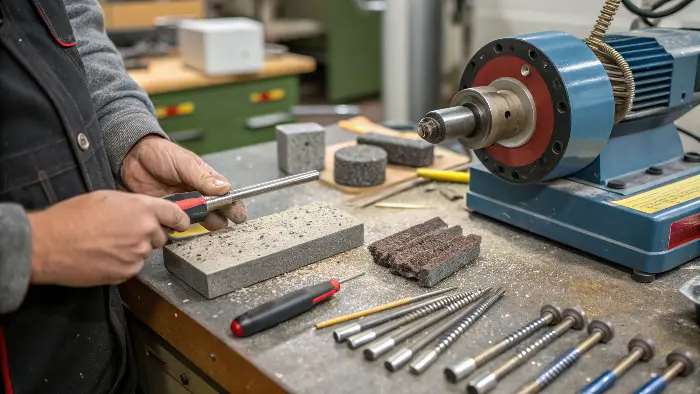
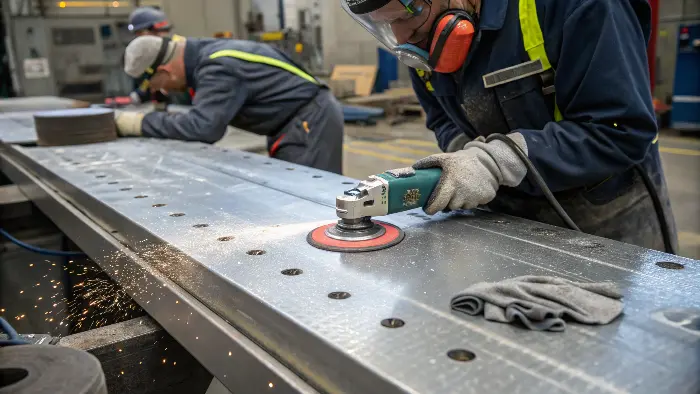
Remove EDM and machining evidence progressively rather than skipping steps. Keep tools and abrasives appropriate to the steel and geometry, protect parting lines and sharp edges, and clean the surface between stages. The sequence should be recorded so a second operator can reproduce the work.
Deep ribs, narrow slots, corners, and shutoffs often need different access and protection strategies. Treat them as separate risk areas instead of assuming the broad cavity finish represents the whole tool.
- Inspect after each meaningful stage.
- Protect edges, vents, shutoffs, and engraved details.
- Keep abrasive contamination from crossing finish levels.
Validate with the molded part
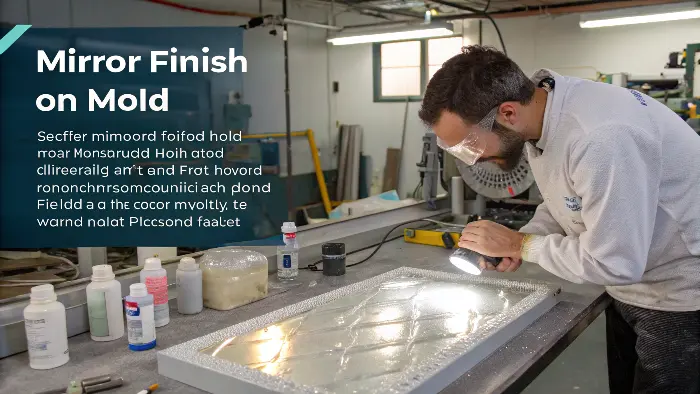
A final steel inspection is necessary but not sufficient. Mold representative material and color, then verify gloss, haze, flow marks, texture transfer, dimensions, release, and function under the agreed conditions. Record any deviation and its effect on the release decision.
- Keep the finish standard linked to the mold revision.
- Compare steel and molded-part samples together.
- Use corrective polishing only within an approved steel-safe plan.
Frequently Asked Questions
What should be specified for a mirror finish?
Name the mold-finish standard, cosmetic zone, inspection condition, steel and geometry assumptions, and the molded-part acceptance criterion.
Can polishing remove every EDM mark?
Only when the surface is accessible and there is enough steel and a controlled sequence; deep or sharp features can impose realistic limits.
Why validate on molded parts?
The resin, color, flow, texture, and process determine how the mold surface appears in the finished product.
Need a part-specific review? Share the 3D model, resin or grade, annual volume, finish requirement, tolerance concerns, and target launch date through our contact page. We can then align DFM, mold design, process, inspection, and delivery assumptions.
Sources and further reading
- Autodesk: Mold surface classifications
- Protolabs: Surface finishes
- Plastic Technology Alliance: Injection mold surface finish
Related Cavity Mold Services
For a connected review of design, tooling, molding, and launch requirements, see our engineering service, mold-making service, injection molding service, or contact our team.