
Core and Cavity Design for Mold Performance
Key takeaway: Core and cavity design affects mold performance through balance, parting, steel support, cooling, venting, ejection, maintenance access, and validation.
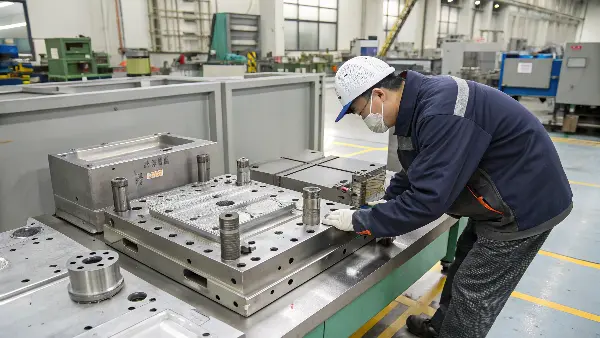
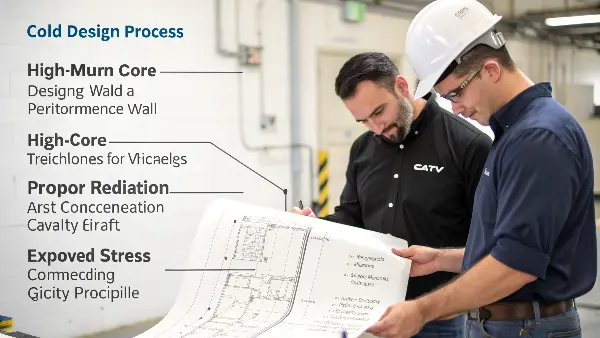

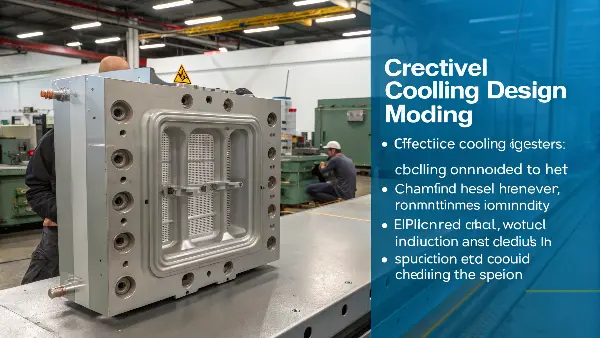
Balance the mold around the part
Performance is more than whether the cavity can be split. The core and cavity must support the intended flow, cooling, venting, ejection, steel strength, parting-line sealing, and maintenance access. A split that looks clean in CAD can still produce uneven cooling, flash, difficult release, or inaccessible polish areas.
Review the split with manufacturing and inspection together. Confirm that critical dimensions have stable datums and that the tool can be measured and corrected without removing more steel than intended.
- Check parting-line land and shutoff quality.
- Keep critical features supported by adequate steel.
- Provide access for cooling, venting, ejection, polishing, and measurement.
Design for repeatability and maintenance
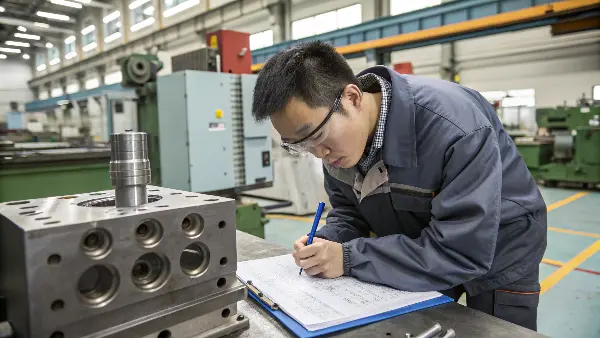
Cooling channels, vents, ejection features, slides, inserts, and wear areas should be positioned with the service plan in mind. Material, filler, pressure, cycle, and cosmetic requirements can all change the maintenance burden. Specify what is inspected after a defined number of cycles or when a quality trend changes.
The mold record should include steel, surface finish, replaceable components, spare strategy, and approved correction zones. This turns performance into a maintainable system rather than a one-time trial result.
- Document inspection and preventive-maintenance points.
- Use replaceable steel where wear or correction risk is credible.
- Tie maintenance findings to part-quality trends.
Validate the complete system
Use first trials to verify fill, dimensions, appearance, ejection, cooling balance, cycle, and mold protection. If a design change is needed, record the reason and the effect on the part and process. A clear validation package protects performance through future operators and revisions.
- Compare cavity results rather than relying only on averages.
- Check parting, vents, gates, and ejection after trials.
- Release the tool only with an agreed baseline and reaction plan.
Frequently Asked Questions
What makes a core and cavity design perform well?
A coordinated split, steel support, cooling, venting, ejection, inspection, maintenance access, and validation plan.
Why include maintenance during initial design?
Access, replaceable steel, vents, cooling, and wear areas influence whether the mold can preserve quality over its production life.
What should first trials verify?
Fill and pack behavior, dimensions, appearance, ejection, cooling balance, cycle, mold protection, and the condition of parting and functional surfaces.
Need a part-specific review? Share the 3D model, resin or grade, annual volume, finish requirement, tolerance concerns, and target launch date through our contact page. We can then align DFM, mold design, process, inspection, and delivery assumptions.
Sources and further reading
- Autodesk Inventor: Core and cavity feature
- Protolabs: Injection molding guide
- Protolabs: Designing for moldability with complex features
Related Cavity Mold Services
For a connected review of design, tooling, molding, and launch requirements, see our engineering service, mold-making service, injection molding service, or contact our team.