
Key takeaway: Automated insert molding should be evaluated through loading repeatability, part presentation, cycle time, vision, safety, changeover, inspection, maintenance, and measured ROI.
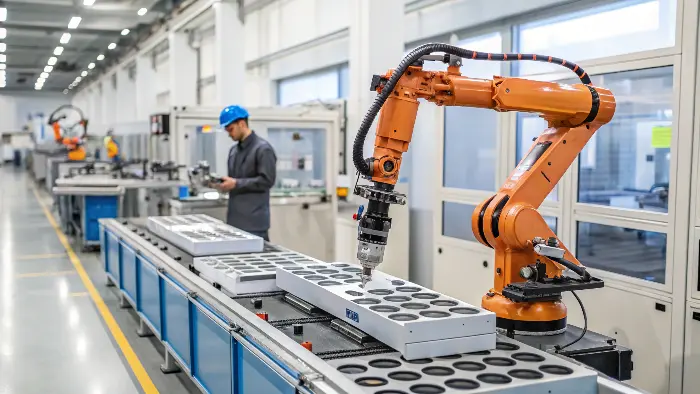
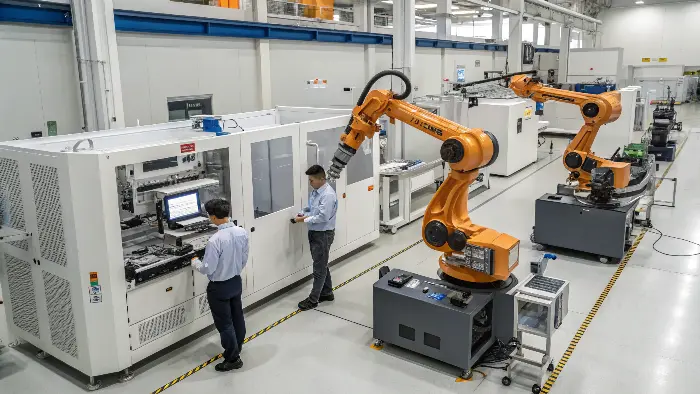
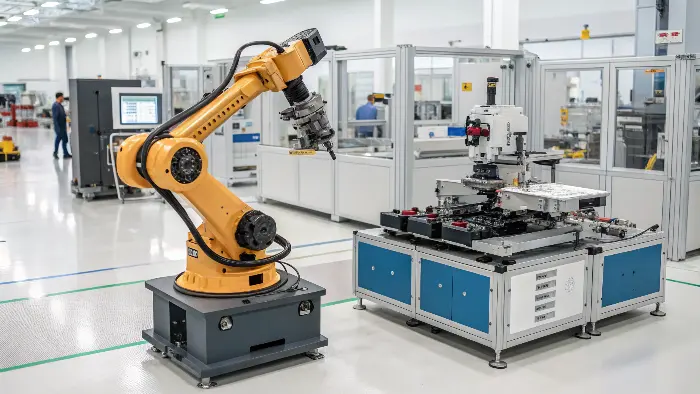
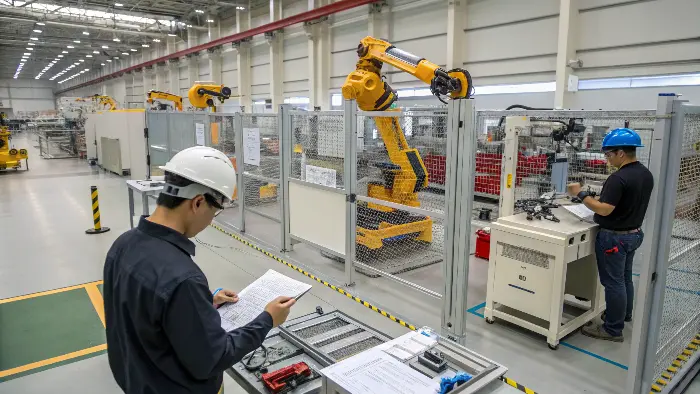
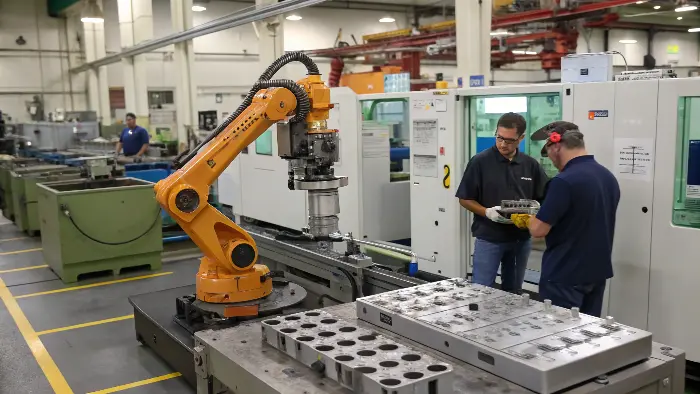
Start with the process, not the robot
Automation is valuable when it controls a repeatable bottleneck or quality risk. First map insert supply, orientation, loading, mold close, injection, ejection, inspection, packing, changeover, and fault recovery. A robot cannot compensate for unstable inserts, unclear datums, or a tool that does not support repeatable loading.
Build a realistic ROI model
Include equipment, end-of-arm tooling, nests, sensors, vision, guarding, integration, validation, maintenance, spare parts, training, changeover, and downtime. Compare the baseline and automated cycle, labor content, scrap, rework, safety exposure, uptime, and usable output—not just theoretical cycle time.
Use a pilot with production-representative inserts and a defined acceptance plan. Measure pick success, misload detection, cycle distribution, recovery time, first-pass yield, and changeover time before scaling the cell.
Implementation controls
Use poka-yoke, presence and position sensing, safe recovery, recipe control, access control, and traceable alarm handling. Define who owns the robot program, mold, feeder, vision recipes, and quality records. A good automation design also has a practical manual or maintenance mode.
Frequently Asked Questions
When does automated insert molding usually make sense?
It is most attractive when volume, labor content, ergonomic risk, quality variation, or takt requirements justify the equipment and the insert presentation can be made repeatable.
What costs are commonly missed in an ROI calculation?
Integration, nests, end-of-arm tooling, sensors, guarding, vision, validation, changeover, maintenance, training, downtime, spare parts, and fault recovery are often missed.
How should an automation pilot be judged?
Measure usable output, cycle distribution, first-pass yield, insert placement, detection of misloads, changeover, recovery, uptime, safety, and maintenance—not only robot speed.
Related Cavity Mold Services
Engineering and DFM; Mold making; Plastic injection molding; Contact Cavity Mold.
Have a drawing, resin, finish, volume, or quality requirement to review? Contact Cavity Mold for a project discussion.
Reference material
Automate only after the insert process is stable
Insert molding automation can improve repeatability and ergonomics, but it also exposes variation in insert supply, orientation, nest fit, machine timing, sensing, and quality release. Start with a stable manual process and measurable failure modes.
| Decision | Evidence to review | Boundary |
|---|---|---|
| Baseline | Measure manual load time, errors, defects, changeovers, and containment. | Use actual data from the intended part family. |
| Automation scope | Separate loading, unloading, inspection, packaging, and material handling. | Do not hide a difficult quality step inside a labor estimate. |
| Business case | Include cell, fixtures, integration, maintenance, training, downtime, and fallback. | A payback result is only as sound as the assumptions. |
Readiness checks
- Insert presentation, orientation, tolerance, cleanliness, and replenishment.
- Nesting, retention, presence sensing, wrong-part detection, and recovery from a failed load.
- Mold and machine timing, robot access, safety interlocks, cycle balance, and buffer logic.
- Part inspection, traceability, reject handling, and manual fallback.
Review the insert and part with engineering and define the automation boundary before requesting a scoped quote.