
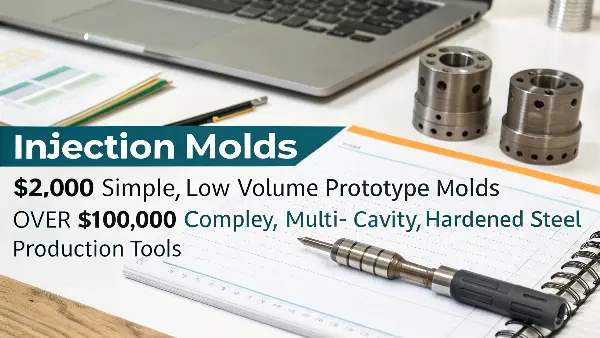
Injection mold pricing is determined by part geometry, steel, cavity count, mechanisms, surface finish, validation, production volume, and service requirements. A transparent pricing guide should explain those drivers without promising a universal price or hiding the assumptions behind a low quote.
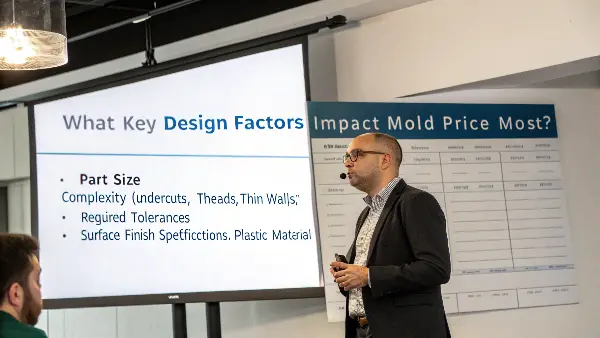
What changes the mold price?
- Part size, wall thickness, draft, undercuts, slides, lifters, threads, inserts, tolerances, and cosmetic surfaces.
- Cavity count, mold base, steel, heat treatment, gates, runners, cooling, vents, ejectors, and standard components.
- CNC, EDM, grinding, polishing, texture, fitting, assembly, inspection, samples, trials, and corrections.
- Annual volume, machine fit, cycle-time target, maintenance access, spare parts, ownership, freight, and data delivery.
How to request a transparent quote
Send the same CAD, drawing, resin, color, texture, volume, tolerance, sample requirement, and delivery point to each supplier. Ask for inclusions, exclusions, assumptions, payment stages, correction limits, acceptance criteria, and change-order triggers. Keep tooling and part-production pricing separate so you can compare total economics.
What the buyer should receive
A production-ready program should include approved mold data, material and steel records where required, trial samples, dimensional evidence, maintenance information, spare-part recommendations, and clear ownership terms. The lowest price is not transparent if these deliverables are missing.
Plan the next step
Share your part, resin, annual volume, critical dimensions, finish, and timing with the Cavity Mold team through our contact page. We can review the manufacturing risks and recommend a practical next step.
Related Cavity Mold resources
- Injection mold making services
- Injection mold engineering services
- Plastic injection molding services
- Contact Cavity Mold
Technical references
- Protolabs Network injection molding cost guide
- NICE Rapid line-by-line cost breakdown
- Protolabs design-for-moldability toolkit
Define the assumptions before asking for a price
A mold quotation is only as reliable as the information behind it. If the supplier must guess resin grade, revision, cavity requirement, surface, inspection, or ownership, the headline price is not yet a comparable planning number.
| Decision point | Check | Evidence or boundary |
|---|---|---|
| Part data | State CAD revision, drawing, CTQs, tolerances, datum scheme, and cosmetic zones. | Flag features still under design review. |
| Material | State exact grade or approved family, color, additives, reinforcement, and service environment. | Define grade approval and substitute rules. |
| Tool requirement | State volume, ramp, cavity intent, machine constraints, cycle objective, and maintenance expectation. | Separate forecast from committed volume. |
| Acceptance | State samples, measurement method, appearance standard, trial stages, and correction boundary. | Name the final approval owner. |
| Commercial | State tool ownership, delivery point, freight, spares, changes, and support. | List optional items separately. |
Prepare the RFQ information sheet
- Freeze CAD and material inputs.
- Convert unresolved choices into explicit questions.
- Ask suppliers to mark included, excluded, or optional.
- Compare proposals only after the assumptions are aligned.
Use an engineering input review before the quote form.