
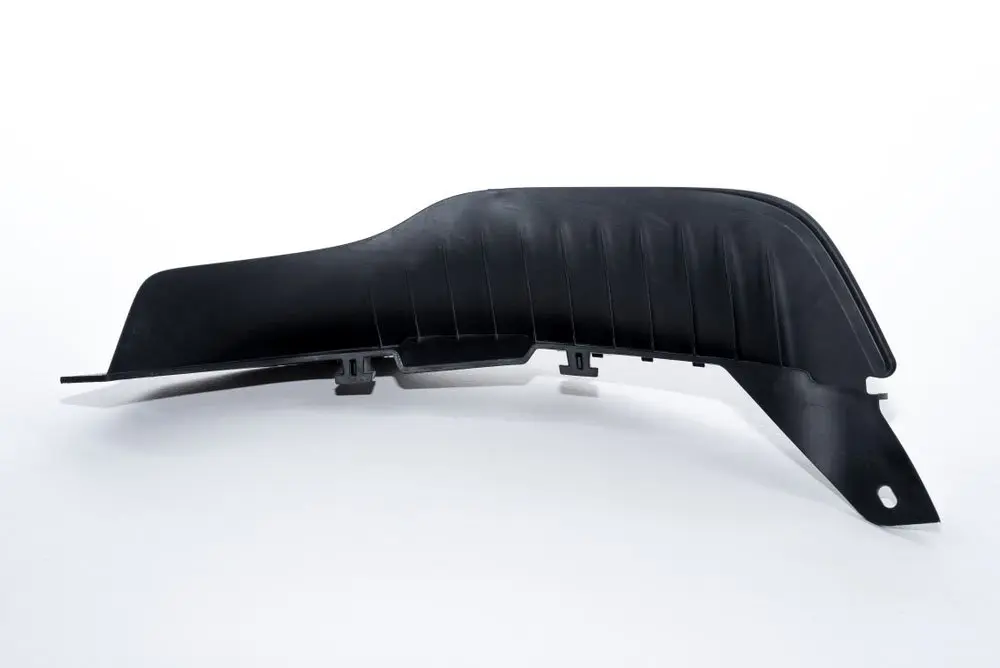
TPE injection molding combines rubber-like flexibility with thermoplastic processing. The practical goal is not simply to fill a soft material: it is to select a grade that meets hardness, compression set, chemical, temperature, and bonding requirements, then design the substrate, gate, vents, cooling, and ejection around that grade. TPE families are not interchangeable, so the exact supplier data sheet controls processing conditions.

What makes TPE injection molding different?
Thermoplastic elastomers can be heated, molded, cooled, and reprocessed within the limits of the selected formulation. This makes them suitable for soft-touch parts, seals, grips, gaskets, vibration-management components, and overmolded assemblies. Unlike a rigid resin, a soft TPE can deform during ejection, recover after molding, and require different support at the gate and parting line.
Start by distinguishing the material family—SBC/TPS, TPU, TPV, TPO, COPE, or another formulation—and then specify hardness, color, reinforcement, surface feel, and end-use environment. Avient’s GLS TPE injection molding guide covers part design, mold design, processing, and troubleshooting. It is a better starting point than copying a temperature from a generic TPE article.

Part design for stable TPE molding
Wall thickness and flow length
Keep the nominal wall as consistent as the product function permits. Thin sections, long flow lengths, and abrupt thickness changes can create short shots, weld lines, hesitation marks, or non-uniform softness. Use gradual transitions and radii. If a rigid substrate is being overmolded, leave enough land and support for the TPE to flow without lifting, folding, or separating from the substrate.
Undercuts, draft, and recovery
TPE can sometimes release over small undercuts because it flexes, but that is a design decision, not a free feature. The part must survive deformation without tearing, whitening, or taking a permanent set. Provide draft where possible, support thin lips, and confirm ejection force with a trial. Deep undercuts may need slides, lifters, collapsible features, or a different part split.
Material compatibility for overmolding
For a two-material part, the bond may be chemical, mechanical, or a combination. The selected TPE may bond well to one substrate family and poorly to another, even when the shapes look identical. Check the supplier’s compatibility chart, substrate texture, cleanliness, temperature history, and expected service environment. Mechanical locks such as holes, undercuts, ribs, or wraparound features can add security when chemical adhesion alone is not sufficient.
Do not claim a permanent bond from a visual trial. Define a test method—peel, pull, torque, flex, leak, or environmental aging—based on the product function. The test should be repeated across the process window and material lots before production release.

Mold and process considerations
- Gate: use a gate that fills the soft material without a sharp restriction or excessive vestige. Edge, tab, film, and hot-runner options should be selected with the grade and appearance in mind.
- Venting: provide effective venting at the end of fill and around inserts, ribs, and texture. Trapped air can cause burns, short shots, or weak knit lines.
- Cooling: support uniform mold temperature so the skin does not freeze in one region while another remains too soft to pack or eject.
- Ejection: spread the load over enough area and avoid ejector pins that create permanent dents or distortion.
- Color and contamination: plan purge and material changeover because soft elastomers can remain in gates, hot runners, and dead spots.
Process development should record melt and mold temperature, injection speed profile, pack or hold strategy, screw recovery, cushion, cooling time, and part weight. The best setting is the one that creates a repeatable part with a usable process window, not the one that produces a single attractive sample.
TPE quality checklist for buyers
| Requirement | What to define |
|---|---|
| Feel and mechanics | Hardness method, compression set, rebound, tensile or tear requirement, and acceptable surface feel |
| Environment | Temperature range, oils, cleaners, UV, humidity, electrical exposure, and expected flex cycles |
| Bonding | Substrate grade, surface preparation, mechanical lock, bond test, and failure mode |
| Appearance | Color, gloss or texture, gate location, knit-line limits, flash limit, and parting-line visibility |
For a complete program, connect the material decision to Cavity Mold’s engineering review, mold-making capability, and injection molding service. If the part uses a rigid substrate, the related overmolding guide can help frame the design review. Contact Cavity Mold with the TPE grade, substrate, drawing, and test requirements for an RFQ.