
Key takeaway: PET preform injection molds must coordinate neck finish, gate, wall distribution, cooling, cavity balance, PET drying, cycle, clarity, inspection, and downstream blowing.

What a PET preform mold must control
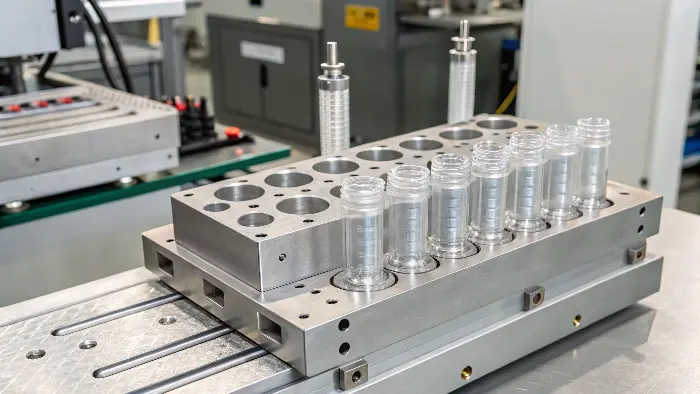
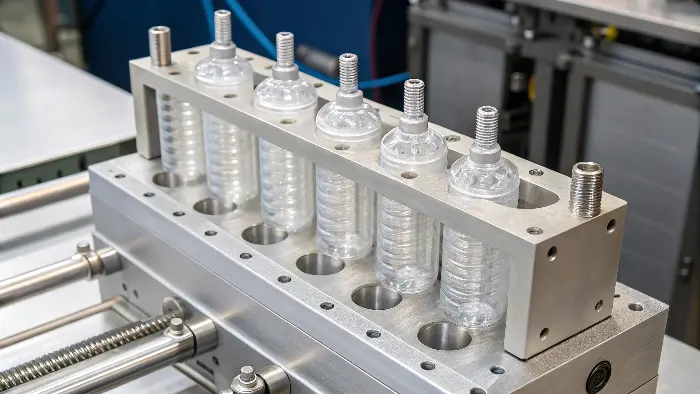
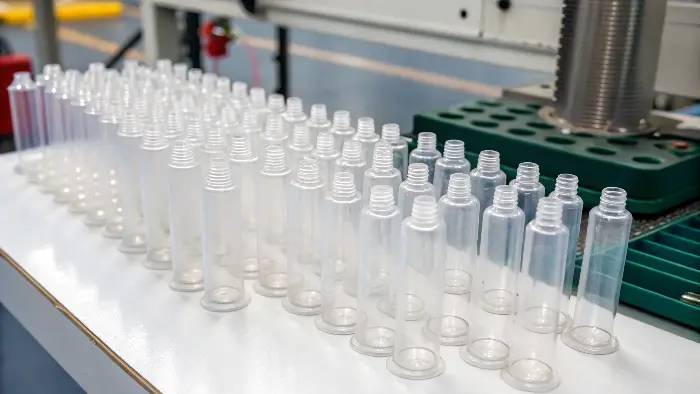
A preform is not the final bottle; it is an intermediate geometry that will be reheated and stretch-blown. The mold therefore needs to control neck finish, gate quality, wall distribution, clarity, dimensions, cooling, and repeatability across cavities so downstream blowing is stable.
Design and process priorities
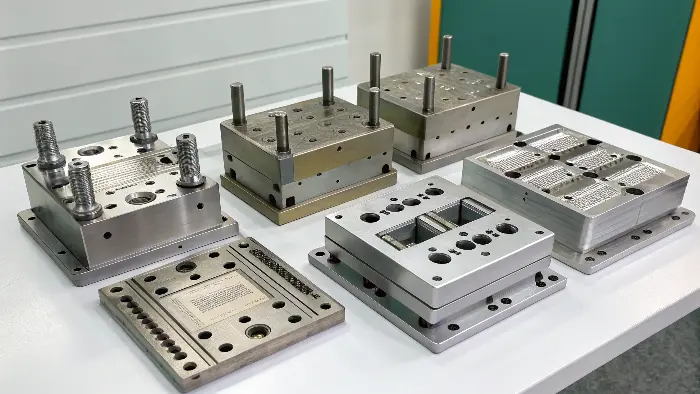
Review cavity balance, runner and gate concept, neck and thread details, core and cavity cooling, ejection, demolding, and inspection access. PET drying and melt handling are critical because moisture and thermal history can affect material behavior and part quality.
Use representative trials to check weight, wall thickness, gate, neck dimensions, haze or appearance, cooling, cycle, and cavity-to-cavity variation. Connect preform inspection to the requirements of the downstream blowing process instead of judging only by a visual sample.
Plan the complete production system
Account for mold, machine, dryer, material handling, cooling, post-cooling or handling, inspection, packaging, and maintenance. Validate start-up stabilization and define how cavity imbalance, gate wear, moisture, or temperature drift will be detected.
Frequently Asked Questions
What is the most critical feature of a PET preform?
The answer depends on the bottle, but neck finish, gate, wall distribution, material drying, cooling, clarity, and cavity balance commonly have direct downstream impact.
Why is PET drying important?
Moisture and thermal history can affect PET processing and part quality. Drying requirements should follow the resin supplier’s specification and be verified in the process control plan.
How should PET preforms be approved?
Check weight, neck and gate dimensions, wall distribution, appearance or haze, cavity-to-cavity variation, cooling, cycle, and downstream blowing performance against agreed requirements.
Related Cavity Mold Services
Engineering and DFM; Mold making; Plastic injection molding; Contact Cavity Mold.
Have a drawing, resin, finish, volume, or quality requirement to review? Contact Cavity Mold for a project discussion.
Reference material
Design the preform for the next process
A PET preform is not the final package. Injection mold balance, gate quality, cooling, wall distribution, material condition, and thermal history influence how the preform stretches into the final container.
| Decision | Evidence to review | Boundary |
|---|---|---|
| Preform geometry | Define weight, length, wall distribution, neck finish, gate, and downstream stretch ratio. | A preform that looks acceptable can still blow unevenly. |
| Material condition | Control resin identity, drying or handling requirements, IV-related evidence, contamination, and residence. | Use the selected grade supplier data and the actual process history. |
| Mold and hot runner | Review cavity balance, gate cooling, hot-runner behavior, venting, and cycle stability. | Cavity-to-cavity variation can become container variation. |
| Downstream validation | Inspect preform and blown part, including distribution, gate, appearance, and function. | Approve the intermediate and final part together. |
Preform development path
- Freeze bottle and preform requirements.
- Model or trial the highest-risk wall and gate regions.
- Measure cavity balance and preform evidence.
- Validate stretch-blow output before final release.
Use engineering to connect preform and bottle requirements before the preform-tool RFQ.