
Injection Molding Back Pressure: Purpose, Settings, and Troubleshooting
Answer in one sentence: Injection molding back pressure opposes screw return and affects melt mixing, plasticization, dosing repeatability, shear, residence time, and fiber or heat-sensitive material risk.
Engineering scope: This guide separates design assumptions, process controls, inspection evidence, and buyer decisions so the recommendation can be verified on the actual resin, mold, machine, and production requirement.
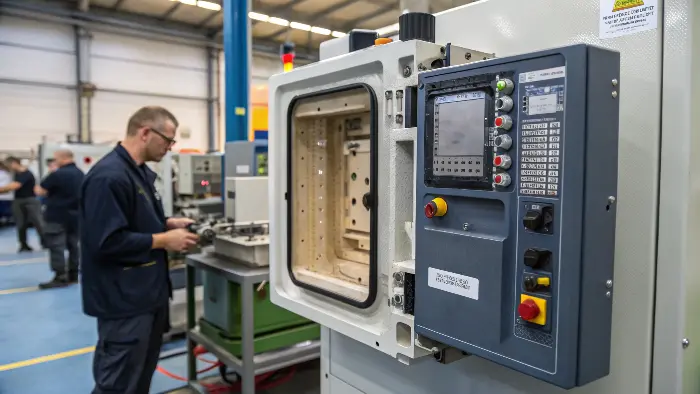
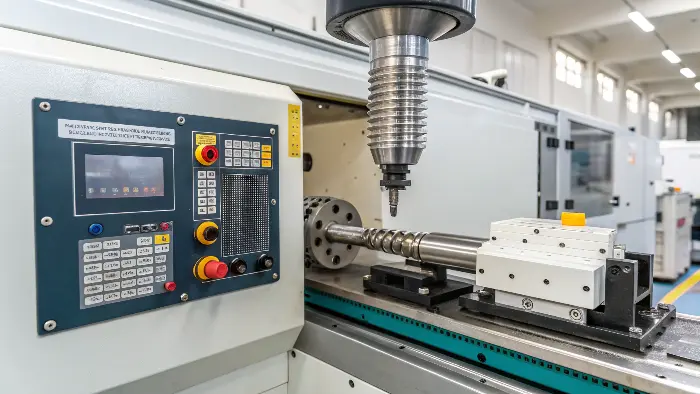
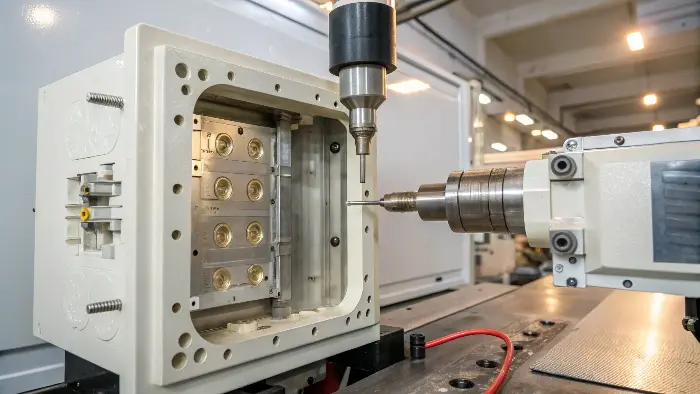
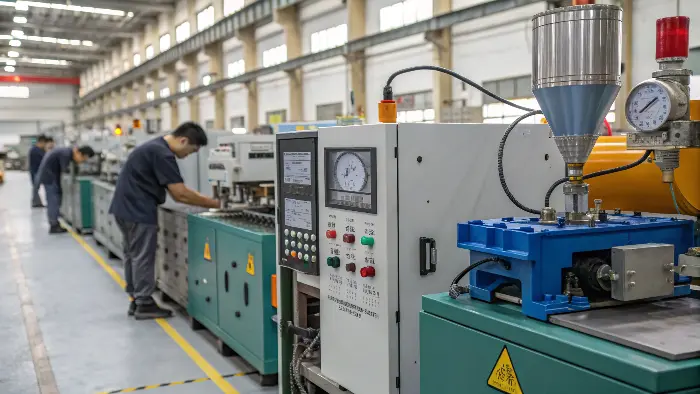
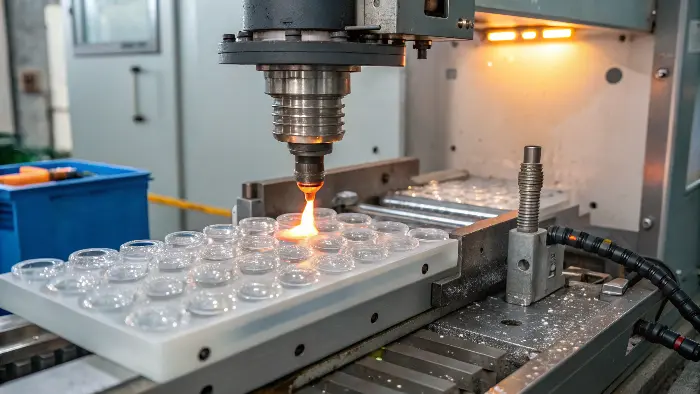
The short answer: what back pressure does
Back pressure is the pressure opposing the screw as it returns during plasticizing. Increasing it makes screw recovery harder, which can increase shear heating and mixing and improve melt uniformity when the material and machine can tolerate it.
It is not the same as injection pressure or holding pressure. Back pressure acts during screw recovery; injection and pack pressure act while the melt is filling and packing the cavity. Confusing these settings can make troubleshooting less precise.
How to set it without guessing
Start with the resin supplier’s processing window and the machine’s documented limits, then establish a baseline using shot weight, recovery time, melt temperature, cushion, screw position repeatability, appearance, and part function. Adjust one variable at a time and record the resulting process window.
A useful setting is the lowest level that gives stable plasticization and dosing for the specified material. The optimum can change with screw design, shot size, colorant, filler, regrind, residence time, and cycle target.
- Check shot-weight and cushion repeatability across consecutive cycles.
- Measure actual melt or nozzle temperature when the material is shear- or heat-sensitive.
- Watch recovery time, screw torque, unmelted material, color dispersion, fibers, black specks, and degradation.
Symptoms of too little or too much
Too little back pressure may appear as poor mixing, unmelted pellets, inconsistent shot weight, color streaks, or unstable recovery. Too much can increase melt temperature, residence-time exposure, screw torque, fiber breakage, degradation, or cycle time.
Do not diagnose from appearance alone. Compare material lot, drying, screw condition, purge history, temperature profile, recovery time, and part data before changing the setting. A short designed trial is more reliable than repeated large adjustments.
Validation evidence for production release
For a critical part, document the selected range, not only the nominal value. Confirm dimensional and functional results at the low and high ends of the permitted window, and define the reaction plan if recovery time, cushion, melt temperature, or shot weight drifts.
Frequently Asked Questions
Is back pressure the same as injection pressure?
No. Back pressure resists screw return during plasticizing; injection and pack pressure control filling and packing after the screw moves forward.
Why increase back pressure?
It can improve melt mixing and plasticization, but it also increases shear and thermal exposure. Use only as much as needed for stable, acceptable melt quality.
Can back pressure damage glass-filled material?
Excessive shear or residence time can contribute to fiber damage or material degradation. Confirm the supplier’s limits and validate strength, appearance, and shot repeatability.
What should be monitored when changing back pressure?
Monitor shot weight, cushion, recovery time, screw torque, melt temperature, color or dispersion, material degradation, dimensions, and part function.
Related Cavity Mold Services
Engineering and DFM; Mold making; Plastic injection molding; Contact Cavity Mold.
For a drawing, resin, tolerance, finish, cavity-count, or process-window review, contact Cavity Mold.