
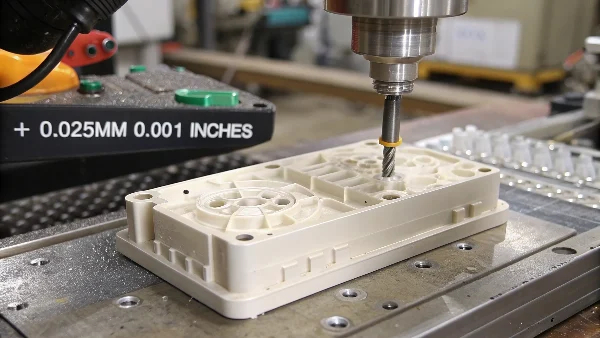
Precision mold design starts with tolerance allocation, datum strategy, shrinkage, steel-safe decisions, cooling, ejection, inspection, and a controlled correction plan. The phrase “micron-level accuracy” should describe a validated requirement for a specific feature, not a blanket promise for every molded dimension.
Design the tolerance chain
- Identify functional features and assign realistic part tolerances based on size, material, geometry, and use.
- Choose datums that can be reproduced in mold machining, part inspection, and assembly.
- Account for resin shrinkage, orientation, thermal movement, insert fit, and steel-safe allowance.
- Balance gates, runners, cooling, vents, and ejection to reduce distortion and cavity-to-cavity variation.
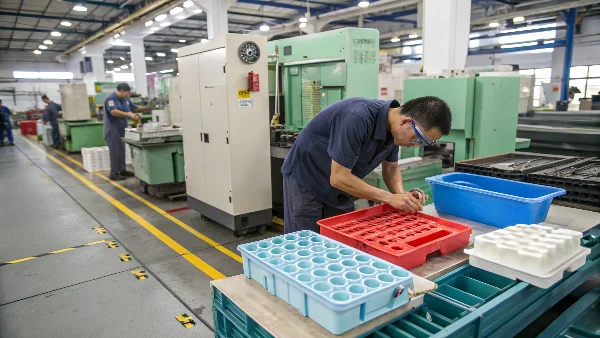
- Plan inspection fixtures, measurement access, surface finish, and correction steps before steel release.
Accuracy is more than machining
Machining precision must be carried through fitting, mold temperature, process stability, measurement, and environmental control. A very tight steel feature can still produce a drifting part when shrinkage or process variation is not controlled.
What to request
Ask for mold design review, steel inspection, datum explanation, material shrinkage data, trial plan, dimensional report, and the rule for safe steel versus rework. Approve the requirement feature by feature.
Plan the next step
Share your part, resin, annual volume, critical dimensions, finish, and timing with the Cavity Mold team through our contact page. We can review the manufacturing risks and recommend a practical next step.
Related Cavity Mold resources
- Injection mold making services
- Injection mold engineering services
- Plastic injection molding services
- Contact Cavity Mold