
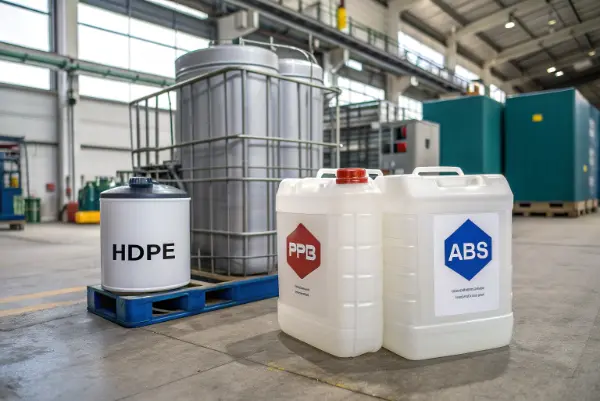
You need strong containers for your factory. Bad plastic choices cause leaks and ruined products. These mistakes cost money and time. I will show you how to pick the right plastic for your needs.
HDPE is the best overall choice for industrial containers because it offers excellent chemical resistance and survives heavy drops. PP is better if you need high heat resistance. ABS is rigid and looks good but is the worst choice for chemical storage. Choose the plastic that fits your specific needs.
You might wonder how these plastics compare in real life. Let us look closer at each material so you can stop guessing and start making good decisions.
What is stronger, HDPE or ABS plastic?
You want a container that does not break. A weak container shatters when dropped. This ruins your hard work. I will explain which plastic holds up better.
HDPE is stronger than ABS for container drops and impacts. HDPE flexes and bounces back under heavy loads. ABS is stiffer and more rigid, which makes it easier to crack when dropped. You should use HDPE for rugged industrial containers and ABS for hard outer cases.
I have seen many containers fail in the factory. People think stiff plastic means strong plastic. This is not always true. I work at CavityMold. We design many molds for these plastics. Let us break down what strength really means for your containers.
Understanding Impact Resistance
HDPE is very tough. You can drop an HDPE drum full of heavy liquid. It will probably bounce. It handles heavy loads without breaking. It has high tensile strength. This makes it perfect for heavy industrial totes. ABS is different. ABS is very hard and rigid. It feels strong in your hand. But if you drop an ABS box on a concrete floor, it might shatter. Rigid plastics do not absorb shock well. They crack instead of bending.
Handling Stress and Chemicals
Strength is also about surviving bad chemicals. HDPE wins this fight easily. HDPE holds acids and industrial liquids safely. ABS has poor chemical resistance. Bad chemicals can weaken ABS. This makes it unsafe for liquid containers. We never make chemical bottles out of ABS.
Mold Design for Strength
I design molds every day. HDPE flows well in the mold. It cools down and becomes very tough. ABS needs higher pressure in the mold. It cools into a stiff shape.
Comparing HDPE and ABS Strength
| Property | HDPE Plastic | ABS Plastic |
|---|---|---|
| Impact Resistance | Very strong, bends instead of breaking | Good, but cracks under sudden hard drops |
| Rigidity | Flexible and tough | High rigidity, feels very stiff |
| Chemical Storage | Excellent, handles tough liquids | Poor, chemicals melt or crack it |
| Best Use | Drums, chemical jugs, rugged totes | Hard cases, shiny product covers |
HDPE is clearly the winner for industrial storage. You want your boxes to survive harsh conditions. ABS looks nicer. ABS has a great surface finish. You should pick ABS if you make a computer mouse or a TV remote. You should pick HDPE if you make a bucket for factory chemicals.
Which is stronger, PP or HDPE?
Heat and heavy weight can destroy containers. Choosing the wrong plastic causes warping. Warped containers leak and cause big messes. I will help you compare PP and HDPE so you choose wisely.
HDPE has a higher tensile strength than PP, making it better for holding heavy loads without stretching. However, PP has better fatigue resistance and heat resistance. PP is stronger if your container bends often or gets hot. HDPE is stronger for heavy weights and cold drops.
My clients ask me this question all the time. Both materials are very popular in our factory. Both are easy to recycle. Both save you money. But they act differently under stress. Let us look at how they compare in daily use.
When HDPE Wins
HDPE handles cold weather very well. It stays tough in the freezer. It does not shatter easily in the cold. It also holds heavy weights better. If you stack heavy boxes, HDPE keeps its shape. However, HDPE can suffer from stress cracking over a long time. You must think about this if you store things for years. HDPE is a great moisture barrier. It keeps water out.
When PP Wins
PP is a special plastic. PP is great at bending. We call this fatigue resistance. You use PP for living hinges. Think of the flip-top cap on your shampoo bottle. That is made of PP. It bends thousands of times without breaking. HDPE would snap. PP also handles heat much better than HDPE. If you need to wash your containers in boiling water, you must use PP. HDPE will get soft and melt in high heat.
Manufacturing Differences
We mold both plastics at CavityMold. PP shrinks a lot when it cools. We must make the mold bigger to fix this. HDPE shrinks differently. I must plan the mold cooling pipes carefully for both.
Performance Breakdown
| Feature | HDPE Plastic | PP Plastic |
|---|---|---|
| Tensile Strength | Higher, handles heavy loads well | Lower, can stretch under heavy weight |
| Heat Resistance | Moderate, melts in very hot water | Excellent, survives hot washing |
| Fatigue Resistance | Low, breaks if bent back and forth | High, bends many times without breaking |
| Cold Weather | Excellent, stays tough | Fair, becomes brittle and cracks |
Choose HDPE for cold storage and heavy liquids. Choose PP for hot liquids and parts that move or bend.
Which is better polypropylene PP or ABS plastic?
You need a part that looks good but works hard. Picking the wrong material leads to ugly parts or broken pieces. Customers hate bad products. I will compare PP and ABS for you.
PP is better than ABS for chemical resistance, heat resistance, and moving parts. ABS is better than PP for stiffness, impact resistance, and a shiny surface finish. You should use PP for industrial containers and medical tools. You should use ABS for rigid, good-looking electronic cases.
I deal with these two materials a lot. They do very different jobs. You almost never use ABS for a liquid container. You almost never use PP for a computer monitor case. Let me explain why.
Surface and Looks
ABS is famous for looking good. ABS gives you a smooth finish. It looks shiny. You can paint ABS easily. You can glue ABS easily. PP is very hard to paint. Glue does not stick to PP. If your product needs to look perfect on a store shelf, ABS is a great choice. ABS is beautiful.
Environment and Heat
PP handles heat better than ABS. ABS gets soft at lower temperatures. If you leave an ABS part in a hot car, it might warp. PP can survive hot water and steam sterilization. PP also handles chemicals much better. Solvents and oils can melt ABS. PP ignores most chemicals. PP is safe for many strong cleaners.
Outdoor Use and Recycling
You can treat PP surfaces to increase UV resistance. This makes PP last longer outside. ABS will turn yellow in the sun. Also, PP and HDPE are both easy to recycle. This helps the earth. ABS recycling is less efficient.
Comparing PP and ABS
| Property | PP (Polypropylene) | ABS Plastic |
|---|---|---|
| Chemical Resistance | Excellent, ignores most solvents | Poor, melts with certain chemicals |
| Heat Resistance | Very high | Moderate to low |
| Surface Finish | Dull, hard to paint | Shiny, easy to paint and glue |
| Moisture Barrier | Good | Not very good |
If you need a container to hold harsh liquids, PP is much better. ABS is mostly for outer shells. Choose PP for pure performance. Choose ABS for stiff shapes.
What are the three unsafe plastics?
Storing food or chemicals in the wrong plastic is dangerous. Toxins can leak into your products. This puts people at risk. I will tell you which plastics to avoid for safe storage.
The three unsafe plastics for food and general use are PVC (Polyvinyl Chloride), PS (Polystyrene), and PC (Polycarbonate). These plastics can release harmful chemicals like BPA or phthalates when heated or used for a long time. You should always use safer plastics like HDPE or PP for food and water containers.
We must talk about safety. Industrial containers often hold food, water, or medicine. You must keep these pure. Some plastics are toxic. I always warn my clients about them. You must protect your customers.
The Danger of PVC (Plastic Number 3)
PVC is very common in pipes. But it is terrible for food or skin contact. PVC contains phthalates. These chemicals make the plastic soft. But they can leak out into water or food. Phthalates cause big health problems. Never use PVC for eating or drinking containers. It is very unsafe.
The Problem with PS (Plastic Number 6)
PS is polystyrene. You know it as Styrofoam. People use it for cheap cups and takeout boxes. PS is bad because it releases styrene. Styrene is a harmful chemical. It leaks out when the plastic gets hot. If you put hot coffee in a PS cup, you drink styrene. It is also terrible for the earth.
The Risk of Polycarbonate (Plastic Number 7)
Polycarbonate is very strong and clear. But many older PC plastics contain BPA. BPA stands for Bisphenol A. BPA is very bad for the human body. It acts like hormones. Many countries ban BPA in baby bottles now. You should avoid it.
Safe vs Unsafe Plastics
| Plastic Type | Safety Level | Main Danger | Safe Alternative |
|---|---|---|---|
| PVC (#3) | Unsafe | Leaks phthalates | HDPE |
| PS (#6) | Unsafe | Leaks styrene when hot | PP |
| PC (#7) | Unsafe | Often contains BPA | Tritan or PP |
HDPE and PP are safe. They do not have BPA. They do not leak bad chemicals. You can wash them and reuse them safely. Always check your plastic numbers. Keep your factory and your customers safe.
Conclusion
HDPE, PP, and ABS each have special jobs. HDPE is best for tough chemical containers. PP handles high heat and bending. ABS offers stiff, nice-looking shells. Avoid unsafe plastics like PVC, PS, and PC. Always pick the right material for your specific factory needs.