
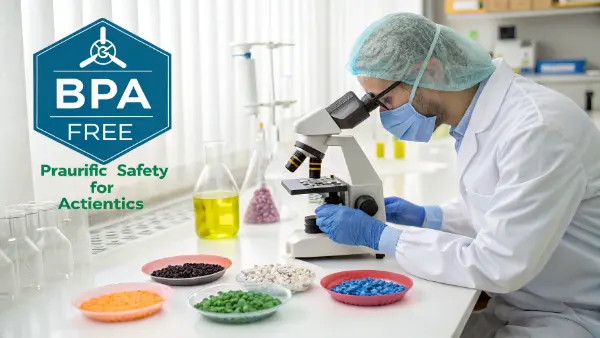
Are you worried about chemical safety in your plastic parts? Customers hate health risks in their products. I will show you how to choose safe materials for your next project.
BPA-free alternatives in injection molding include true non-bisphenol plastics like Tritan, COC, PMMA, PPSU, and PEI. Bio-based materials like PLA and Sulapac also work well. These materials replace polycarbonate without the health risks. They offer great clarity, heat resistance, and strength for safe food and medical parts.
Choosing the right plastic can feel like a maze. We can explore the best options together so you can start molding safely today.
What are the alternatives to BPA?
Finding a good substitute for tough polycarbonate is hard. A wrong choice ruins your product quality. You can use safe materials that perform just as well.
The best alternatives to BPA include Tritan, polypropylene, and PETG for everyday items. Medical and food products often use COC, PPSU, or PEI. You can also use silicone or nylon. These options provide safety and meet FDA rules while keeping your parts strong and clear.
True Replacements Versus Risky Substitutes
I see many companies make a big mistake. They switch from BPA to BPS or BPF. These belong to the same bisphenol family. They cause similar health problems. You need true non-bisphenol replacements. This choice keeps your products truly safe for food and skin contact. I always tell my team to look at the job the part does. We do not just look at the chemistry. We look at heat, clarity, and toughness. You must pick a completely different chemical family.
Top Material Choices For Your Project
Polypropylene works great because it resists chemicals and lasts a long time. Tritan is very clear and tough. People love Tritan for water bottles. You might want something green. You can try PLA or Sulapac. These are bio-based materials. They break down safely in nature. High heat requires different plastics. Silicone or PPSU handles heat the best. You must check your engineering designs. You might need material adjustments for these BPA-free substitutes. This step helps the new plastic match previous structural tolerances.
Material Comparison Table
| Material | Best Feature | Weakness | Good For |
|---|---|---|---|
| COC | Very clear, blocks water well | Can break easily | Medical parts, baby bottles |
| PPSU | Takes high heat, very tough | Costs a lot of money | Hot liquid parts, tools |
| PMMA | Looks great, stays clear | Less impact strength | Clear display screens |
| PEI | Handles extreme heat | High cost, hard to mold | Aerospace, electronics |
Machine Processing Rules
You can run many of these plastics on normal injection molding machines. But you must watch the heat. Materials like PEI need very hot molds. This requirement means you might need to adjust your tool designs. You want to match the old structural shapes while using new safe plastics. I always test the flow before starting a big production run.
Is phthalate free the same as BPA free?
Chemical names confuse many people. Mixing them up can lead to illegal products. I will explain the difference clearly to keep your project safe.
No, phthalate free is not the same as BPA free. BPA makes hard plastics like polycarbonate strong and clear. Phthalates make soft plastics like PVC flexible. A product can have no BPA but still have phthalates. You must check for both to ensure complete safety.
Understanding Different Chemical Jobs
I remember a client meeting a few years ago. The client asked me if their soft tubing was BPA-free. I had to explain the facts. BPA was not their problem. BPA stands for Bisphenol A. Factories use BPA to make hard plastics. We see BPA in old water bottles and CDs. Phthalates do a completely different job. Factories add phthalates to make plastics bend easily. You find phthalates in soft hoses and rubbery toys. These chemicals act like oil between the plastic molecules.
Why You Must Check Both Chemicals
A plastic injection project might need both hard and soft parts. You might make a hard case with a soft grip. You check for BPA in the hard case. You check for phthalates in the soft grip. You cannot assume a simple "BPA-free" label means the product is entirely safe from all bad chemicals. Customers care about full safety. You must test every single part of your product.
Safe Alternatives For Hard And Soft Parts
I avoid PVC when I design a soft part. I use safe elastomers instead. I use Tritan or PETG when I make a hard part. The FDA and EU have strict rules now. They want manufacturers to stop using both chemicals in food packaging. You must ask your material supplier for full data sheets.
Chemical Comparison Table
| Chemical | What it does | Where it hides | Safe Alternative |
|---|---|---|---|
| BPA | Makes plastic hard | Polycarbonate, epoxy | Tritan, PETG, COC |
| Phthalate | Makes plastic soft | PVC, vinyl covers | Silicone, TPU |
We must understand these facts to protect the users. We can build better molds when we know the exact chemical limits. Your brand stays safe when you test for everything.
What is worse, BPA or PFAS?
News stories talk about toxic chemicals every day. Ignoring these warnings puts your brand at risk. We can look at which chemical poses a bigger threat.
PFAS is generally considered worse than BPA. BPA breaks down in the environment and leaves the human body in a few days. PFAS chemicals are called forever chemicals because they never break down. They build up in nature and cause severe long-term health problems.
The Extreme Danger Of Forever Chemicals
PFAS stands for per- and polyfluoroalkyl substances. People call them forever chemicals. They do not break down in water or dirt. I read a report last month. The report found PFAS in rain all over the world. This fact scares me. BPA is bad for your hormones. But your body can clear BPA in a few days. You just need to stop eating from bad containers. PFAS stays in your blood for many years. It causes much bigger health issues.
Where These Chemicals Live In Manufacturing
We used to see BPA in almost all clear hard plastics. Now, we use safe plastics like polyamide or nylon. PFAS hides in different places. Factories use PFAS to make things resist water and grease. You find PFAS in non-stick pans and fast-food wrappers. Sometimes, factories use PFAS in mold release sprays. I tell my team to ban these sprays in our shop. We only use clean sprays.
Comparing The Risks
Let us look at how they compare directly.
| Feature | BPA | PFAS |
|---|---|---|
| Nickname | Hormone disruptor | Forever chemical |
| Breakdown time | Fast | Never |
| Main use | Hard plastics | Non-stick, waterproof coatings |
| Body removal | Days | Years |
Governments ban BPA in baby items. But governments now ban PFAS in almost everything. PFAS creates a huge problem for our earth. We must choose clean materials and clean mold sprays. This choice protects our workers and our customers. You will lose customers if they find PFAS in your items.
What are the alternatives to plastic injection molding?
Sticking to one manufacturing method limits your growth. You might miss faster or cheaper ways to make parts. Here are other great ways to build your products.
The best alternatives to plastic injection molding are 3D printing, CNC machining, urethane casting, and thermoforming. 3D printing is great for fast prototypes. CNC machining works best for metal or highly precise plastic parts. Urethane casting handles small production runs perfectly.
When To Skip Injection Molding
I love injection molding. It is my job. But sometimes, injection molding is not the right choice. Tooling costs a lot of money. You waste money if you only need fifty parts. A steel mold takes weeks to cut. You have other choices. We use different methods based on the project size. You must look at your budget first.
Top Manufacturing Choices For Your Brand
3D printing is very popular now. We use 3D printing to test designs before we cut steel. It saves a lot of time. CNC machining cuts parts out of solid blocks. It is very accurate. We use CNC machining when we need perfect strength. Urethane casting uses soft silicone molds. We pour liquid plastic into them. This method is cheap and fast for a hundred parts. Thermoforming heats a flat sheet of plastic. A machine sucks the hot plastic over a shape. People use thermoforming for large trays.
How To Pick The Best Method
I always ask my clients how many parts they need.
| Method | Tooling Cost | Speed | Best Volume |
|---|---|---|---|
| 3D Printing | Zero | Fast | 1 to 50 parts |
| CNC Machining | Zero | Medium | 1 to 100 parts |
| Urethane Casting | Low | Medium | 20 to 500 parts |
| Injection Molding | High | Very Fast | 10,000+ parts |
You can even use eco-friendly composite materials in these methods. You can mix PLA and bio-based polymers. This step creates green solutions outside of standard molding. Every method has a specific job. You just need to match the method to your timeline and budget.
Conclusion
BPA-free injection molding is essential for modern manufacturing. You can use great materials like COC, Tritan, and PEI to build safe products. Always avoid harmful substitutes and check for PFAS or phthalates. Choose the right process to ensure your project succeeds safely and efficiently.