
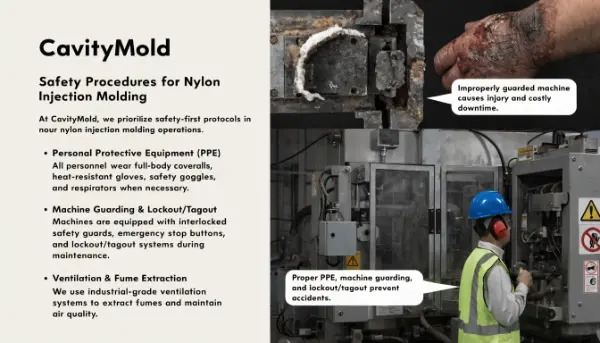
Do factory injuries worry you? Broken machines and burned skin cost money and hurt your team. At CavityMold, I use strict rules to fix these problems. Good safety plans keep everyone safe and keep our production lines running fast.
Nylon injection molding safety requires controlling hot material burns, crush risks, and bad fumes. The best approach combines machine guards, personal protective equipment (PPE), lockout/tagout rules, and good ventilation. Proper nylon drying and regular machine checks prevent big hazards and protect all factory workers every day.
I want to share my daily safety methods so you can protect your own factory team.
What Are The Main Hazards In Nylon Injection Molding?
Do hot plastics scare your new workers? A small splash of melted nylon burns skin instantly. We must spot these factory dangers early. Finding risks early stops very bad injuries.
The main hazards include severe burns from hot nylon and hot machine barrels. Moving machine parts like platens create bad crush hazards. Overheated nylon releases toxic fumes and dark smoke. Maintenance work also creates dangerous electrical risks if workers skip lockout/tagout steps.
I have managed molding projects for ten years. I see many dangers on the factory floor every week. Hot nylon is very sticky. It burns deep into the skin very quickly. Workers must stay away from hot purge streams. They must respect the hot nozzles and hot molds. I tell my team to treat every metal part like a hot stove.
Moving Machine Parts
Machines use heavy metal plates. These plates open and close very fast. Ejector pins push plastic parts out with great force. Robot arms move quickly around the machine. These moving parts create big crush hazards. They can pinch fingers or crush arms. Workers must never bypass machine guards. Safety doors must stay closed during operation. We check the hinges on these doors often. Broken hinges allow doors to open during a cycle. We fix broken doors right away.
Dangerous Air Quality
Nylon can burn if it gets too hot inside the machine. Overheated resin makes bad smoke. Additives and colorants also create toxic dust. Workers breathe these fumes. This dirty air hurts their lungs. We must install good exhaust fans above every machine. We must use smoke detectors in the molding area. These tools clean the air and warn us about fires early.
Electrical And Energy Risks
Maintenance teams fix broken machines frequently. Machines use high voltage power. They also hold high hydraulic pressure inside thick hoses. This stored energy is very dangerous. Workers must use lockout/tagout (LOTO) rules. They put strong locks on the power switches before they touch anything.
| Hazard Type | Machine Part | Injury Risk | Safety Rule |
|---|---|---|---|
| Heat | Nozzle and Barrel | Severe Burns | Wear heat-resistant gloves. |
| Crush | Platens and Robots | Broken Bones | Keep safety doors closed. |
| Fumes | Melted Nylon | Lung Irritation | Turn on exhaust fans. |
| Energy | Power Switches | Electric Shock | Use lockout/tagout locks. |
We check these specific risks every single morning to keep our whole team safe.
How Do We Apply Nylon-Specific Safety Controls?
Does wet nylon cause production errors? Wet plastic creates dangerous steam and weak parts. We need very specific steps to handle this unique plastic safely. Good material control stops many accidents.
We must dry nylon correctly before melting it because moisture creates steam and unstable melting. We must control barrel temperatures tightly to stop overheating and dangerous fumes. We also check ventilation near the machine and store resin in dry places to avoid material breakdown.
Nylon acts differently than other common plastics. Nylon pulls water out of the air. This water is a big problem. I always check the material dryers first before we start a job. We use special heating machines to bake the water out. We test the moisture level with a small testing tool.
Drying The Material
Wet nylon boils inside the hot machine barrel. This boiling water creates high pressure steam. The steam makes the melted plastic shoot out very fast. This fast plastic can burn an operator badly. We must dry nylon completely before we use it. We limit exposure to high humidity in the factory. Dry nylon melts smoothly and stays safe. It also makes much stronger plastic parts.
Controlling The Temperature
Temperature control is very important for nylon production. We set exact temperatures for the heating barrel. We set exact temperatures for the steel mold. Overheated nylon breaks down very fast. It creates dangerous gases. It also ruins the plastic parts completely. We install loud temperature alarms on all machines. These alarms ring loudly if the barrel gets too hot.
Storing The Plastic
We must store raw nylon granules properly. We keep them in thick sealed bags. We put them in dry, climate-controlled storage rooms. Good storage stops dirt contamination. It reduces the chance of material failure. We also separate old regrind plastic from new plastic. We label every single bag clearly with big letters.
| Control Step | Why We Do It | Benefit To Worker | Equipment Used |
|---|---|---|---|
| Dry Material | Stops steam pressure | Prevents burn injuries | Hopper Dryer |
| Check Heat | Stops material burning | Stops toxic fumes | Heat Controller |
| Clean Air | Removes plastic dust | Protects lungs | Exhaust Fan |
| Store Safe | Stops wet material | Keeps process stable | Sealed Bins |
These simple nylon rules save us from many dangerous and expensive machine problems.
What Are The Best Practices For Risk Mitigation?
Do workers forget basic safety rules? Poor training leads to broken machines and bad accidents. A strong safety plan fixes these gaps. Good rules build a confident and safe team.
Best practices involve keeping machine guards functional and using personal protective equipment like safety glasses. We train operators on emergency shutdowns and chemical hazards. We use preventive maintenance for all machine wiring. We identify high-risk jobs and use engineering controls like interlocks to protect our workers.
A factory needs clear rules to survive and make money. I teach my team safety rules every week. We focus on controlling the highest risks first. Loading heavy material and changing steel molds are very dangerous jobs. We pay extra attention during these specific times.
Using Protective Gear
Workers must wear Personal Protective Equipment (PPE) every day. They need clear safety glasses to stop flying hot plastic. They need thick heat-resistant gloves to touch hot parts. They wear hard safety shoes to protect their toes from heavy dropped tools. Sometimes, they wear breathing respirators if the air gets too dusty. I always walk around the factory to verify that workers actually wear their gear.
Training The Team
Employee training programs improve workplace safety quickly. I teach new workers how to start the machine safely. I teach them how to push out old plastic. I explain the chemical dangers from plastic resins and chemical mold cleaners. We also practice fire and emergency response drills. We install automated systems to move parts. These robots reduce human contact with hot and dangerous processes.
Maintaining The Machines
Regular inspection reduces daily risks. My maintenance team checks electrical heaters and wires every month. They look for messy hydraulic oil leaks under the machines. They fix broken rubber hoses immediately. Good housekeeping is also very crucial. We sweep the concrete floor often. We clean up spilled oil and water. A clean floor stops bad slip and trip accidents.
| Best Practice | Action Required | Main Goal | Review Time |
|---|---|---|---|
| Wear Gear | Put on glasses and gloves | Stop cuts and burns | Every shift |
| Train Staff | Teach emergency steps | Build safe habits | Every month |
| Fix Machines | Check wires and hoses | Stop sudden fires | Every week |
| Clean Floor | Sweep up oil and tools | Stop slip accidents | Every day |
We review all minor accidents and near misses to fix problems before people get badly hurt.
How Do We Use A Practical Safety Checklist?
Do you skip safety steps during busy days? Skipping a simple check can start a huge factory fire. A simple checklist stops these bad mistakes. Checklists keep our actions organized.
A practical safety checklist includes checking guards and door interlocks before every run. Workers must inspect heaters, wiring, and hoses for leaks early. Keep purge tools and spill kits ready nearby. Also, ensure safety data sheets and fire extinguishers are very easy for everyone to reach.
A paper checklist is a simple tool. It is the absolute best tool for factory safety. I require all my operators to use a paper checklist before they start the machine. This checking step takes only five minutes. It saves machines and saves lives.
Starting The Shift
The machine operator walks around the machine first. They check the plastic safety doors. They push the red emergency stop buttons to test them. They look at the black hydraulic lines. They look for small puddles of oil on the floor. If they see any problem, they tell the shift manager immediately. We never run broken equipment with broken safety devices.
Ready For Emergencies
We keep important emergency tools very close to the machine. We have soft brass purge tools ready on a table. We keep strong lifting aids nearby for moving heavy molds. We place yellow spill kits near the oil tanks. Every single worker knows where the red fire extinguishers are. They know exactly where to find the white first aid kits. We hang Safety Data Sheets (SDS) clearly on the wall.
Handling Machine Jams
Sometimes solid plastic gets stuck. The machine stops working. Workers feel rushed and stressed. They want to fix the problem fast. This is the most dangerous time in the factory. Workers must stop and think. They must use the lockout/tagout system before they reach their hands inside. They must turn off the main power switch completely.
| Checklist Item | When To Check | Who Checks It | Tool Needed |
|---|---|---|---|
| Door Guards | Before starting machine | Machine Operator | None |
| Oil Leaks | Start of the shift | Machine Operator | Flashlight |
| Fire Tools | First day of month | Safety Manager | Checklist |
| Lockout Tags | Before clearing jams | Maintenance Team | Padlock |
A strong emergency shutdown system protects the entire team when equipment fails suddenly.
Conclusion
Nylon injection molding safety depends on controlling hot material, moving parts, and toxic fumes. We use strong guards, protective gear, and strict checklists to lower risks. Proper material drying and clear worker training keep our factory secure. Safety always comes first at CavityMold to ensure perfect production.