
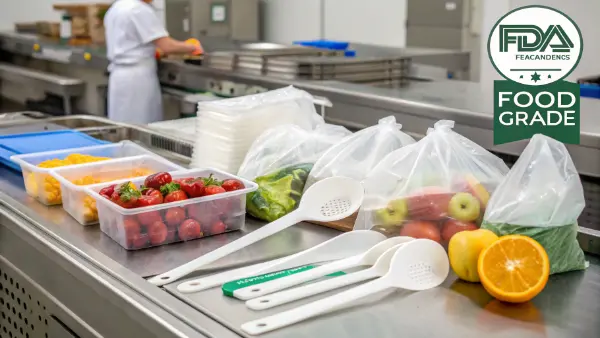
You need a strong material for your kitchen tools or food packaging, and nylon seems great. But is it really safe when it touches your food? Chemical leaks can be scary. Do not worry. I will explain exactly how to use nylon safely with food.
Yes, nylon is safe for food contact if it is food-grade and complies with FDA or EU rules. You must use it within its temperature limits. Safe nylon does not have harmful additives or dyes. You can find food-safe nylon in cooking utensils, food storage bags, and food factory belts. Never use damaged, melted, or non-food-grade nylon near your food.
As a project manager who works with plastic molds every day, I see a lot of materials. People ask me about food safety all the time. Let us look closer at nylon and see what makes it safe or unsafe for your food.
Is nylon safe for food contact?
You might see nylon used everywhere in the kitchen. But you wonder if it is truly safe for your family. Picking the wrong plastic can lead to health risks. Let us clear up the confusion about nylon food safety.
Nylon is safe for food contact when it is officially marked as food-grade. It must meet FDA or EU safety standards. Food-safe nylon blocks moisture well, making it great for food packaging. However, non-food-grade nylon might contain harmful plasticizers. You should also avoid using scratched or worn-out nylon items.
Let us talk about what makes nylon safe. I have spent ten years working with plastic injection molds. I know that not all plastics are the same. Nylon is a very strong plastic. It blocks moisture very well. This makes it perfect for food bags. It is also great for conveyor belts in food factories. But you have to be careful. You must only use food-grade nylon for your food.
Why Grade Matters
Non-food-grade nylon is not safe at all. It may have bad chemicals inside it. These chemicals make the plastic soft. They also add bright colors to the plastic. But these chemicals can leak out into your food. Some nylon has glass fibers mixed into it. This makes the nylon very strong for car parts. Never use glass-filled nylon for food. The small glass pieces can break off into your meal. Also, recycled nylon is a bad idea for food. We do not know where recycled nylon comes from. It might have dirty parts or bad chemicals in it. You should only use fresh, pure nylon for food.
Signs of Safe Nylon
How do you know if your nylon is safe? You must look at the label. The label must say "food safe". It might also show a little picture of a fork and a glass. You should also look at the color. Some black nylon has bad chemicals in it. Try to buy nylon tools from good brands. If your nylon tool gets old, throw it away. If your nylon tool gets scratched, throw it away. Scratches can hold bad germs. Old nylon can also break down over time. When it breaks down, it releases bad plastic parts.
| Nylon Type | Safe for Food? | Why? |
|---|---|---|
| Food-Grade Nylon | Yes | It meets strict safety rules and has no bad chemicals. |
| Recycled Nylon | No | It has an unknown history and might be dirty. |
| Glass-Filled Nylon | No | Small glass pieces can get into the food. |
| Scratched Nylon | No | Deep scratches trap germs and leak plastic bits. |
Is nylon 6 6 FDA approved?
You hear big words like "Nylon 6 6" and wonder what they mean. Does the government say this specific plastic is safe? Using unapproved materials can break the law and hurt people. Let us look at what the FDA says.
Yes, Nylon 6 6 is FDA approved for food contact, but only under specific rules. It is listed in the FDA regulation 21 CFR 177.1500. This rule allows certain nylon plastics for processing, handling, and packaging food. The nylon must be made correctly and used within safe limits to stay approved.
Working in product design in Australia, I deal with global rules a lot. The FDA in the United States has very clear rules about plastics. Nylon 6 6 is a very common type of nylon. It is strong and handles heat well. We use it a lot at CavityMold. The FDA does say Nylon 6 6 is safe for food. But there is a catch. You must follow their exact rules.
The FDA Rules
You can find the exact rules in a big document. This document is called 21 CFR 177.1500. This rule lists which nylon plastics are okay to use. It says you can use approved nylon to pack dry food. You can use it to move food in a factory. You can use it to hold food. But the factory must make the nylon the right way. They cannot just mix anything into it. At my job, we always make sure our materials match these strict rules. If a company adds bad dyes to Nylon 6 6, it is not safe anymore. If they add cheap fillers, it loses its FDA approval.
Strict Safety Limits
The FDA approval is very narrow. It depends on how thick the plastic is. It also depends on the type of food it touches. Acidic foods like tomatoes can be harsh on plastics. Hot foods can also cause problems. You must follow the exact instructions for the specific nylon grade. If you use it wrong, it is not safe. The factory must test the nylon to make sure it does not leak into the food.
| Food Activity | FDA Approval Status | Important Detail |
|---|---|---|
| Dry Food Packaging | Approved | Nylon blocks moisture very well to keep food fresh. |
| Food Processing Belts | Approved | The factory must use pure, food-grade plastic. |
| Adding Cheap Dyes | Not Approved | Cheap dyes can leak out into the food. |
| Overheating the Plastic | Not Approved | High heat breaks the nylon down very fast. |
Is food-grade nylon safe for cooking?
Cooking gets hot. You might worry that your plastic spoon will melt into your hot soup. Melting plastic ruins your food and adds health risks. Let us see if food-grade nylon can handle the heat of your kitchen.
Food-grade nylon is safe for cooking at moderate temperatures. It is heat-resistant and will not leach harmful chemicals if used correctly. However, you should not leave nylon utensils in hot pans for a long time. Long-term high heat can break down the nylon and release bad substances into your food.
In my job making molds, we test plastics under heat all the time. Nylon is tough. Heat-resistant nylon is made just for cooking. You can stir a big pot of soup with a nylon spoon. You can flip a burger with a food-grade nylon spatula. It is safe for normal cooking. But you must know its limits. Heat is the biggest enemy of plastic.
Watch the Heat
Nylon can melt if it gets too hot. The biggest danger in the kitchen is leaving the spoon resting in a hot pan. If you leave it in the pan, the nylon will start to break down. When it breaks down, it can leak small plastic parts into your meal. We call this leaking. You do not want these plastic parts in your body. Also, direct fire will melt nylon very fast. Never use a nylon spoon on an open flame. Sunlight can also ruin nylon over time. You should keep your tools inside a dark drawer. Do not leave them in the hot sun.
Keep It Clean Safely
How you clean your nylon tools matters a lot. Do not use very harsh chemicals to wash them. Strong soaps can damage the plastic. When the plastic is damaged, it is less safe to use. You should use mild dish soap and warm water. If you see the edges of your spatula getting rough, throw it out. If the edges look melted, throw it out. Melted edges can hide old food and bad germs.
| Cooking Action | Nylon Safety | Advice |
|---|---|---|
| Stirring warm soup | Safe | Nylon handles warm liquids very well. |
| Flipping pancakes quickly | Safe | Short contact with a hot pan is fine. |
| Leaving it in a hot pan | Unsafe | Nylon will melt and leak chemicals into food. |
| Washing with harsh bleach | Unsafe | Bleach ruins the smooth plastic surface. |
Which is safer to cook with, silicone or nylon?
You stand in the store holding a silicone spoon and a nylon spoon. You do not know which one is better for your health. Making the wrong choice means wasting money and risking safety. Let us compare these two materials.
Silicone is generally safer to cook with than nylon. Silicone can handle much higher heat without melting. It does not break down or leach chemicals easily. Nylon is safe for warm food, but it melts faster in hot pans. Silicone is also softer and will not scratch your pots and pans.
I help design plastic parts for kitchens often. People always ask me to compare silicone and nylon. Both materials are good. But they act differently under heat. If we talk strictly about safety during high-heat cooking, silicone wins. It is much better for hot cooking. Let me explain why silicone is safer.
Heat Resistance
Silicone can handle extreme heat. You can put silicone in a hot oven up to 400 degrees. It will not melt. It will not change its shape. Nylon cannot do this at all. Nylon will warp and melt if it gets too hot. When nylon melts, it becomes very unsafe. It drops plastic into your food. Silicone is very stable. It does not leak chemicals into food, even when it is very hot. This makes silicone a much safer choice for heavy cooking.
Durability and Wear
Nylon is harder than silicone. A hard nylon spoon is great for scraping a bowl. But nylon gets scratched easily. When nylon gets scratched, the rough spots hold germs. You cannot clean those germs out easily. Silicone is soft and flexible. It does not scratch easily at all. It also does not scratch your expensive non-stick pans. Over time, a nylon spatula might get a melted, fuzzy edge. A silicone spatula stays smooth for a much longer time. A smooth tool is a safe tool.
| Feature | Nylon | Silicone |
|---|---|---|
| Heat Limit | Medium (can melt in hot pans) | High (safe in hot ovens) |
| Hardness | Hard and stiff | Soft and flexible |
| Scratch Risk | Can get scratched over time | Resists scratches very well |
| Chemical Leaking | Can leak if it gets too hot | Very stable, rarely leaks |
Conclusion
Nylon is safe for food if you buy food-grade items and treat them right. Do not let nylon get too hot. Throw away scratched or melted tools. If you want high heat safety, silicone is better. Always check the labels to keep your kitchen safe.