
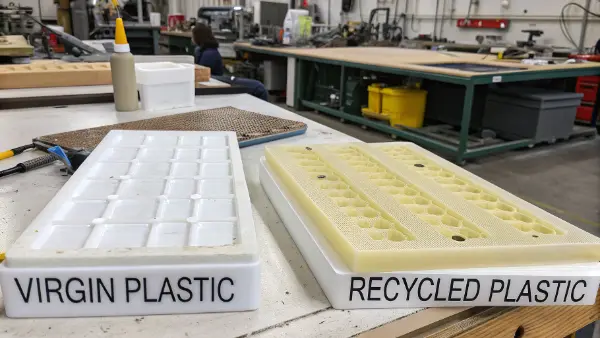
You need safe plastics for your projects. Bad plastics cause parts to break. This ruins your hard work and costs money. You want the best material for your molds. We can help you pick the right plastic to keep your parts safe.
Virgin plastics are safer for critical industrial uses because they offer high purity and consistent performance. Recycled plastics are safe for many uses, but they carry a higher risk of contamination and variability. You should use virgin plastic for food or medical parts. You can use recycled plastic for non-critical parts.
You might wonder how to make the best choice for your next project. Let us look at the details to help you decide.
What are the main safety differences between virgin and recycled plastics?
You worry about hidden risks in your materials. Hidden dirt or bad chemicals can ruin your products. This makes your customers unhappy. You need to know exactly what is inside your plastic.
Virgin plastic starts from new materials, so it is very predictable and clean. Recycled plastic can hold dirt or chemicals from its past life. These old chemicals can change how the plastic works. Virgin plastic gives you safe results every time. Recycled plastic needs more testing to prove it is safe.
I see this problem often in my work at CavityMold. Clients want cheap parts. But they also need safe parts. We must look closely at how the plastic is made.
The true cost of old chemicals
Recycled plastic comes from old bottles and parts. These old parts might have held bad chemicals. Sometimes, the recycling process itself adds bad things like heavy metals or strange smells. We call these bad things contaminants. Contaminants can stay inside the recycled plastic. This means the new parts might not be safe. Virgin plastics do not have this problem. Factory workers make virgin plastics from brand new materials. The factory controls every step. This makes virgin plastics very safe and clean.
How material strength changes
Plastics use special add-ins to stay strong. We call these additives. Additives in old plastic can break down over time. This makes recycled plastic weaker. Virgin plastic has fresh additives. It stays strong for a long time. Virgin plastic also fights off bad chemicals better. This is important for tough industrial jobs.
Comparing the two plastics
I made a simple table to show you the differences. You can see why we must test old plastics.
| Feature | Virgin Plastic | Recycled Plastic |
|---|---|---|
| Purity | Very high | Can have dirt or chemicals |
| Strength | Very strong | Can be weak |
| Testing needed | Low | High |
| Consistency | Always the same | Changes every time |
You must test recycled plastics a lot. You do not want a weak part to break. Virgin plastics give you peace of mind. You know exactly what you get every time.
Where do recycled plastics work best in industrial settings?
You want to save money and help the earth. But you cannot use bad plastic. A bad choice can cause big failures in your factory. You need a safe way to use green materials.
Recycled plastics work best for parts that do not face extreme stress or touch food. You can use them for pipes, heavy boxes, and car parts. These parts do not need perfect purity. New recycling technology makes these plastics cleaner today. You can use them safely if you test them well.
I love helping clients save money. Recycled plastic is a great way to do this. But we must use it in the right place. We cannot use it everywhere.
Best uses for old plastic
Many factories use recycled plastics for big, simple things. You can make thick pipes or big storage boxes. A small flaw in a big box does not matter much. The box will still hold your tools. Car makers use old plastic for bumpers and hidden parts. These parts do not need to look perfect. They just need to work.
Better cleaning technology
The world is getting better at cleaning old plastic. New machines wash the plastic very well. They melt it and take out the bad chemicals. This fixes the safety gap between old and new plastic. Some recycled plastics even get special safety papers. We call these papers certifications.
Upgrading old materials
Workers can mix new things into the old plastic. They can add fresh strong materials to make the old plastic tough again. This helps the old plastic meet hard industrial rules.
| Application | Why Recycled Works |
|---|---|
| Thick pipes | Small flaws do not break thick walls |
| Storage boxes | Purity does not matter for tool boxes |
| Car bumpers | Hidden parts do not need perfect looks |
| Garden decks | Weather hurts all plastic over time |
You can trust recycled plastic for these jobs. You just need to ask your supplier for good test results. Good testing makes recycled plastic a smart choice.
Why is virgin plastic safer for critical applications?
You make parts for doctors or food companies. A dirty part can make someone sick. This is a huge risk for your business. You must avoid bad materials at all costs.
Virgin plastic is safer because it has no unknown chemicals. You must use virgin plastic for food boxes, medical tools, and safe drinking pipes. Old plastics can leak bad chemicals into food or medicine. Virgin plastic meets strict health rules easily. It protects your company from lawsuits and bad products.
I always tell my clients to be careful with food and medicine parts. We make many molds for these industries at CavityMold. We never take risks here.
The danger of leaking chemicals
Old plastic can hold secrets. A recycled bottle might have held soap or oil before. If you make a new food box from that old bottle, the soap can leak into the food. The FDA calls this migration. Migration is very bad. You cannot sell food boxes that leak chemicals. Virgin plastic never held soap or oil. It is completely new. It will not leak unknown things into your food.
Strict rules and safety papers
Governments make very hard rules for medical tools. You must know exactly where the plastic came from. Virgin plastics give you perfect tracking. We call this traceability. You can follow virgin plastic from the factory to your hand. Recycled plastic is a mix of a million different things. You cannot track it easily.
High liability risks
If a medical part breaks, a person can get hurt. Your company will get into big trouble. You want to avoid this trouble.
| Industry | Risk of Recycled Plastic | Why Virgin is Better |
|---|---|---|
| Medical tools | Weak parts break during surgery | Perfect strength every time |
| Food packing | Bad chemicals leak into food | Zero old chemicals |
| Clean pipes | Dirt gets into drinking water | Perfectly clean inside |
| Lab dishes | Strange chemicals ruin science tests | Very pure material |
Virgin plastic costs more resources. People worry about the earth. But virgin plastic is the only real choice for human safety. You must put safety first.
What is the best industrial decision rule for choosing plastics?
You have many choices to make every day. Picking the wrong plastic wastes time. You need a fast and easy rule. This rule will help you decide quickly and safely.
Use virgin plastic when the part touches food or needs perfect strength. Use recycled plastic when the part is thick and hidden. You must always test recycled plastic before you buy it. You must check the supplier and screen for dirt. This simple rule keeps your projects safe and cheap.
Alex is a smart project manager. He uses a clear rule to pick his plastics. I teach this same rule to all my clients. It makes my job as a mold maker much easier.
The simple decision rule
You should look at the job the part does. Does the part hold human food? Use virgin. Does the part go inside a human body? Use virgin. Does the part sit in a warehouse and hold heavy metal parts? Use recycled. You need to look at the stress on the part. High stress means virgin. Low stress means recycled.
How to buy recycled plastic safely
If you pick recycled plastic, you must do some homework. You cannot just buy the cheapest one. You must qualify your supplier. This means you check their factory. You must ask for contaminant screening. This means they test the plastic for dirt. You must also ask where the plastic came from. Traceability matters even for recycled materials.
Making the final choice
You can look at this simple guide to help you.
| Question to ask | Yes Answer | No Answer |
|---|---|---|
| Does it touch food? | Buy Virgin | Check next question |
| Does a life depend on it? | Buy Virgin | Check next question |
| Is it a thick storage box? | Buy Recycled | Check next question |
| Do you have a strict budget? | Buy Recycled | Buy Virgin |
You must always test the plastic. Testing confirms the performance. Good testing makes any plastic safe. You can build great products when you follow this rule.
Conclusion
Recycled plastics are good for basic industrial parts. They save money. Virgin plastics are best for food and medical parts. They offer perfect safety and clean results. You must test your materials well. Choose the right plastic to keep your factory safe and your customers happy.