
You have a great product idea, but choosing the wrong plastic can ruin it. If the part breaks easily or hurts someone, your business is in big trouble. You need a safe, strong material. Let me show you if ABS plastic is the right choice for you.
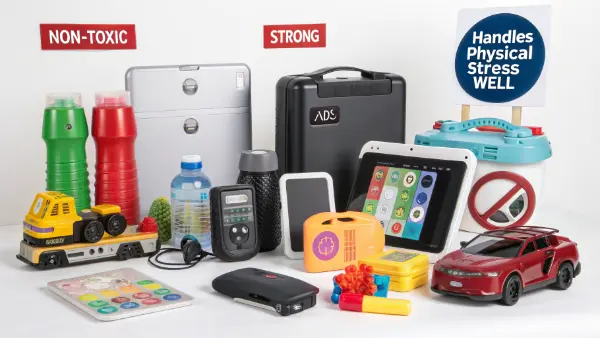
Yes, ABS plastic is generally safe for injection molding in consumer products. It is non-toxic, strong, and handles physical stress well. However, its safety depends on how you use it. For things like food contact or high heat, you must pick the specific right grade and follow safety rules.
You might think any basic plastic works for your new design, but picking the wrong one is a huge mistake. Let us look at how ABS actually works in the molding process so you do not waste your time and money on bad parts.
Can ABS plastic be injection moulded?
You have a cool design, but you worry if it can actually be made in a factory. If the plastic does not flow well, your mold will fail and waste money. You need a plastic that is easy to work with.
Yes, ABS plastic can be easily injection molded. It is a thermoplastic material. This means it melts smoothly when heated and becomes hard when cooled. This makes it perfect for filling molds to create strong, exact parts for toys, electronics, and home goods.
At CavityMold, I work with many different plastics every single day. Over my 10 years of experience, I have seen a lot of projects. I can tell you that ABS is one of the absolute best plastics for making parts. It is very friendly for the mold making process.
How ABS Melts and Flows
Because ABS is a thermoplastic, it reacts to heat in a very predictable way. When we heat it up in our machines, it turns into a smooth liquid. We push this liquid into a metal mold. It flows into all the tiny corners of the mold very easily. This is super important when you have a design with a lot of small details. Once it cools down, it holds its shape perfectly. The parts come out looking exactly like the computer design.
Why Mold Makers Love It
I love using ABS because it does not shrink too much when it cools down. Some plastics shrink a lot, and that makes the final part the wrong size. ABS stays very true to its size. It also leaves a very nice, shiny surface on the product. It is rigid and tough. It does not warp or bend under normal use.
ABS Molding Facts
Here is a simple look at why we use it:
| Feature | What it means for your product |
|---|---|
| Melting Point | Melts easily in machines, saving time and energy. |
| Low Shrinkage | Parts stay the exact right size after cooling. |
| Surface Finish | Looks shiny and clean right out of the mold. |
| Toughness | Does not crack when we push it out of the mold. |
If you want a part that looks good and is easy to make, ABS is a smart choice. We use it all the time for computer keyboards, TV cases, and car parts. It just works well.
What are the disadvantages of ABS plastic?
ABS sounds perfect, but it is not magic. If you ignore its weak points, your product will fail in the real world. You must know its limits before you start making thousands of parts.
The main disadvantages of ABS plastic include poor UV resistance and limited heat resistance. It can turn yellow and break if left in the sun too long. It also melts or changes shape in very high heat, and it can release bad fumes if it catches fire.
Every material has bad sides. In my job as a project manager, I have to look at the bad sides very closely. If a client wants to make a park bench out of normal ABS, I have to tell them no. It will not last.
Sun Damage and UV Light
The biggest problem with normal ABS is the sun. It hates UV light. If you put an ABS part outside for a long time, the sun will damage it. The color will turn yellow or brown. Even worse, the plastic will become very weak. It will snap like a dry twig if you drop it. If you must use ABS outside, you have to buy a special grade that has UV blockers in it. Or, you have to paint it to protect it from the light.
Heat and Chemical Limits
ABS is strong at room temperature, but it is weak in high heat. It will soften and bend if it gets too hot. You should not use it near ovens or car engines. It also does not like certain chemicals. Things like alcohol or strong cleaners can melt it or make it crack.
Common Problems and Fixes
Here is a table showing the bad parts of ABS and how we try to fix them:
| Disadvantage | Real World Problem | How to Fix It |
|---|---|---|
| Poor UV Resistance | Turns yellow and brittle outside. | Add UV stabilizers or use a different plastic. |
| Low Heat Limit | Melts near hot engines or ovens. | Keep away from high heat or use Polycarbonate. |
| Chemical Weakness | Cracks when wiped with strong cleaners. | Only use mild soap and water to clean it. |
| Flammability | Burns and makes bad smoke. | Buy special flame-retardant ABS grades. |
You must test your product in the real world. Do not just guess. Know the limits of ABS so your product stays safe.
Which is better, ABS or HDPE?
Choosing between two good plastics is really hard. Pick the wrong one, and your part might break or cost way too much money. Let us compare ABS and HDPE to see which one wins for your project.
ABS is better for stiff, strong parts that need a nice finish, like TV cases or toys. HDPE is better for parts that need to hold chemicals or food, like milk jugs or water pipes. Your choice completely depends on what your product actually does.
I get asked this question a lot. Clients come to me at CavityMold and say, "Alex, should I use ABS or HDPE?" The truth is, neither one is just "better." They are just different. They do different jobs.
When to Use ABS
Think of ABS like the hard shell of a turtle. It is very rigid. It takes hard hits without breaking. It is the best choice when you need a hard box or case. We use it for things like power tools, computer mice, and Lego bricks. It is easy to paint and glue. If you need a product that looks really nice on a store shelf and feels hard in your hand, you want ABS. But remember, it does not like the sun or strong chemicals.
When to Use HDPE
Think of HDPE like a tough water bottle. It is softer than ABS. It can bend a little bit without snapping. It is amazing at handling chemicals and water. It does not care if it sits in the sun or the rain as much. We use it for milk jugs, shampoo bottles, and outdoor pipes. It is also very cheap.
Comparing the Two Plastics
Here is how they stand next to each other:
| Feature | ABS Plastic | HDPE Plastic |
|---|---|---|
| Stiffness | Very stiff and hard. | Softer and more flexible. |
| Chemical Safe | Poor. Melts with some chemicals. | Excellent. Holds harsh cleaners safely. |
| Look and Feel | Shiny, smooth, feels premium. | Waxy, dull, feels cheap. |
| Best Uses | Electronics, toys, hard cases. | Bottles, pipes, chemical tanks. |
If you are making a hard case for a drill, pick ABS. If you are making a bucket to hold soap, pick HDPE. It is that simple.
Is ABS plastic FDA approved?
Making parts for food or medical use is scary. If the plastic is not totally safe, people can get sick, and you can get sued. You need to know if the FDA says ABS is okay to use.
General ABS plastic is not automatically FDA approved for food. However, there are special food-grade versions of ABS that meet FDA rules. If your product touches food, you must buy certified food-grade ABS and test it to make sure no chemicals leak out.
Safety is the most important thing in my job. When we make parts that touch food or go near mouths, we have to be super careful. You cannot just buy normal, cheap ABS and use it for a spoon or a cup. That is very dangerous.
Special Food Grades
Normal ABS has chemicals in it that make it strong. Sometimes, if the plastic gets hot, these chemicals can leak out into the food. This is called leaching. To stop this, plastic makers create special "food-contact" ABS. This special type is made very carefully. It follows strict rules from the FDA. When you buy this plastic, the supplier gives you a certificate. You must keep this paper. It proves your plastic is safe. If you make a kitchen tool, always ask your mold maker for the safety data sheet.
Medical and Child Safety
The same rules apply to medical parts and baby toys. ABS is great for toy blocks because it does not break easily. No sharp edges mean kids are safe. But kids put toys in their mouths. So, the plastic must be non-toxic. We make sure our ABS passes tests like RoHS and REACH. These tests prove there are no hidden heavy metals or bad poisons inside.
Safety Checklist for ABS
Before you use ABS for sensitive products, follow this list:
| Step | What you need to do |
|---|---|
| Check the Grade | Ask the supplier if it is specifically FDA food-grade. |
| Get the Papers | Get the Material Data Sheet and keep it safe. |
| Test the Heat | Make sure the plastic does not melt in hot water or food. |
| Avoid Implants | Never use ABS inside the human body. It is only for outside cases. |
Always test your final product. Do not just trust the label. Send it to a lab to be sure it is safe for everyone.
Conclusion
ABS plastic is a safe, strong, and easy-to-mold choice for many consumer goods. Just remember to check its limits with heat, sun, and food contact. At CavityMold, we help you pick the perfect material to make sure your next big project is a huge success.