
TPU Blends and Alloys: Creating Customized Material Properties?
Struggling to find the perfect material that is both flexible and strong? You might feel stuck between choosing rubber that is too soft or plastic that is too hard. This frustration is common in manufacturing, but there is a powerful solution that solves this problem instantly.
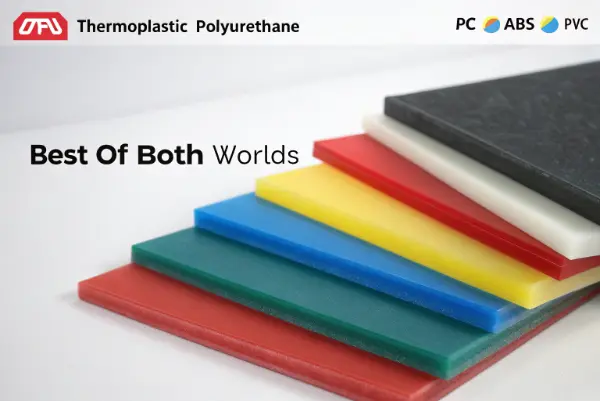
TPU blends and alloys are mixtures of Thermoplastic Polyurethane with other polymers like PC, ABS, or PVC. By combining these materials, manufacturers can customize specific properties. This allows you to increase strength, improve chemical resistance, or enhance softness without sacrificing durability. It creates a "best of both worlds" material for specialized products.
Let’s move past the basic definitions and look at how this actually works on the factory floor. We will explore exactly what TPU is, why it is safer than older materials, and how blending it changes the game for your product designs.
What is TPU in manufacturing?
Many people hear the term "TPU" but don’t know exactly where it fits in the production line. This confusion can lead to choosing the wrong material for your project, costing you time and money. You need to understand its core identity to use it effectively.
In manufacturing, TPU (Thermoplastic Polyurethane) is a unique elastomer that bridges the gap between rubber and plastics. It is processed on standard injection molding machines but behaves like a flexible rubber in the final product. It is used to make phone cases, shoe soles, and industrial seals because it melts when heated and solidifies when cooled.
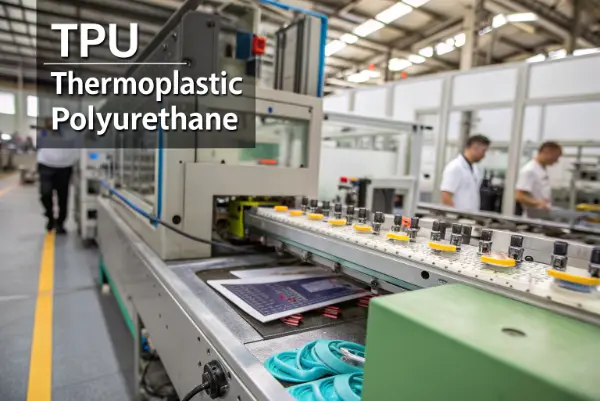
Understanding TPU requires looking at its chemistry and processing capabilities. I remember when I first started at CavityMold back in 2009. We had a client who wanted a grip for a power tool. They tried rubber, but the cycle time was too long. They tried standard plastic, but it was too slippery. We introduced them to TPU.
The magic of TPU in manufacturing lies in its "thermoplastic" nature. Unlike thermoset rubber, which cures and cannot be remelted, TPU can be melted, molded, and even recycled. This makes it incredibly versatile for injection molding.
Here is a breakdown of how TPU fits into different manufacturing stages:
Key Manufacturing Attributes
| Stage | What Happens with TPU | Why it Matters |
|---|---|---|
| Feeding | Pellets are dried to remove moisture. | Wet TPU creates bubbles and weak parts. |
| Melting | Heated in the barrel of the machine. | Must control shear heat to prevent burning. |
| Molding | Injected into a cold mold cavity. | Needs specific gate designs to flow well. |
| Ejection | Part is pushed out once solid. | Flexibility makes ejection tricky; needs good draft angles. |
| Recycling | Scrap parts are ground up and reused. | Reduces waste and saves material costs. |
When we talk about "alloys" in this context, we mean mixing TPU with other plastics during that melting stage. Imagine mixing blue paint and yellow paint to get green. We mix TPU (flexible) with Polycarbonate (hard) to get a material that is tough but rigid. This capability is why TPU is a superstar in modern manufacturing. It is not just one material; it is a building block for hundreds of custom solutions.
What are the properties of TPU material?
Designers often guess which material to use, hoping it survives the real world. If you guess wrong, your product might crack in the cold or melt in the heat. Knowing the specific properties of TPU removes this risk and ensures your product performs correctly.
TPU is famous for its high abrasion resistance, excellent elasticity, and strong resistance to oils and greases. It can stretch significantly without breaking and return to its original shape. It also handles low temperatures very well, staying flexible even when it is freezing outside, unlike many other plastics.
Let’s dig deeper into these properties because "strong" and "flexible" are vague words. In my years at CavityMold, I have seen TPU used in everything from delicate medical tubes to heavy-duty mining screens. This range is possible because of its segmented block copolymer structure. That sounds complex, but think of it like a chain made of hard links and soft springs.
The "hard segments" give it rigidity and strength. The "soft segments" give it flexibility and stretch. By changing the ratio of hard to soft, we change the properties.
Here is a detailed look at the specific properties you can expect:
Critical Property Breakdown
- Abrasion Resistance: This is TPU’s superpower. If you rub TPU against concrete and rubber against concrete, the TPU will last much longer. This is why it is used for skateboard wheels and shoe soles.
- Tensile Strength: It is very hard to snap. High-quality TPU has a high tensile strength, meaning it can hold a lot of weight before it breaks.
- Transparency: Unlike regular rubber which is usually black or opaque, TPU can be crystal clear. This is perfect for protective cases where you want to see the product underneath.
- Chemical Resistance: It hates water (hydrolysis can be an issue if not treated), but it loves resisting oil, grease, and solvents. This makes it ideal for automotive seals.
Hardness Scales (Shore Hardness)
TPU is unique because it spans a wide range of hardness. We measure this on the "Shore" scale.
| Shore Scale | Feel | Typical Application |
|---|---|---|
| 60A | Soft, like a tire tread. | Soft-touch grips, gaskets. |
| 85A | Firm, like a shoe heel. | Phone cases, industrial wheels. |
| 95A | Hard, like a shopping cart wheel. | Structural parts, protective gear. |
| 60D | Very hard, like a hard hat. | Engineering components. |
By blending TPU, we can fine-tune these properties further. For example, blending TPU with ABS increases the stiffness (higher modulus) while keeping the soft-touch feel.
Is TPU safer than PVC?
Safety regulations are getting stricter every year, and using the wrong material can get your product banned. Many companies still use PVC because it is cheap, but they ignore the health and environmental risks. You need to know if switching to TPU is the safer, smarter choice for your brand.
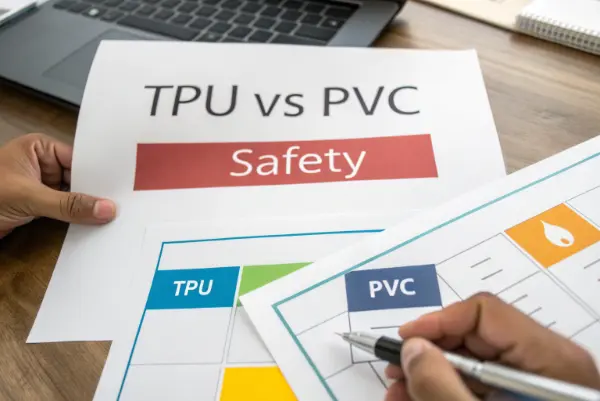
Yes, TPU is generally considered much safer and more environmentally friendly than PVC. TPU does not contain dangerous plasticizers or phthalates, which are often found in PVC to make it flexible. Additionally, burning PVC releases toxic chlorine gas, whereas TPU does not, making it safer for both users and the environment.
This is a conversation I have with clients almost every week. A customer will come to us with a design for a child’s toy or a medical device and specify PVC because of the low cost. I always stop them there. While PVC (Polyvinyl Chloride) is cheap, the hidden costs are high.
PVC needs additives to be flexible. These additives, called phthalates, can leach out over time. You don’t want that in a baby toy. TPU acts differently. It is flexible naturally because of its chemical structure. It doesn’t need those liquid plasticizers.
The Safety and Eco-Impact Comparison
Let’s look at the facts critically. When we talk about "safer," we mean safer for the human body and safer for the planet.
- Medical Grade Safety: TPU is widely used in biomedical applications. It is biocompatible. You can put it in the human body (for short periods) or in contact with blood, and it won’t cause a reaction. PVC requires very specific, expensive formulations to even come close to this.
- End-of-Life Disposal:
- PVC: If you burn PVC, it releases dioxins and hydrochloric acid. This is dangerous. It damages incinerators and pollutes the air.
- TPU: When TPU burns, it mostly releases carbon dioxide and water. It is much cleaner to dispose of.
- Recyclability: Both are thermoplastics, meaning they can be remelted. However, because PVC contains so many different additives, recycling it is chemically difficult. TPU is more straightforward to recycle into new raw materials.
- Skin Contact: For wearables like smartwatches, TPU is hypoallergenic. PVC can cause skin irritation for some people due to the chemicals sweating out of the plastic.
So, while TPU is more expensive per kilogram than PVC, it protects your brand reputation. It ensures you meet regulations like REACH (in Europe) and CPSIA (in the US) without struggling.
What is the disadvantage of TPU?
No material is perfect, and believing TPU is a magic solution for everything is a dangerous mistake. If you ignore its weaknesses, your product might fail in humid environments or cost too much to produce. You must understand the downsides to make an informed engineering decision.
The main disadvantages of TPU are its high material cost and its sensitivity to moisture. It is more expensive than materials like PVC or standard polyethylene. Also, TPU must be dried thoroughly before processing, because any water inside the pellets will turn into steam and ruin the final part. It can also degrade over time in hot, wet environments.
I want to be completely honest with you. At CavityMold, we love TPU, but we also know when not to use it. There was a project a few years ago where a client wanted to make outdoor garden furniture parts entirely out of soft TPU. We advised against it. Why? Because of hydrolysis and cost.
Let’s break down the limitations so you don’t fall into a trap.
1. Processing Difficulty (The Moisture Problem)
TPU is hygroscopic. This means it absorbs water from the air like a sponge.
- The Issue: If you put wet TPU pellets into an injection molding machine, the water boils instantly at 200°C.
- The Result: The steam creates "splay marks" (silver streaks) on your product. It also breaks the chemical chains, making the part weak.
- The Fix: You must use a desiccant dryer for 2-4 hours before molding. This adds energy cost and time to the manufacturing process.
2. The Price Tag
TPU is a premium engineering resin.
- Comparison: It can cost 3 to 5 times more than PVC or PP (Polypropylene).
- Impact: For a cheap, disposable item, TPU is likely too expensive. It is best for high-value items where durability matters.
3. Thermal Limitations
While TPU is tough, it has a lower melting point than some high-performance plastics.
- The Issue: If your product gets very hot (above 80°C – 100°C depending on the grade), it will start to soften and lose its shape.
- The Context: You wouldn’t use standard TPU for an engine component that sits right next to the exhaust manifold.
4. Hydrolysis (Water Damage)
There are two main types of TPU: Polyester-based and Polyether-based.
- Polyester TPU: Stronger, but if it sits in hot water or humid soil, it will eventually rot and crumble.
- Polyether TPU: Resists water well, but is more expensive and slightly weaker against oils.
- The Lesson: You must choose the right type of TPU blend. If you pick the wrong one for a water-bottle seal, it will fail.
Conclusion
TPU blends and alloys allow us to create materials that are strong, flexible, and safe. By mixing TPU with other plastics, we solve specific problems like durability and chemical resistance. While TPU is more expensive and needs careful drying, its superior properties make it the best choice for high-quality, long-lasting products.