
Are you tired of receiving injection molded parts that don’t meet your standards? Inconsistent quality can lead to project delays, budget overruns, and even product failure. This uncertainty is a major headache for any project manager, threatening your timelines and reputation.
The most effective quality control for injection molded parts involves a multi-layered approach. It starts with visual inspection to catch obvious defects, then moves to precise dimensional measurements using tools like calipers and CMMs. Finally, it incorporates advanced functional and material testing to ensure parts perform exactly as designed. This combination verifies aesthetics, fit, and function for total quality assurance.
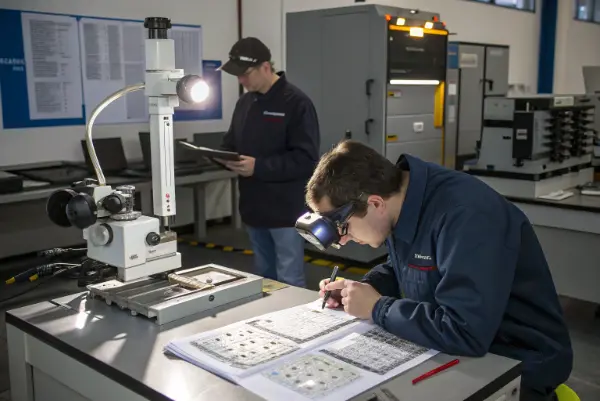
This layered strategy might sound complex, but it’s the only way to guarantee that every single part leaving the factory is perfect. Over my years in this industry, I’ve seen how skipping even one step can lead to disaster down the line. We build our entire quality process around this comprehensive mindset. But to really understand it, you need to see how each piece of the puzzle works. Let’s break down these methods one by one, so you can see what truly goes into creating a flawless molded part.
What Is the Foundation of All Part Inspection?
Your production run is finished, but how can you be sure the parts are good? A batch of thousands of parts could be hiding critical flaws, and shipping them would be a disaster. You need a fast, effective first line of defense to catch common problems immediately.
The foundation of part inspection is a thorough visual check. This is the quickest and most direct method to identify surface-level defects. An experienced inspector can spot issues like flash, sink marks, short shots, and color variations. It’s a non-destructive, cost-effective first step that filters out obvious failures before they move to more advanced testing stages.
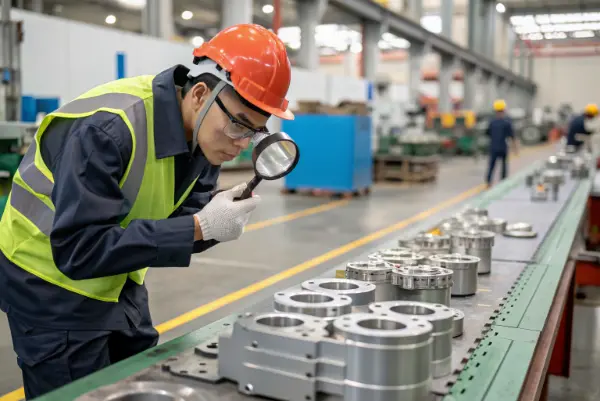
I remember a project for an automotive client where the part was a cosmetic interior trim piece. A simple visual inspection by one of our trained technicians caught a slight color mismatch that would have been completely unacceptable to the end-user. It wasn’t a functional failure, but it would have been a brand failure. This is why we never underestimate the power of a trained eye. It’s about more than just function; it’s about upholding the quality your customers expect. To do this right, we systemize the process.
Establishing Clear Visual Standards
The first thing we do is create a "master sample" or "golden sample" with the client. This is a perfect part, approved by everyone, that becomes the benchmark. All subsequent parts are compared against this sample. We also create a document that clearly defines and illustrates potential defects. This ensures that every inspector, whether on our team or the client’s, is working from the same playbook. Consistency is everything.
Common Defects to Look For
During a visual check, inspectors are trained to spot a specific list of common molding issues. Here are a few key ones:
- Flash: Thin excess plastic that seeps out of the mold parting line.
- Sink Marks: Small depressions on the surface, usually over thick sections of the part.
- Short Shot: The mold cavity wasn’t completely filled, resulting in an incomplete part.
- Warping: The part is distorted or bent out of its intended shape as it cools.
- Burn Marks: Discoloration caused by trapped, overheated gas in the mold.
By identifying these early, we can often adjust the molding process parameters in real-time, preventing the defect from recurring in the rest of the production run.
How Do You Guarantee Parts Meet Exact Specifications?
A part might look perfect, but will it fit? When you’re dealing with complex assemblies, a deviation of even a fraction of a millimeter can render an entire batch of parts useless. This is a huge risk for projects with tight assembly tolerances.
To guarantee parts meet exact specifications, you must use precision metrology and dimensional analysis. This involves using tools ranging from digital calipers and micrometers for basic checks to advanced Coordinate Measuring Machines (CMM) for complex geometries. This process verifies that every critical dimension of the part falls within the tight tolerances defined in your CAD files and drawings.
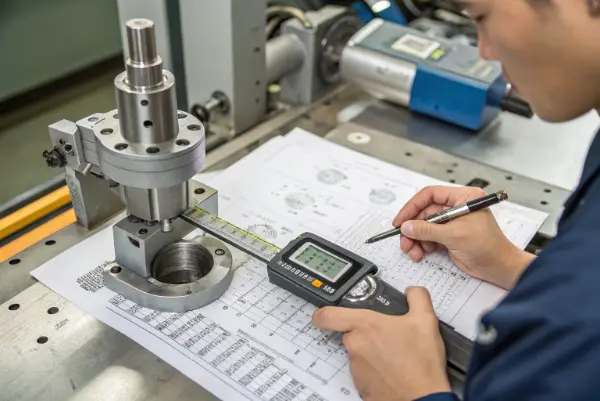
We once worked on a medical device where two interlocking parts required a precise snap-fit. The tolerances were incredibly tight. Simple caliper checks weren’t enough to guarantee the geometry of the locking feature. By using our CMM, we mapped hundreds of points on the part’s surface and compared it directly to the 3D CAD model. We discovered a slight, consistent deviation that was causing the fit to fail. This data allowed us to make a micro-adjustment to the mold, solving the problem and saving the client from a major production delay. This is why we invest in advanced measurement technology.
The Right Tools for the Job
Choosing the right measurement tool depends on the complexity of the part and the tightness of the tolerance.
| Tool | Best For | Precision Level |
|---|---|---|
| Digital Calipers | Quick checks of outer/inner diameters, lengths. | Moderate (±0.02 mm) |
| Micrometers | Highly accurate checks of thickness, diameters. | High (±0.005 mm) |
| Profile Projector | Verifying 2D profiles, angles, and shapes. | High |
| CMM | Measuring complex 3D geometries and surfaces. | Very High (±0.001 mm) |
First Article Inspection (FAI) Report
For any new mold, the First Article Inspection is the most critical step in dimensional verification. We take the first parts produced by the new tool and perform a full dimensional layout. Every single dimension, tolerance, and note on the engineering drawing is measured and recorded in an FAI report. This comprehensive document proves that the mold is capable of producing parts that meet your design intent. Only after you, the client, have reviewed and approved this FAI report do we proceed with mass production.
Are Your Parts as Strong and Durable as They Need to Be?
Your part looks good and measures correctly, but will it break under stress? A part that fails in the field can be catastrophic, leading to safety issues, costly recalls, and irreparable damage to your brand’s reputation. You can’t afford to just hope it’s strong enough.
To confirm a part’s strength and durability, we conduct a series of mechanical and material tests. These destructive tests, such as tensile, impact, and hardness testing, apply controlled forces to sample parts to measure their physical properties. This data proves that the material and the part’s design can withstand the real-world stresses it was designed for, ensuring reliability and safety.
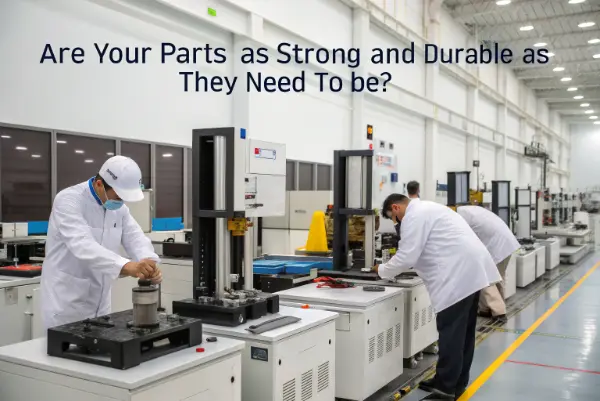
I remember a client who designed a plastic clip for an outdoor equipment product. It needed to withstand repeated flexing and survive accidental drops. Visual and dimensional checks were perfect, but we needed to be sure about its real-world performance. We subjected sample parts to an Izod impact test, which simulates a sudden shock, and a flexural test to measure its bending strength. The initial tests showed a higher-than-expected brittleness. This feedback allowed the client to switch to a more impact-resistant grade of polycarbonate before a single unit was shipped to customers, preventing almost certain field failures.
Key Mechanical Tests
These tests are designed to simulate the types of forces a part will experience during its life.
- Tensile Test: We pull a sample part until it breaks. This tells us its ultimate tensile strength (the force it can withstand) and its elongation (how much it can stretch before failing). This is critical for parts that will be under tension.
- Impact Test (Izod/Charpy): A weighted pendulum strikes the part to measure its ability to absorb a sudden shock. This is essential for housings, safety equipment, or any part that might be dropped.
- Hardness Test (Rockwell/Durometer): We measure the material’s resistance to surface indentation. This is important for parts that need to resist scratches and wear, like cosmetic surfaces or gears.
Verifying Material Properties
Sometimes, the issue isn’t the mold but the material itself. We also use tests to ensure the plastic resin meets specifications. A Melt Flow Index (MFI) test, for instance, measures how easily the plastic flows when melted. A significant deviation from the spec sheet can indicate a bad batch of material, which can cause molding defects and compromise the final part’s strength.
How Does Controlling the Molding Process Improve Part Quality?
Inspecting parts after they’re made is crucial, but what if you could prevent defects from happening in the first place? Relying only on end-of-line inspection is inefficient. It leads to higher scrap rates and means you’re constantly reacting to problems instead of preventing them.
You improve part quality by implementing Statistical Process Control (SPC) during the injection molding process itself. By continuously monitoring and charting critical process parameters—like melt temperature, injection pressure, and cooling time—you can detect and correct subtle drifts before they cause out-of-tolerance parts. This proactive approach ensures consistency and dramatically reduces defects, moving from detection to prevention.
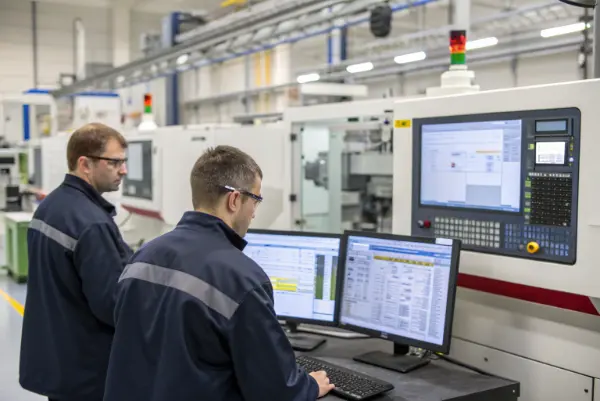
We had a long-running project for a consumer electronics client that required extremely high consistency. For the first few runs, we relied on standard post-production inspections. But we noticed minor, random variations in part weight. By implementing SPC and tracking injection pressure and packing time, we saw a pattern. A slight fluctuation in hydraulic pressure was causing the inconsistency. We installed a pressure regulator and the problem disappeared. Our scrap rate dropped to nearly zero, and the client received more consistent parts than ever before. This is the power of managing the process, not just the part.
Monitoring Critical Process Parameters
The goal of SPC is to keep the process centered and within its control limits. We use automated sensors and software to track the variables that have the biggest impact on part quality.
- Temperature: This includes the melt temperature, which affects viscosity, and the mold temperature, which impacts cooling rate, shrinkage, and surface finish.
- Pressure: Injection pressure, packing pressure, and back pressure all influence how the cavity is filled and how dense the final part is.
- Time: Fill time, pack/hold time, and cooling time are critical for ensuring a complete, stable part.
- Shot Size/Velocity: Controlling the volume and speed of injection ensures each part is made with the same amount of material, which is key for consistency.
Using Control Charts
The data from these parameters is plotted on control charts. These charts have a center line (the target value) and upper and lower control limits. As long as the data points fall randomly between these limits, the process is considered "in control." If we see a trend of data points moving toward a limit, or points falling outside the limits, it’s an immediate signal for our process technicians to investigate and make a correction before any bad parts are produced. This data-driven approach is fundamental to modern, high-quality manufacturing.
Conclusion
Ultimately, ensuring part quality isn’t about a single check. It’s a comprehensive system combining visual inspection, precise measurement, material validation, and in-process control. Each method builds on the last, creating a robust shield against defects and guaranteeing that the parts you receive are right, every time.