
Sticking with standard injection molding can feel limiting. It often leads to heavier parts, design compromises, and complex assembly, driving up costs and delaying your launch. But what if you could create stronger, lighter, and more intricate parts in a single step?
Advanced injection molding technologies go beyond the standard process to produce parts with specialized properties. By selecting the right method—such as Gas-Assist, Multi-Component, Thin-Wall, or Liquid Silicone Rubber (LSR) molding—you can optimize part performance, reduce manufacturing costs, and improve aesthetics. The key is matching the technology to your specific design requirements for material, geometry, and function, enabling innovation that standard molding cannot achieve.
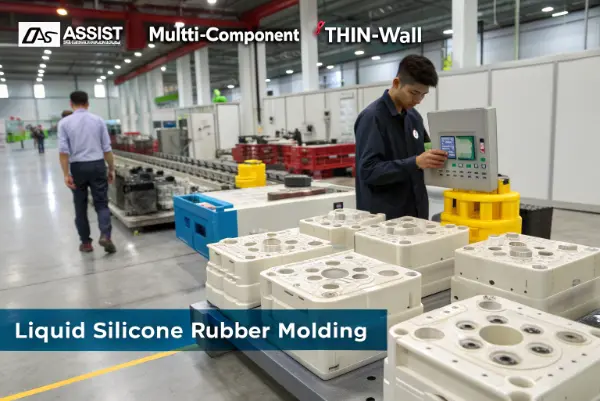
Over my years in this industry, I’ve seen many project managers, like Alex, struggle to push the boundaries of what’s possible with plastics. They have a great product idea but are held back by the perceived limitations of manufacturing. The truth is, the technology has likely already caught up to your imagination. Understanding these advanced processes is the first step toward transforming your designs from concept to reality.
Let’s dive into some of these game-changing technologies.
How Can Gas-Assist Molding Reduce Weight and Improve Finish?
Designing parts with thick-walled sections is a classic manufacturing headache. These areas are prone to ugly sink marks and warping as they cool. This not only compromises the look of your product but can also weaken it structurally, forcing you into frustrating redesigns or costly secondary operations.
Gas-assist injection molding (GAIM) is a low-pressure process that solves this by creating hollow channels within the part. After a partial shot of plastic is injected, nitrogen gas is introduced. The gas pushes the molten plastic to the mold surfaces, ensuring a smooth finish while hollowing out thick sections. This reduces material usage, part weight, and cycle times, and eliminates surface defects like sink marks.
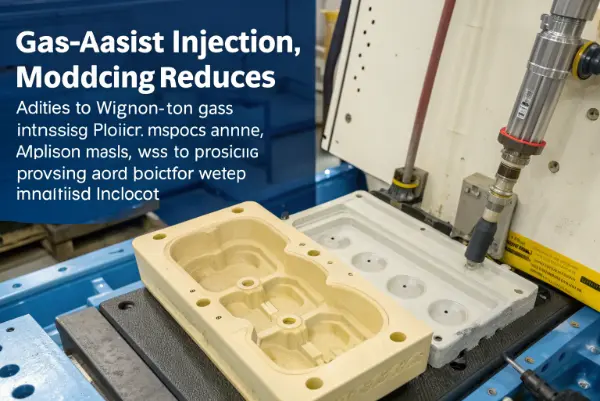
I remember working on a project for a client who needed a large, chunky handle for an industrial equipment case. With standard molding, the prototype was heavy, and the flat surfaces were covered in sink marks right where the internal support ribs were. It just looked and felt cheap. We switched to a gas-assist process. The final part was not only 30% lighter but also had a perfectly smooth, Class-A finish. The gas created the internal structure without any of the external flaws. It completely changed the client’s perception of what plastic could do. GAIM isn’t just a problem-solver; it’s a tool that opens up new design possibilities, allowing for a combination of thick, hollow sections and thin, detailed features in a single part. It’s perfect for when you need both strength and aesthetics without the extra weight.
The GAIM Process Breakdown
| Step | Description | Key Benefit |
|---|---|---|
| 1. Partial Injection | The mold is partially filled with molten plastic, leaving room for the gas. | Uses less material from the start. |
| 2. Gas Injection | High-pressure nitrogen gas is injected into the melt through specialized gas pins. | Creates hollow channels and pushes plastic to the extremities. |
| 3. Gas Packing | The gas pressure is maintained, packing the plastic against the mold cavity walls. | Eliminates sink marks and ensures a uniform, high-quality surface. |
| 4. Cooling & Venting | The part cools, and the gas is vented from the part before the mold opens. | Faster cooling times due to hollow sections, reducing cycle time. |
How Does Multi-Component Molding Create Complex Parts in One Cycle?
You need a part with a rigid structure but a soft, grippy surface. The traditional approach? Mold two separate parts and then assemble them. This means two molds, two production runs, and extra labor for assembly, driving up costs and introducing potential points of failure.
Multi-component molding, also known as 2K or two-shot molding, solves this by injecting two or more different materials into a single mold during one machine cycle. A rotating mold or core allows a second material to be injected over or adjacent to the first, creating a permanently bonded, multi-material part directly out of the machine. This eliminates assembly, improves part quality, and enables complex designs.
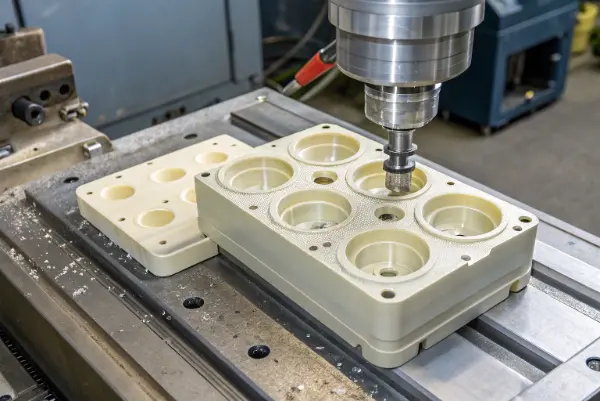
One of the most satisfying projects I ever worked on involved a waterproof electronic device. The housing needed to be a rigid, impact-resistant polycarbonate, but it also required a soft, flexible TPE seal molded directly into it to keep water out. Trying to glue a separate gasket in place was messy and unreliable. With 2K molding, we created a single, seamless part. The chemical bond between the PC and TPE was so strong that the seal was inseparable and completely watertight. It passed every IP67 test with flying colors. This technology is incredibly versatile, allowing you to combine colors for branding, integrate clear windows into opaque housings, or create ergonomic soft-touch grips on rigid tools. It elevates a product from functional to exceptional.
Key Considerations for 2K Molding
Material Compatibility: The success of 2K molding hinges on the chemical and thermal compatibility of the materials. You need materials that will form a strong chemical or mechanical bond. For example, PC and TPE bond well, as do ABS and TPU. Your mold maker should be an expert in material selection to ensure a durable bond and prevent delamination.
Mold Design Complexity: 2K molds are more complex and expensive than single-shot molds. They often feature rotating platens, sliding cores, or robotic part transfer systems to move the first shot into position for the second. While the upfront investment is higher, it’s often offset by the elimination of assembly costs and improved part quality.
Gating and Flow: Precise control over the injection process is crucial. The gating for the second material must be carefully designed to not damage or warp the first shot. Mold flow analysis is essential here to simulate how the materials will interact and fill the cavity, ensuring a perfect final part.
Can Thin-Wall Molding Really Make Your Products Lighter and Faster to Produce?
In industries like consumer electronics and packaging, every millimeter and every gram counts. Thick, bulky plastic parts are a non-starter. But trying to make parts too thin with standard molding often leads to incomplete fills, weak spots, and high scrap rates, creating a constant battle between design goals and manufacturing reality.
Thin-wall injection molding is a specialized high-speed, high-pressure process designed to produce plastic parts with wall thicknesses under 1mm. It relies on extremely fast injection speeds, specialized machinery, and optimized mold design to fill the cavity before the plastic freezes. This enables the production of incredibly light, strong, and cost-effective parts with very short cycle times.
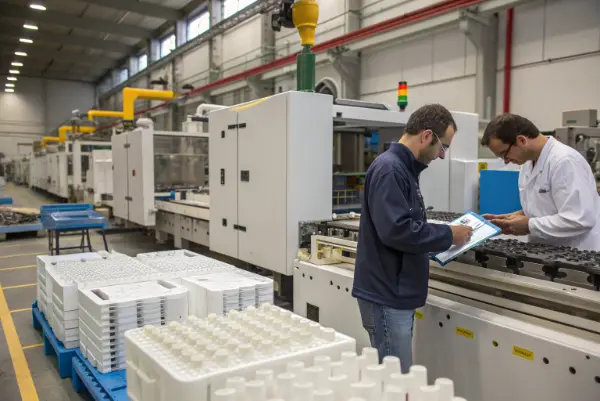
I’ve worked closely with project managers like Alex who are developing the next generation of smartphones and laptops. For them, thin-wall molding is not just an option; it’s a necessity. We were tasked with creating a laptop chassis that was both incredibly thin and durable. We used a modified polycarbonate blend and designed a mold with a sophisticated multi-point gating system. The injection speed was lightning-fast—the mold was filled in a fraction of a second. The result was a part that was strong, ridiculously light, and met the exact dimensional specs. Cycle times were so low that we could produce thousands of units per day, keeping the project on schedule and on budget. This technology is the reason our devices get sleeker and our food packaging gets lighter every year.
Factors for Successful Thin-Wall Molding
| Factor | Importance | Why It Matters |
|---|---|---|
| Mold Design | Critical | Must have robust cooling channels to manage heat from fast cycles. Polished surfaces and precise venting are needed to prevent trapped air. Gating must be designed for rapid, balanced filling. |
| Material Selection | Critical | Materials must have very high flow rates (high Melt Flow Index) to fill the thin cavities quickly. High-strength materials like modified PC, ABS, and PP are common. |
| Machine Performance | Critical | The injection molding machine must be capable of extremely high injection speeds and pressures to push the plastic into the cavity before it solidifies. Accumulators are often used to achieve this. |
| Cycle Time | High | The goal is to be as fast as possible. Every aspect, from injection to cooling and ejection, is optimized to minimize the cycle, often bringing it down to just a few seconds. |
When Should You Choose Liquid Silicone Rubber Molding?
You need a part that is flexible, durable, and can withstand extreme temperatures, from a freezing winter to a hot engine bay. Standard thermoplastics like TPE or TPU might work, but they can degrade over time, lose flexibility, or become brittle. For critical applications, you need something more reliable.
Liquid Silicone Rubber (LSR) molding is the ideal process for creating high-performance elastomeric parts. Unlike thermoplastics, LSR is a thermoset material that is chemically cross-linked during molding, resulting in a part that is permanently flexible, stable across a wide temperature range (-65°C to 180°C), UV resistant, and biocompatible. This makes it perfect for medical, automotive, and outdoor applications.
A medical device company approached us to produce a complex seal for a diagnostic machine. The seal had intricate undercuts and needed to be repeatedly sterilized in an autoclave without degrading. No thermoplastic could meet these demands. We recommended LSR molding. The process is a bit different—it uses a cooled runner system and a heated mold to cure the material. But the result was flawless. We created a part with fine details and a perfect seal that maintained its flexibility and integrity after hundreds of sterilization cycles. This is why LSR is the go-to material for baby products, baking molds, automotive gaskets, and medical components. When performance and safety are non-negotiable, LSR is often the only answer.
LSR vs. Thermoplastic Elastomers (TPE)
| Feature | Liquid Silicone Rubber (LSR) | Thermoplastic Elastomer (TPE) |
|---|---|---|
| Material Type | Thermoset (cured by heat) | Thermoplastic (melts when heated) |
| Temperature Resistance | Excellent (-65°C to 180°C) | Moderate (-30°C to 100°C) |
| Hardness Range | Wide (5 to 80 Shore A) | Wide, can be very soft or semi-rigid |
| Chemical/UV Resistance | Excellent | Good, but can degrade with exposure |
| Biocompatibility | Excellent (Medical grades available) | Some medical grades exist, but less common |
| Processing | Heated mold, requires special equipment | Standard injection molding process |
| Cost | Higher material and tooling cost | Lower material and processing cost |
| Best For | High-performance seals, medical devices, outdoor use | Consumer goods, overmolded grips, cost-sensitive items |
Conclusion
Choosing the right injection molding technology is about more than just making a part. It’s about unlocking your product’s full potential. By moving beyond standard processes, you can create parts that are lighter, stronger, more efficient to produce, and better suited for their final application.