
Are you new to manufacturing and find injection molding confusing? The process seems simple, but hidden complexities can quickly derail your project, leading to costly mistakes and delays. Getting it right from the start is essential for success.
Absolutely. Injection molding is a complex manufacturing discipline where the quality of the final part is determined long before any plastic is melted. Success depends heavily on three key areas: a well-designed mold, correct material selection, and an understanding of how to prevent common defects. Mastering these elements is the difference between a successful product and a costly failure. This guide will help you understand these critical aspects.
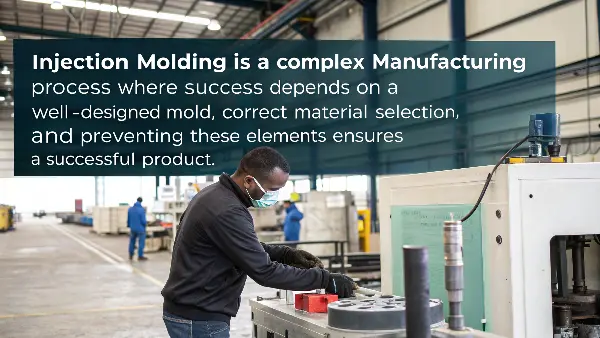
This guide is designed for beginners, but it won’t just cover the basics you can find anywhere. I want to share some insights I’ve learned over the past fifteen years in this industry. We’ll skip the simple "what is it" and dive straight into what really matters for getting your project off the ground and ensuring its success. Stick with me, and I’ll show you how to think like a seasoned pro and avoid the common pitfalls that trap newcomers.
Why is the mold the real star of the show?
Think your product’s design is everything? Many newcomers focus only on the final part. But they soon discover that a poor mold leads to endless production headaches, delays, and budget overruns, no matter how great the part design is.
The mold is the most critical component in injection molding because it directly controls the part’s final quality, production speed, and overall cost. It’s not just a cavity; it’s a precision-engineered machine responsible for shaping the plastic, cooling it correctly, and ejecting the finished part flawlessly. A well-made mold is the foundation for a successful manufacturing run.
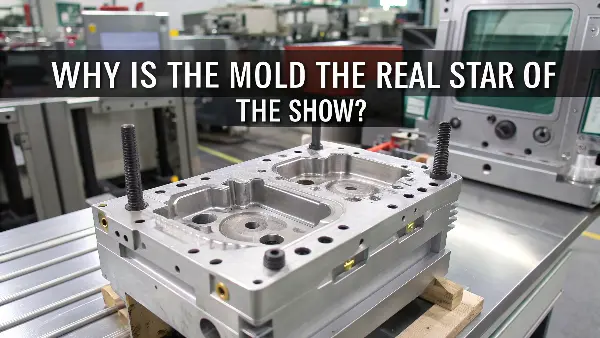
When I started my career, a client came to us with a failing project. They had a beautiful design for a handheld device casing, but the parts they were getting were terrible. They were warped, had ugly marks, and didn’t fit together. The problem wasn’t their product design; it was the cheap mold they had commissioned. It had inefficient cooling, no thought for plastic flow, and incorrect draft angles. We ended up building a new mold from scratch, and it was a night-and-day difference. That experience taught me a vital lesson: the mold is the heart of the entire operation. It dictates everything. Let’s break down the key elements you must get right.
Core Mold Design considerations
| Feature | Why It’s Critical | Common Mistake for Beginners |
|---|---|---|
| Draft Angles | Tapered sides that allow the part to be ejected easily from the mold. Without them, the part can get stuck, causing scratches or breakage. | Forgetting to include them in the 3D model, or making them too small, leading to ejection problems and surface defects. |
| Cooling Channels | A network of passages within the mold where fluid circulates to cool the plastic. Uniform cooling prevents warping and reduces cycle time. | Poorly placed or insufficient channels cause uneven cooling, leading to warped parts and longer, more expensive production cycles. |
| Gate Location | The entry point where molten plastic flows into the mold cavity. Its position affects how the cavity fills, influencing part strength and appearance. | Placing the gate in a visually critical area or in a way that creates weak points (weld lines) or flow marks on the finished part. |
| Parting Line | The line where the two halves of the mold meet. Its placement affects the part’s appearance and can create flash if the halves don’t seal perfectly. | Creating a complex, non-planar parting line that is difficult to machine and seal, leading to visible lines and excess plastic (flash). |
Understanding these elements helps you have more intelligent conversations with your mold maker. It’s not just about giving them a 3D file; it’s about collaborating to build a tool that will produce great parts efficiently for years to come.
How does your material choice make or break your project?
You’ve found a plastic that seems perfect for your part. It has the right look and feel. But if you don’t consider its technical properties, you could face disaster. Shrinkage, flow rate, and temperature needs can turn your perfect design into a mess.
Your material choice is critical because every plastic behaves differently inside the mold. Properties like shrink rate, moisture absorption, and melt flow directly impact mold design and processing parameters. Choosing the wrong material can lead to parts that are out of tolerance, weak, or warped, completely undermining the project’s success and budget.
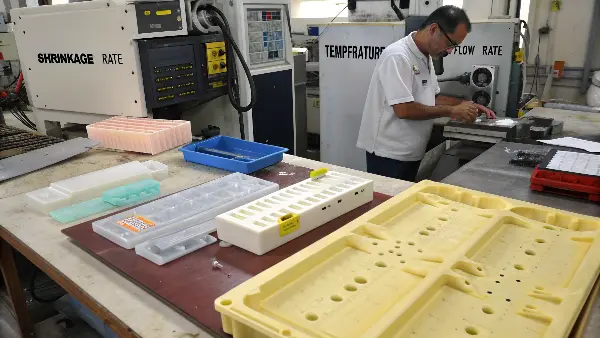
I remember a project for a client in Australia, a project manager named Alex. He needed a set of gears for a new consumer device. He specified a common type of nylon because it was strong and he’d used it before. However, he didn’t account for its high moisture absorption in his product’s intended humid environment. After molding, the parts were perfect. But weeks later, in testing, the gears swelled from humidity and the device failed. We had to switch to a more stable, moisture-resistant polymer and adjust the mold slightly to compensate. This highlights a crucial point: the material and the design are not separate. They work together. Here’s a deeper look.
Key Factors in Material Selection
1. Mechanical Properties:
This is the most obvious factor. Does the part need to be strong, flexible, or rigid? You need to consider tensile strength, impact resistance, and hardness. For a simple enclosure, ABS might be fine. But for a snap-fit clip that will be used thousands of times, you might need something like Polypropylene (PP) or POM (Acetal) for its fatigue resistance.
2. Thermal Properties:
Will your part be exposed to heat? The Heat Deflection Temperature (HDT) tells you the temperature at which a material will start to deform under a specific load. For a part used inside a car engine bay, you’ll need a high-performance material like PEEK, not standard ABS which would melt quickly.
3. Shrink Rate:
This is one of the most overlooked properties by beginners. All plastics shrink as they cool. The mold cavity must be machined slightly larger than the final part dimensions to account for this. The key is that different plastics shrink by different amounts.
| Material | Typical Shrink Rate (%) | Key Consideration |
|---|---|---|
| ABS | 0.4% – 0.7% | Relatively low and predictable. A good general-purpose choice. |
| Polypropylene (PP) | 1.0% – 2.5% | High shrinkage requires careful mold design and process control to avoid warping. |
| Nylon (PA66) | 0.8% – 1.5% | Absorbs moisture, which can affect its dimensional stability after molding. |
| Polycarbonate (PC) | 0.5% – 0.7% | Similar to ABS but requires higher processing temperatures and must be dried thoroughly. |
If you design a mold for ABS and later decide to use PP, the parts will come out too small. A good mold maker will always ask for your final material choice before cutting steel.
What common defects should you watch out for from day one?
Your first batch of parts has arrived, but something is wrong. There are strange lines, sunken spots, and thin bits of extra plastic around the edges. Now you’re stuck with thousands of useless parts and a production line on hold.
You must watch for common defects like flash, sink marks, and weld lines from the start. These issues are often symptoms of a flawed mold design, incorrect material choice, or improper processing settings. Identifying them early allows you to diagnose the root cause and fix it before it ruins your entire production run and budget.
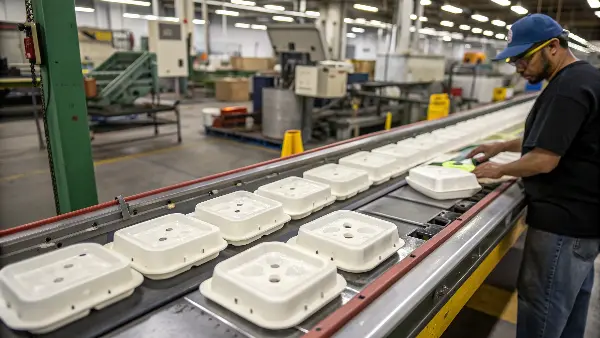
Preventing defects isn’t magic; it’s good engineering. In my experience, most problems can be traced back to decisions made long before the molding machine was even turned on. It’s about thinking ahead. For example, designing a part with thick and thin walls right next to each other is asking for trouble. The plastic will cool at different rates, causing the thick section to pull on the thin section, resulting in a distorted, ugly part. That’s not a machine operator’s fault; that’s a design flaw. Let’s look at the most common culprits and how to think about them from a design perspective.
Diagnosing and Preventing Common Defects
| Defect | Description | Primary Cause (Design & Process) | How to Prevent It |
|---|---|---|---|
| Sink Marks | Small craters or depressions on the surface, typically opposite thick sections like ribs or bosses. | The plastic in the thick section shrinks more as it cools, pulling the surface inward. | Design parts with uniform wall thickness. If ribs are needed, make their base no more than 60% of the main wall thickness. |
| Flash | A thin layer of excess plastic that escapes the mold cavity, usually at the parting line. | The two halves of the mold don’t seal perfectly due to high injection pressure, low clamp force, or a damaged/poorly designed parting line. | Ensure the parting line is flat and simple. Use appropriate clamp tonnage for the part size. Don’t use excessive injection pressure. |
| Weld Lines | A line or notch where two fronts of molten plastic meet as they flow around a core or hole in the mold. | The two flows are too cool to merge perfectly, creating a weak and often visible line. | Position gates to create a single, uninterrupted flow path. Use mold flow analysis software to predict and relocate weld lines to non-critical areas. |
| Warping | The part distorts and doesn’t hold its intended shape after being ejected from the mold. | Non-uniform cooling causes different parts of the material to shrink at different rates, creating internal stresses that bend the part. | Ensure uniform wall thickness in the part design. The mold must have well-placed cooling channels to cool the part evenly. |
These are not just production issues; they are design issues. By anticipating them during the design phase, you work with the manufacturing process instead of fighting against it. This proactive approach saves an enormous amount of time and money.
Conclusion
Injection molding success hinges on mastering more than just the basics. A high-quality mold, smart material selection, and proactive defect prevention are the pillars of a successful project. By focusing on these areas, you move from a beginner’s mindset to that of a seasoned professional.