
CNC Machining Plastics: Material and Design Guide
Answer in one sentence: CNC plastic success depends on material behavior, stiffness, stock size, tool access, fixturing, heat, tolerances, threads, finish, and inspection.
How to use this guide: Machining plastic is a controlled thermal and mechanical problem: the cutter, workholding, stock, and inspection method must be designed around the material's behavior. Use the controls and evidence below to compare the actual part, resin, mold, machine, and production requirement.

Choose the plastic for the function
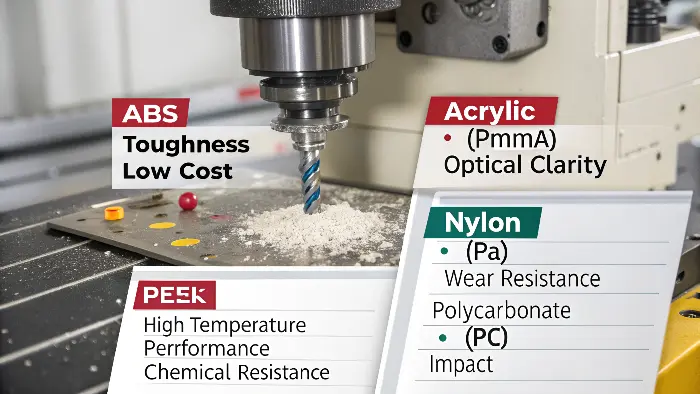
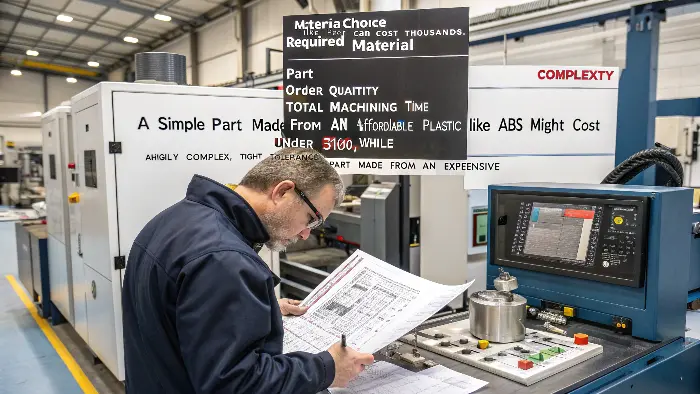
Start with load, temperature, chemicals, wear, moisture, electrical behavior, optical needs, and compliance. Then check the available stock form, machinability, dimensional stability, and the actual finished-part requirement. A resin's datasheet value is not a machining process window.
- Check stiffness and creep at the service temperature.
- Review moisture absorption and its effect on dimensions and fit.
- Confirm stock size, grain or reinforcement direction where relevant, and surface finish expectations.
Design for cutter access and workholding
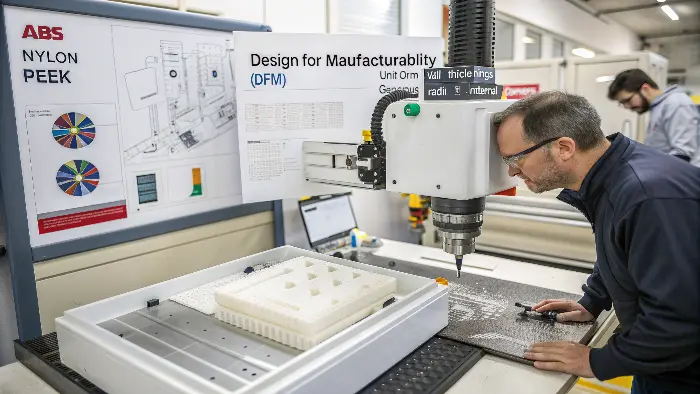
CNC tools need access, clearance, and a stable datum. Deep pockets, thin walls, internal corners, long tools, and flexible features increase deflection and heat. Design the part and the fixture together so the machining sequence does not distort the result.
- Use internal radii compatible with the selected cutter where possible.
- Avoid unsupported thin walls and provide sacrificial or nonfunctional clamping surfaces.
- Plan a datum scheme that can be repeated across setups and inspected after machining.
- Check tool reach, chip evacuation, and the risk of rubbing in deep features.
Tolerances, threads, and heat
Plastic expands, relaxes, and can deform under clamping. Tight tolerances should be reserved for functional features and measured at a controlled condition. Threads, press fits, and thin sections need material-specific design and assembly checks.
- Specify the measurement temperature and reference condition for critical dimensions.
- Use inserts or alternate fastening methods when repeated assembly would damage the plastic.
- Control cutting heat, sharp tooling, chip evacuation, and dwell to reduce melting or residual stress.
- Separate cosmetic surface requirements from true functional tolerances.
Inspection and release
A good CNC part is not proven by a toolpath screenshot. Define datums, gauges, CMM or optical methods, surface-finish measurement, and sampling. Inspect the features that control function, assembly, sealing, and wear, and retain material and process records.
- Tie the inspection report to the drawing revision and material certificate.
- Measure after stress relief or conditioning when the material requires it.
- Use a first-article plan before repeating a part across batches.
Frequently Asked Questions
Which plastics are easiest to CNC machine?
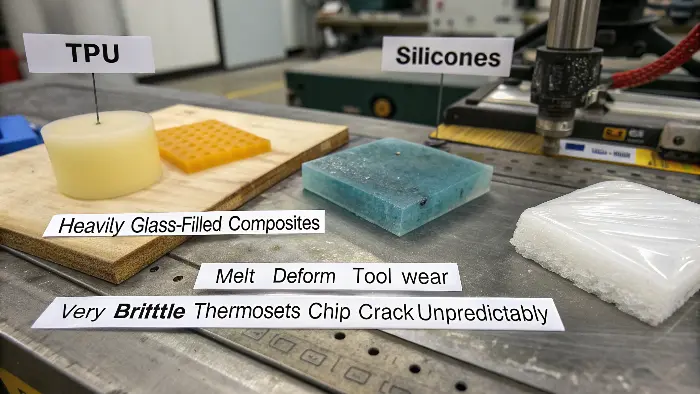
Many engineering plastics can be machined, but ease depends on stock form, stiffness, reinforcement, heat response, moisture, feature geometry, and the required finish. Material choice should be paired with the tool and fixture plan.
Why do CNC plastic parts change size after machining?
Thermal expansion, moisture, residual stress, creep, clamping distortion, and relaxation can change dimensions. Control the material condition, cutting heat, datum strategy, and inspection timing.
Can CNC machining hold metal-like tolerances in plastic?
Some local tolerances are achievable, but the allowable capability depends on material, size, geometry, temperature, fixturing, tool condition, and measurement method. Specify only tolerances that the function needs.
How should threads be designed in machined plastic?
Consider thread size, engagement, assembly torque, creep, repeated use, and the material's strength. Inserts or alternate fasteners may be more reliable for repeated or highly loaded joints.
Related Cavity Mold Services
For design review, mold engineering, tooling, and production planning, see our mold engineering service, mold-making service, and injection molding service.
Need a part-specific recommendation? Contact Cavity Mold with the part drawing, resin, annual volume, tolerances, and target application.