
Injection Molding Tooling vs. Part Price: A Total Cost Model
Answer in one sentence: True molding cost combines tooling, piece cost, yield, cycle, maintenance, inspection, logistics, and change risk across realistic volume.
How to use this guide: A useful cost model turns a quotation into an operating scenario that can be checked against actual production data. Use the controls and evidence below to compare the actual part, resin, mold, machine, and production requirement.
Separate one-time and recurring cost
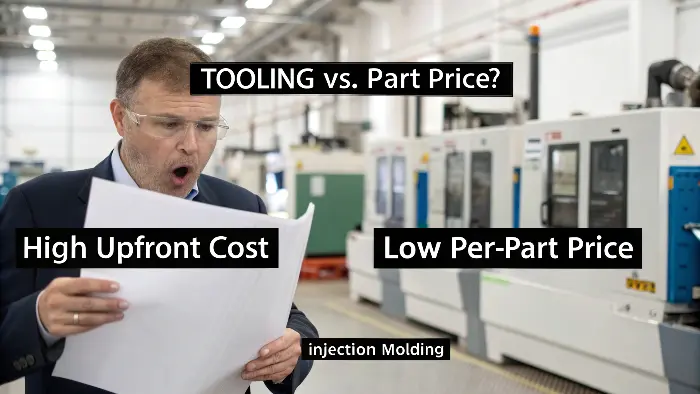
Tooling is the one-time investment, but the part price reflects material, machine time, labor, quality, packaging, and margin. A fair comparison identifies which costs occur at launch, which occur per part, and which are triggered by volume or engineering change.
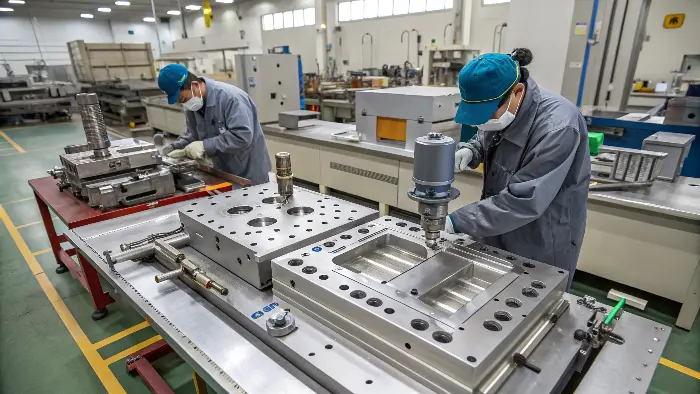
- List mold base, cavities, slides, lifters, hot runner or cold runner, surface finish, tryout, and spare parts.
- List resin, colorant, cycle time, machine rate, labor, inspection, packaging, scrap, and freight.
- State what is included in the quoted part price and what is excluded.
Use a volume and yield scenario
Calculate total cost at prototype, pilot, annual, and lifetime volumes. Add yield and rework assumptions rather than dividing the quote by nominal pieces. Cycle time, cavity count, uptime, material waste, and demand variability can change the result more than a small tool-price difference.
- Use effective good parts per hour, not only theoretical cycle time.
- Model startup scrap, process drift, color changes, and planned maintenance.
- Include inventory, shipping, and packaging when parts travel between locations.
- Show sensitivity for volume, yield, resin price, and cycle-time changes.
The cost of change and risk
A low tool quote can be expensive if a late design change requires steel rework or a new insert. Add a change-control path, design-freeze milestone, contingency, and acceptance criteria. Risk should be priced transparently rather than hidden in a vague allowance.
- Identify features likely to change and use replaceable inserts where justified.
- Clarify who pays for corrections caused by design, workmanship, or process assumptions.
- Keep a revision-controlled drawing and sample approval record.
How to compare two quotes
Normalize both quotes to the same part, steel, cavity count, runner concept, finish, inspection, sample quantity, delivery point, and warranty. Then compare total ownership cost and evidence, not only the tooling line or piece price.
- Ask for the assumed annual volume and cycle time behind the part price.
- Check whether maintenance, spare parts, and engineering support are included.
- Verify that dimensional and cosmetic acceptance criteria are written before order placement.
Frequently Asked Questions
Why can a cheap mold produce an expensive part?
Tool limitations can increase cycle time, scrap, maintenance, manual operations, or correction work. The part price should be evaluated with the tool's expected output and process stability.
Should mold cost be included in the part price?
For internal budgeting, allocate tooling over an explicit quantity or program life, while keeping the one-time investment visible. Hiding tooling in a unit price makes volume and ownership comparisons harder.
What is the most important input in a molding cost model?
The model needs realistic good-part output: quantity, cavity count, cycle time, uptime, yield, material usage, labor, inspection, maintenance, packaging, and logistics. No single input is sufficient.
How should engineering changes be budgeted?
Identify likely change points, define a design freeze, price insert-based options where useful, and document responsibility for change-driven rework versus workmanship correction.
Related Cavity Mold Services
For design review, mold engineering, tooling, and production planning, see our mold engineering service, mold-making service, and injection molding service.
Need a part-specific recommendation? Contact Cavity Mold with the part drawing, resin, annual volume, tolerances, and target application.