
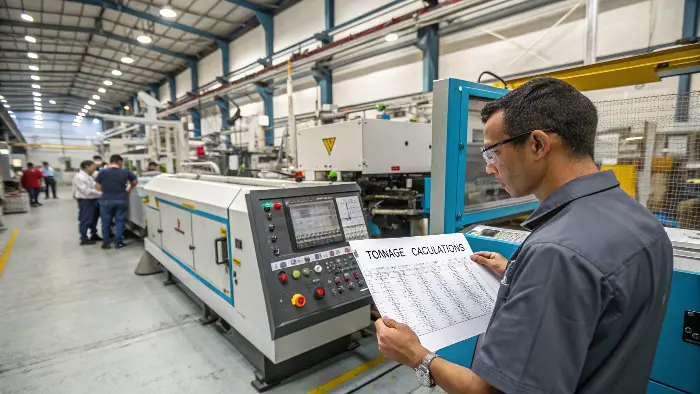
Injection molding tonnage is estimated from projected cavity and runner area and the pressure required to keep the mold closed, then checked against the real machine and process. The calculation is a sizing aid, not permission to choose a press without checking the mold, resin, flow path, and validation plan.
Use the correct projected area
- Project every cavity and relevant runner area onto the parting plane in the clamp direction.
- Account for cavity count, family-mold geometry, stack arrangements, and any overlapping surfaces carefully.
- Use cavity pressure or a material-specific tonnage factor appropriate to the actual resin, wall thickness, flow length, gate, and packing strategy.
Check the machine, not only the formula
- Confirm clamp capacity, platen and tie-bar dimensions, mold height, daylight, ejector interfaces, and safety limits.
- Check injection pressure, injection rate, shot size, screw diameter, temperature control, recovery, and residence time.
- Use flow analysis or cavity pressure evidence when the part is thin-wall, large, high-flow-length, filled, cosmetic, or otherwise high risk.
Validate against flash and stability
Run the real mold and resin with a controlled process. Check flash, parting-line condition, dimensions, pressure, cushion, and cavity balance. Oversizing a machine can create other process problems, while undersizing can cause flash, unstable dimensions, or tool stress.
Plan the next step
Share your part, resin, annual volume, critical dimensions, finish, and timing with the Cavity Mold team through our contact page. We can review the manufacturing risks and recommend a practical next step.
Related Cavity Mold resources
- Injection mold engineering services
- Plastic injection molding services
- Injection mold making services
- Contact Cavity Mold