
Injection molding disadvantages include upfront tooling, design lock-in, lead time, material limits, defects, waste, maintenance, and production-scale commitments. Those risks are manageable when they are identified early and matched with the right design, process, and sourcing decision.


Ten common disadvantages and mitigations
- Tooling investment: use staged validation and right-size the mold to demand.
- Longer launch lead time: freeze requirements early and define design, trial, correction, and approval gates.
- Design lock-in: complete DFM and prototype fit and function before cutting production steel.
- Material constraints: select resin for service requirements and validate drying, shrinkage, and processing.
- Parting lines and gate marks: agree cosmetic zones and gate strategy before mold design release.
- Warp, sink, flash, and short shots: control walls, flow, packing, cooling, venting, and process windows.
- Scrap and purge waste: stabilize the process and evaluate controlled regrind where approved.
- Maintenance: design access, spares, cleaning, inspection, and records into the tool program.
- Volume commitment: compare injection molding with bridge tooling, CNC, or additive manufacturing.
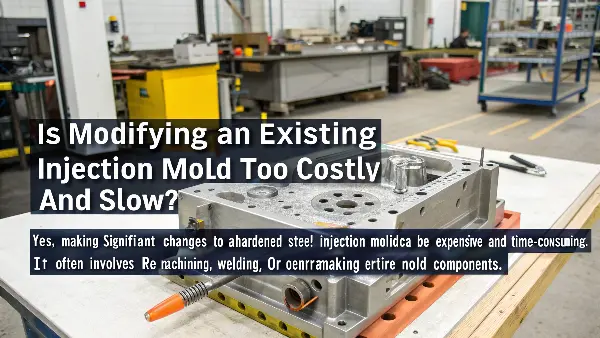
- Change cost: retain revision control, safe steel, modular inserts, and clear ownership.
Choose the process honestly
Injection molding is strongest when repeatable parts and meaningful volume justify the tool. It is not automatically the best choice for one-off parts, unstable geometry, or a material that cannot be melt processed in the proposed equipment.
Plan the next step
Share your part, resin, annual volume, critical dimensions, finish, and timing with the Cavity Mold team through our contact page. We can review the manufacturing risks and recommend a practical next step.
Related Cavity Mold resources
- Plastic injection molding services
- Injection mold engineering services
- Injection mold making services
- Contact Cavity Mold
Technical references
- Protolabs injection molding process and design guide
- Protolabs injection molding defects guide
- Protolabs process comparison
Turn disadvantages into an owned risk register
Injection molding risks become manageable when each one has a trigger, an owner, a mitigation, and evidence for closure. A general warning is not a control plan.
| Decision point | Check | Evidence or boundary |
|---|---|---|
| Design lock-in | CAD changes continue after tooling release. | Use revision freeze, DFM sign-off, and documented change impact. |
| Material fit | Grade, moisture, shrinkage, or service conditions remain uncertain. | Require grade evidence, drying plan, and application validation. |
| Defect variation | Appearance or CTQ acceptance is described only with adjectives. | Define samples, method, cavity identity, and escalation limits. |
| Volume commitment | Forecast is treated as firm demand. | Use scenarios, staged tooling, and an explicit capacity decision. |
| Maintenance | Wear parts and service access are absent from scope. | Define a maintenance plan, spares, and responsibility matrix. |
Minimum fields for the register
- Give each risk one owner and trigger.
- Separate immediate containment from long-term prevention.
- Close the risk only when the stated evidence is available.
Review the register through engineering and the production process.