
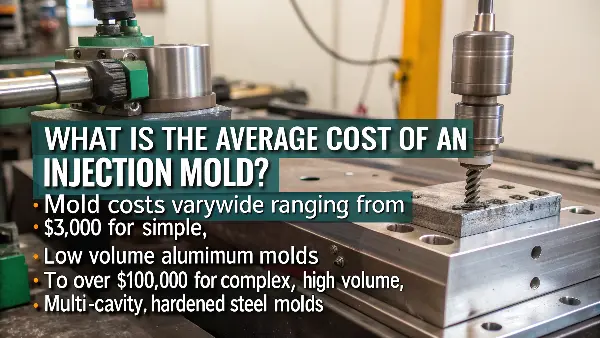
Injection mold ROI depends on tooling investment, unit economics, volume, tool life, quality risk, maintenance, and the timing of cash recovery. An expensive mold can be the right investment at stable volume, while a low-cost tool can be wrong if demand, quality, or service assumptions are uncertain.

Build the decision model
- List the complete upfront investment: DFM, mold design, tool, trials, inspection fixtures, samples, freight, and launch costs.
- Calculate variable cost per part: resin, machine time, labor, scrap, secondary operations, packaging, quality, and logistics.
- Define selling price or avoided purchase cost, expected volume, ramp timing, tool life, maintenance, and replacement risk.
- Calculate contribution per part and the volume at which cumulative contribution recovers the investment.
Use scenarios, not one optimistic forecast
Test demand at 50%, 100%, and 150% of plan; compare one-cavity, multi-cavity, bridge, and production tooling; and include delayed launch, a second trial, cavity downtime, resin changes, and quality containment. A break-even result is not profit unless the margin, cash timing, and operational capacity are realistic.
When a larger mold makes sense
Higher cavity count, better cooling, robust steel, automation, or a more capable machine can lower unit cost or risk, but the additional capital should be justified by demand and service requirements. Ask whether the investment improves capacity, quality, lifecycle cost, or only the quotation headline.
Plan the next step
Share your part, resin, annual volume, critical dimensions, finish, and timing with the Cavity Mold team through our contact page. We can review the manufacturing risks and recommend a practical next step.
Related Cavity Mold resources
- Injection mold making services
- Injection mold engineering services
- Plastic injection molding services
- Contact Cavity Mold