
Struggling to mass-produce complex plastic parts with consistent quality? Manual or other methods can be slow and costly, leading to project delays and budget overruns. Plastic injection molding is the solution for creating high-precision, identical parts at scale, ensuring speed and cost-effectiveness for your production line.
Plastic injection molding is a manufacturing process for creating parts by injecting molten material into a mold. It works by melting plastic pellets and forcing them under high pressure into a custom-made mold cavity. The plastic cools and solidifies to take the shape of the mold. This method is perfect for mass-producing complex parts with incredible precision and speed, from tiny electronic components to large automotive parts.
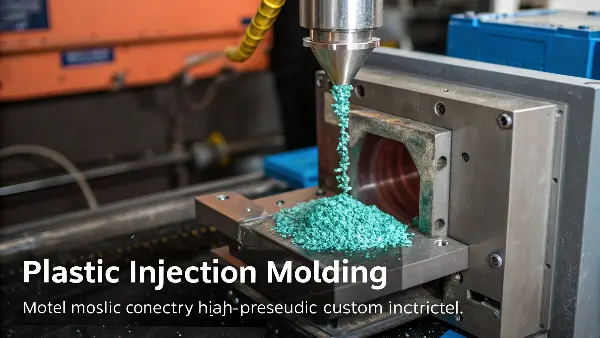
That’s the big picture, but the real power of this process is in the details. I’ve managed countless projects using injection molding, and I know that a good grasp of the fundamentals can make or break a product launch. Let’s dive deeper and break down exactly how this technology works, so you can see how it fits into your next project.
What are the 4 steps of injection molding?
Ever wonder how a machine transforms tiny plastic pellets into a perfectly formed product in just seconds? Without knowing the cycle, it’s hard to troubleshoot issues or optimize production times. Let’s walk through the four key steps that make this efficient manufacturing process possible, giving you a clear picture.
The four essential steps of injection molding are clamping, injection, cooling, and ejection. First, the two halves of the mold are securely closed by the clamping unit. Then, molten plastic is injected into the mold cavity. Next, the plastic cools and solidifies into the part’s final shape. Finally, the mold opens, and the part is pushed out by ejector pins, completing the cycle.
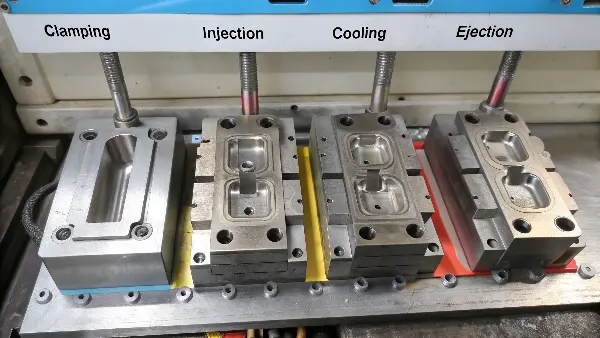
Understanding these four steps is fundamental for any project manager overseeing a manufacturing run. It’s a highly repeatable cycle, and each stage has a direct impact on the final part’s quality, cost, and production speed. As a project manager, I always pay close attention to how these phases are calibrated.
The Clamping Stage
Before anything else happens, the machine prepares the mold. The injection molding machine has two halves of a mold, a fixed half and a moving half. The clamping unit pushes the moving half against the fixed half with immense force. This force, known as clamping tonnage, is critical. It has to be strong enough to keep the mold sealed shut against the pressure of the molten plastic being injected. If the clamp isn’t strong enough, you can get "flash," a thin layer of excess plastic seeping out of the mold seam, which ruins the part. I learned early on that specifying the correct tonnage for a project is crucial; it depends on the part size and the material being used.
Injection and Cooling
Once the mold is clamped, the injection process begins. Plastic pellets are fed from a hopper into a heated barrel, where they are melted by a reciprocating screw. The screw pushes the molten plastic, now called the "shot," forward at high pressure into the mold cavity. After the cavity is filled, the cooling stage starts. Cooling is often the longest part of the cycle. The mold has internal cooling channels where a fluid, usually water, circulates to draw heat away from the plastic. Properly designed cooling is essential for a high-quality part and a short cycle time.
The Final Step: Ejection
After the part has cooled enough to become solid, the clamping unit opens the mold. The final step is to get the part out. This is done by the ejection system. Small pins or other mechanisms push the part out of the mold cavity. Sometimes, a robotic arm will grab the part to ensure it doesn’t get damaged and to maintain a consistent cycle. The machine is then ready to start the next cycle immediately. This whole process can take anywhere from a few seconds to a couple of minutes, depending on the part’s complexity and size.
| Stage | Key Action | Critical Factor |
|---|---|---|
| 1. Clamping | The two mold halves are closed | Sufficient clamping force (tonnage) |
| 2. Injection | Molten plastic is forced into the mold | Injection pressure, speed, and shot size |
| 3. Cooling | The plastic solidifies in the mold | Cooling time and mold temperature |
| 4. Ejection | The finished part is pushed out | Ejector pin placement and force |
What kind of plastic is used for injection molding?
Are you wondering which plastic is the right choice for your product? Selecting the wrong material can lead to part failure, increased costs, and production headaches. With thousands of options available, making an informed decision is vital for a successful project. Let’s explore the most common plastics and what makes them suitable.
A wide variety of thermoplastics and thermosets are used for injection molding, with the most common being Polypropylene (PP), Acrylonitrile Butadiene Styrene (ABS), Polycarbonate (PC), and Nylon (PA). The choice depends entirely on the part’s application requirements, such as strength, flexibility, temperature resistance, and cost. Each material has unique properties that make it ideal for specific products, from consumer goods to industrial components.
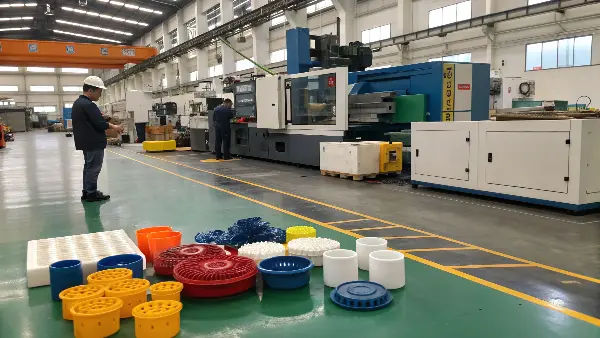
Choosing the right material is one of the most important decisions you’ll make in product development. It affects everything from the part’s performance and appearance to its cost. Over the years, I’ve seen projects succeed or fail based on this single choice. Let’s break down some of the most common materials I work with to give you a better idea of what to consider.
Commodity Plastics for Everyday Use
These are the workhorses of the injection molding world. They are inexpensive, easy to process, and used in a huge range of consumer products.
- Polypropylene (PP): This is one of the most versatile plastics. It’s tough, flexible, and has great chemical resistance. Think about food containers, car bumpers, and living hinges on bottle caps. I often choose PP for projects that need durability and affordability without high-performance mechanical properties.
- Acrylonitrile Butadiene Styrene (ABS): ABS is known for its strength, rigidity, and nice surface finish. It’s what LEGO bricks, keyboard caps, and electronic housings are made of. It’s a great all-around choice when you need a sturdy, good-looking part that can withstand impact.
Engineering Plastics for Tougher Jobs
When a part needs to perform under stress, I turn to engineering plastics. They cost more but offer superior mechanical and thermal properties.
- Polycarbonate (PC): PC is incredibly strong and impact-resistant. It’s also transparent, making it perfect for things like safety glasses, CDs, and clear electronic casings. Its high-performance nature means it requires higher processing temperatures, which is a key consideration for mold design.
- Nylon (PA): Also known as Polyamide, Nylon is known for its excellent strength, temperature resistance, and low-friction properties. I specify it for parts like gears, bearings, and other components that need to be durable and self-lubricating.
Here’s a quick comparison to help you see the differences:
| Plastic | Key Properties | Common Applications |
|---|---|---|
| PP | Flexible, chemical resistant, low cost | Packaging, automotive parts, hinges |
| ABS | Strong, rigid, good surface finish | LEGOs, electronic housings, toys |
| PC | High impact strength, transparent | Safety glasses, CDs, phone cases |
| PA | High strength, wear resistant | Gears, bearings, structural parts |
What are the 5 types of plastic molding?
Is injection molding the only way to make plastic parts? Relying on one method might limit your design possibilities or be inefficient for your specific needs. Knowing about other molding processes can help you choose the best technique for your project, optimizing for cost, volume, and complexity.
While injection molding is very popular, there are several other key types of plastic molding. The five main types include injection molding, blow molding, compression molding, rotational molding, and extrusion molding. Each method is designed for producing different types of plastic products, from hollow containers and large bulky items to continuous linear shapes like pipes or seals.
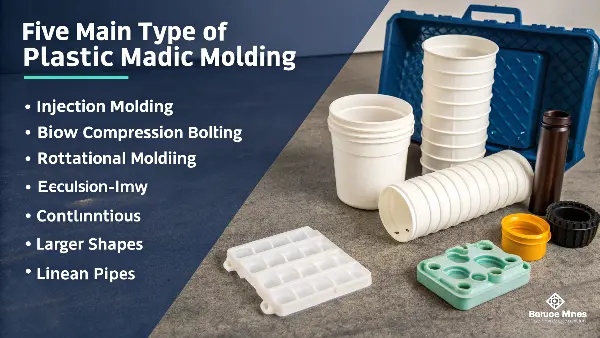
In my role, I have to consider all available manufacturing options to make the best decision for a project. While I mostly work with injection molding due to its precision and speed for high-volume parts, it’s not always the right tool for the job. Understanding the alternatives is crucial for any product developer. Let’s look at how these other methods compare.
Blow Molding
If you need a hollow part, like a bottle or a tank, blow molding is the go-to process. It works a bit like glassblowing. A hollow tube of heated plastic, called a parison, is placed inside a mold. Air is then blown into the parison, forcing it to expand and take the shape of the mold. It’s incredibly fast and efficient for producing items like drink bottles, shampoo containers, and automotive fuel tanks.
Compression Molding
Compression molding is one of the older molding techniques, but it’s still widely used, especially for thermosetting plastics. In this process, the plastic material is placed directly into a heated mold cavity. The mold is then closed, and pressure is applied to force the material to fill the entire cavity. It’s great for producing large, strong parts like electrical components and automotive panels.
Rotational Molding
For very large, hollow, and complex shapes, rotational molding is the answer. A measured amount of plastic powder is placed inside a hollow mold. The mold is then heated and slowly rotated on two axes. The plastic melts and coats the inside of the mold, forming a uniform layer. This method is used to make things like kayaks, large storage tanks, and playground equipment.
Extrusion Molding
Unlike the other processes that create discrete parts, extrusion is a continuous process. Molten plastic is forced through a die to create a long, continuous shape with a fixed cross-section. Think of pipes, window frames, and plastic tubing. The extruded plastic is then cooled and cut to the desired length.
| Method | Best For | Example Products |
|---|---|---|
| Injection Molding | Complex, high-volume solid parts | LEGOs, phone cases |
| Blow Molding | Hollow parts | Bottles, containers |
| Compression Molding | Large, strong, flat parts | Car parts, electrical outlets |
| Rotational Molding | Very large, complex hollow parts | Kayaks, tanks |
| Extrusion Molding | Continuous linear shapes | Pipes, window frames |
Conclusion
In summary, plastic injection molding is a powerful, efficient process for mass-producing high-quality parts. By understanding its core steps, materials, and how it compares to other methods, you can make smarter decisions for your projects and bring your products to market with confidence.