
Choosing the right plastic for your project feels overwhelming. One wrong move can lead to weak parts, production delays, and wasted money. Understanding the properties of common materials is the first step to making a smart, cost-effective decision for a successful product launch.
The best plastic materials for injection molding depend entirely on your project’s needs. The most popular choices are thermoplastics like Polypropylene (PP), Acrylonitrile Butadiene Styrene (ABS), Polycarbonate (PC), and Polyamide (Nylon). Each offers a unique balance of cost, strength, flexibility, and resistance to heat and chemicals. Selecting the right one means matching the material’s properties to your product’s final application and environment.
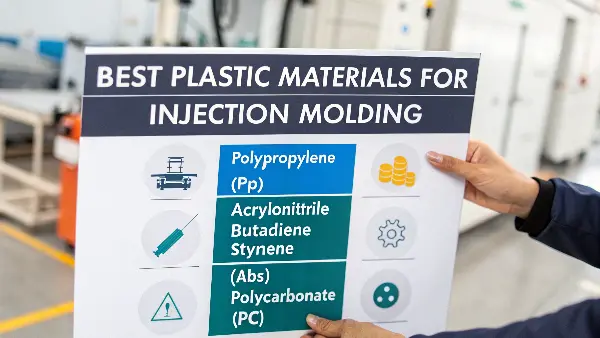
Getting this choice right is one of the most critical decisions you’ll make in product development. It affects everything from the part’s performance and appearance to the overall cost and manufacturing speed. I’ve seen firsthand how a well-chosen material can turn a good design into a great product. Let’s break down the options so you can feel confident in your selection.
What plastic materials are commonly used in injection molding?
You have a great product design, but now you face a list of hundreds of plastics. Picking the wrong one can lead to critical failures once the part is in use, damaging your reputation and your bottom line. Let’s simplify this by looking at the go-to materials we use every day.
The vast majority of injection molding uses thermoplastics because they can be melted and reshaped multiple times. Key materials include Polypropylene (PP) for its low cost and flexibility, ABS for its impact resistance, Polycarbonate (PC) for its toughness, and Nylon (PA) for its strength and heat resistance. These materials cover a wide range of applications, from simple containers to complex engineering components.
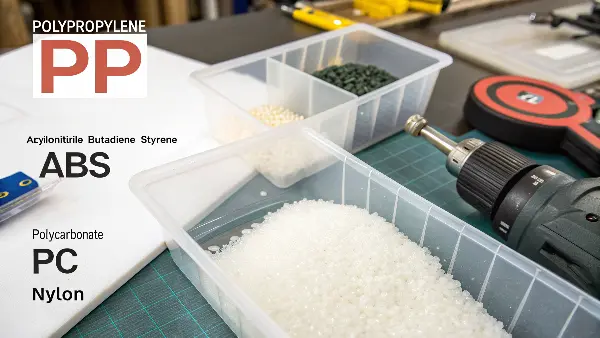
When we talk about plastics for molding, we generally put them into two main groups: thermoplastics and thermosets. Understanding the difference is your first step. I remember a project early in my career where a client insisted on a specific material without considering this. We had to explain that their choice, a thermoset, couldn’t be remolded, which would have made recycling production scraps impossible, driving up their costs. That simple conversation saved them thousands.
Thermoplastics vs. Thermosets
Thermoplastics are like butter. You can melt them, cool them into a solid shape, and then melt them again. This reusability is fantastic for manufacturing because any scrap or rejected parts can be ground up and reused, minimizing waste. They are by far the most common choice for injection molding. Thermosets, on the other hand, are like baking a cake. Once you heat them, they undergo a chemical change and set permanently. You can’t melt them back down. This makes them great for applications needing high heat resistance and structural integrity, but they are less common in standard injection molding.
Common Material Families
To make it easier, we can group the most popular thermoplastics by their characteristics. Here’s a quick breakdown:
| Material Family | Examples | Key Characteristics | Typical Applications |
|---|---|---|---|
| Commodity Plastics | Polypropylene (PP), Polyethylene (PE), Polystyrene (PS) | Low cost, easy to process, good chemical resistance. | Packaging, consumer goods, toys, containers. |
| Engineering Plastics | ABS, Polycarbonate (PC), Nylon (PA), POM | Strong, durable, good heat resistance, tight tolerances. | Automotive parts, electronic housings, gears, medical devices. |
| High-Performance Plastics | PEEK, Ultem (PEI) | Excellent heat and chemical resistance, very high strength. | Aerospace components, high-stress medical implants. |
At CavityMold, we help our partners navigate these options every day. Selecting the right material is a collaboration. We look at your design, your budget, and how the part will be used to recommend the perfect match.
What are the 7 main types of plastic?
You’ve probably seen the little recycling symbols with numbers inside on plastic products. These codes can seem confusing, but they are actually a simple way to classify plastics. Not knowing what they mean can lead to issues with sorting, recycling, or even product compliance. Understanding these seven categories gives you a clear framework for identifying materials.
The seven main types of plastic are classified by their Resin Identification Code (RIC). They are: 1) Polyethylene Terephthalate (PET), 2) High-Density Polyethylene (HDPE), 3) Polyvinyl Chloride (PVC), 4) Low-Density Polyethylene (LDPE), 5) Polypropylene (PP), 6) Polystyrene (PS), and 7) a category for "Other" plastics like ABS and PC. This system standardizes plastic identification for recycling and manufacturing.
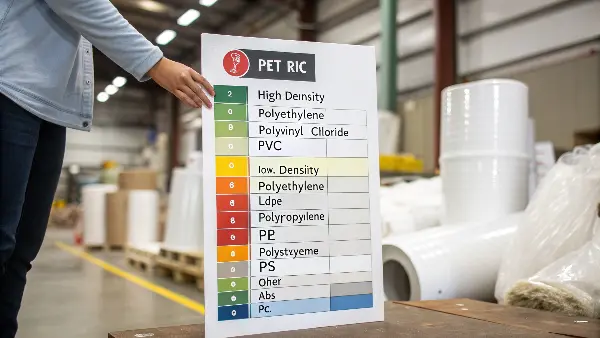
This system was created to help people sort plastics for recycling, but it has also become a handy shortcut in the manufacturing world. When a client tells me they are considering an "HDPE" part, I immediately have a good idea of the properties they’re looking for—rigidity, chemical resistance, and a low cost. It’s a common language for us engineers. It’s important to remember, though, that not all plastics with a RIC symbol are easily recyclable in every region.
The Resin Identification Code (RIC) System
Let’s break down exactly what each number means. This knowledge is not just for recycling; it helps you understand the fundamental properties of the material you’re holding in your hand. For example, knowing the difference between HDPE (#2) and LDPE (#4) can be the deciding factor for a product like a squeeze bottle, which needs flexibility (LDPE), versus a milk jug, which needs rigidity (HDPE).
A Closer Look at Each Type
Here’s a more detailed table that breaks down each of the seven codes. I often use a similar chart when explaining options to new project managers like Alex.
| RIC | Name (Abbreviation) | Key Properties | Common Injection Molded Applications |
|---|---|---|---|
| 1 | Polyethylene Terephthalate (PET) | Clear, strong, lightweight, good gas barrier. | Drink bottles, food jars. |
| 2 | High-Density Polyethylene (HDPE) | Stiff, strong, high chemical resistance. | Milk jugs, cleaning product containers, pipes. |
| 3 | Polyvinyl Chloride (PVC) | Rigid or flexible, durable, chemical resistant. | Pipes, window frames, flooring. |
| 4 | Low-Density Polyethylene (LDPE) | Very flexible, soft, good chemical resistance. | Squeeze bottles, plastic bags, lids. |
| 5 | Polypropylene (PP) | High heat resistance, fatigue resistant, tough. | Automotive parts, living hinges, food containers. |
| 6 | Polystyrene (PS) | Can be rigid or foamed, clear, brittle. | Disposable cups, CD cases, insulation. |
| 7 | Other | Varies greatly; includes PC, ABS, Nylon. | Electronic housings, eyewear, automotive components. |
The "Other" category is a catch-all for many high-performance engineering plastics. It’s a reminder that while the 1-6 classifications cover the most common commodity plastics, the world of injection molding materials is much, much larger.
What is the cheapest plastic to injection mold?
Every project has a budget, and keeping costs down is always a top priority. But chasing the lowest price per kilogram for plastic can be a trap, leading to parts that fail or don’t meet quality standards. The key is to find the material that offers the best value for your specific application without compromising performance.
The cheapest commodity plastics for injection molding are typically Polypropylene (PP) and Polyethylene (PE), including HDPE and LDPE. These materials are widely available, have low raw material costs, and are easy to process in the machine. This combination makes them the go-to choice for high-volume, low-cost applications like packaging, containers, and disposable consumer goods.
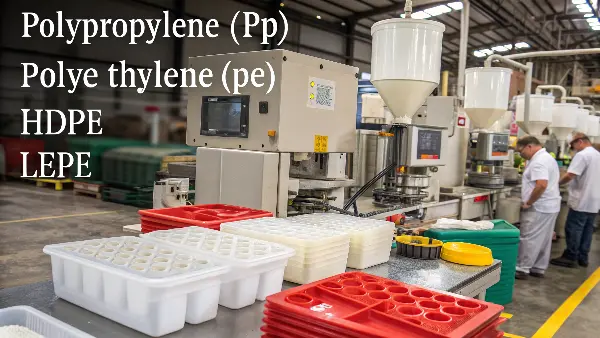
While raw material price is a huge factor, it’s not the only thing that determines the final cost of your part. I always remind our partners to look at the bigger picture. A slightly more expensive material that shortens the cycle time can actually save you money in the long run by increasing production output. It’s about finding the sweet spot between material cost, processing efficiency, and part performance.
Why Are PP and PE So Inexpensive?
Polypropylene and Polyethylene are part of a group called polyolefins. They are the most produced plastics globally, and their low cost comes down to a few key factors. First, the raw materials used to make them (natural gas and oil) are abundant and relatively cheap to process into monomers. Second, the polymerization process to create the plastic is highly efficient and has been optimized over decades. This massive scale of production means lower costs for everyone. Their forgiving nature during the molding process also helps keep costs down. They flow easily when melted and don’t require extremely high temperatures or pressures, which reduces energy consumption and wear on the molds.
Factors Beyond Raw Material Cost
Thinking that a cheap material will always result in a cheap part is a common mistake. Here are other factors that influence your final price:
- Cycle Time: This is the time it takes to make one part. Materials with lower melting points and faster cooling times, like PP, generally have shorter cycle times. A few seconds saved per part can add up to thousands of dollars over a large production run.
- Mold Complexity & Wear: Abrasive additives, like glass fibers used to strengthen a plastic, can wear down a mold faster. This increases maintenance costs. A simpler, unfilled material is easier on the tool.
- Processing Parameters: Some engineering plastics require very high temperatures to melt, which uses more electricity and requires more specialized, expensive machinery.
- Part Weight: Since you buy plastic by the kilogram, a heavier part will always cost more in materials. Designing for minimal material usage is crucial.
Here’s a simple comparison of common low-cost plastics:
| Material | Relative Cost | Key Advantage | Common Trade-off |
|---|---|---|---|
| Polypropylene (PP) | Very Low | Excellent fatigue resistance (living hinges). | Poor UV resistance without additives. |
| HDPE | Low | Great impact strength and chemical resistance. | Can be prone to stress cracking. |
| LDPE | Low | High flexibility and softness. | Low strength and heat resistance. |
Ultimately, choosing the "cheapest" material means balancing all these variables to achieve the lowest total cost per part that still meets all your performance requirements.
What is the strongest plastic for injection molding?
You need a part that can withstand serious abuse without breaking or deforming. Choosing a plastic based on strength can be tricky because "strength" means different things. It could be impact resistance, tensile strength, or hardness. Picking the wrong material can lead to catastrophic part failure, so let’s clarify what true strength looks like.
One of the strongest and toughest plastics available for injection molding is Polycarbonate (PC). It offers exceptional impact resistance, good rigidity, and maintains its properties over a wide temperature range. For applications requiring even higher performance, high-performance plastics like PEEK and Ultem (PEI) provide superior strength, especially at extreme temperatures, but at a much higher cost.
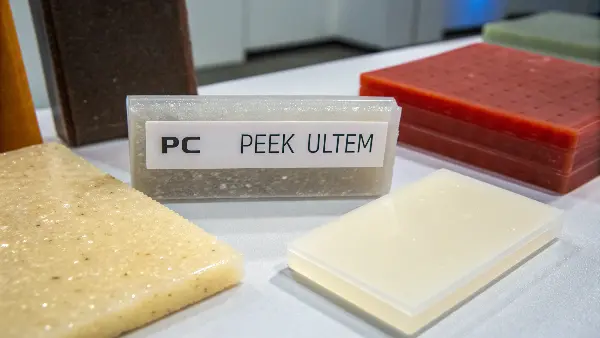
The term "strongest" really needs to be defined by the application. I worked on a project for a client developing protective gear. They initially asked for the "strongest" plastic. For them, strength meant the ability to absorb a sudden, high-force impact without shattering. We immediately recommended Polycarbonate. For another client making internal mechanical gears, "strength" meant high tensile strength and resistance to wear over millions of cycles. In that case, a glass-filled Nylon was a much better fit.
Defining "Strength" in Plastics
When an engineer talks about strength, they are usually referring to a specific mechanical property that we can measure. It’s crucial to know which one matters most for your product to succeed. Let’s look at the main types.
Key Measures of Strength:
- Tensile Strength: This is the material’s ability to resist being pulled apart. It’s important for parts that will be under tension, like ropes or structural brackets. Materials like Nylon and PEEK excel here.
- Impact Strength (Toughness): This measures how well a material can absorb a sudden shock or impact without cracking or breaking. Polycarbonate is the champion in this category, which is why it’s used for things like safety glasses and riot shields. ABS is also a very tough and cost-effective option.
- Compressive Strength: This is the ability to resist being squeezed or compressed. Thermoset plastics and highly-filled engineering plastics often have excellent compressive strength.
- Flexural Strength: This measures how well a material resists bending. Glass-filled plastics often have very high flexural strength, making them stiff and rigid.
Comparing High-Strength Plastics
To make the right choice, you need to compare the properties that matter most for your design while also considering cost. Here is a table comparing some of the top contenders for the "strongest" plastic title.
| Material | Key Strength Property | Best For… | Common Downside |
|---|---|---|---|
| Polycarbonate (PC) | Superior Impact Strength | Protective gear, lenses, electronic housings. | Can be prone to scratching and chemical attack. |
| Nylon (PA, often glass-filled) | High Tensile Strength & Wear Resistance | Gears, bearings, structural components. | Absorbs moisture, which can affect properties. |
| ABS | Good All-Around Toughness & Impact Strength | Consumer electronics, automotive trim, LEGO bricks. | Poor UV resistance without protection. |
| PEEK | Extreme Tensile Strength at High Temps | Aerospace, medical implants, high-stress parts. | Very high cost and difficult to process. |
Choosing the strongest plastic isn’t about picking the one with the highest number on a data sheet. It’s about understanding the forces your part will face and selecting the material that provides the right kind of strength, reliably and cost-effectively.
Conclusion
Choosing the right plastic is a foundational step for any successful injection molding project. From affordable and flexible Polypropylene to ultra-strong Polycarbonate, each material offers a unique profile. The best choice always depends on balancing your specific needs for performance, appearance, and budget.