
Struggling to meet demands for higher precision and faster turnarounds? Traditional methods are often too slow and error-prone for modern designs, leaving you at a competitive disadvantage. CNC machining provides the automated accuracy and versatility needed to overcome these challenges and lead your market.
Computer Numerical Control (CNC) machining is revolutionizing manufacturing by automating production with exceptional precision and speed. It enables the creation of complex parts from diverse materials that were previously too difficult or expensive. This technology significantly reduces human error, shortens lead times from weeks to days, and facilitates rapid prototyping and on-demand production, transforming how we design and build everything.
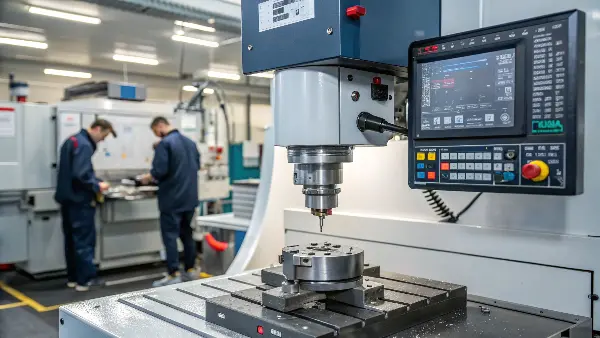
But let’s be honest, calling it a "revolution" is a bold claim. To truly understand its profound effect, we need to look beyond the basic definition. It’s not just about what CNC machining is, but what it does for businesses like ours every single day. Let’s dive into how these machines have reshaped the factory floor, why they are so vital, and what their role is in a more sustainable future.
What is the importance of CNC machining in the manufacturing industry?
Trying to justify new technology investments without a clear ROI can be tough. It’s difficult to see the direct value of every machine on the factory floor. Without grasping the core importance of CNC, you risk underutilizing its power or being outpaced by competitors who are leveraging it fully.
CNC machining is vital because it is the backbone of precision and repeatability in modern manufacturing. Its importance lies in its ability to consistently produce high-quality, complex parts with tight tolerances. This reduces waste, lowers labor costs, and accelerates time-to-market. For any industry requiring reliable and identical components, from aerospace to medical devices, CNC is not just an option—it’s an absolute necessity for staying competitive and innovative.
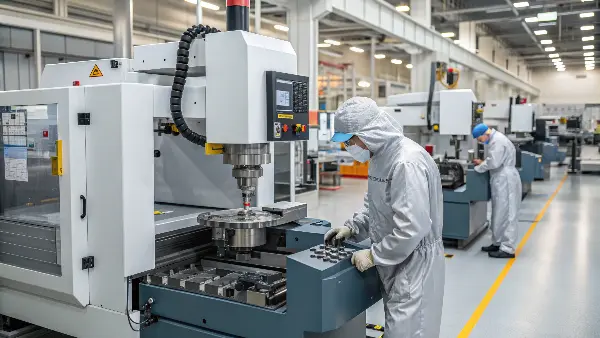
When I first started in this industry over two decades ago, so much relied on the skilled hand of a master machinist. It was an art, but it was also slow and difficult to scale. The real importance of CNC machining is that it took that artistry and encoded it into a language that machines could execute perfectly, 24/7. This shift has three core pillars of importance that we see every day.
The Pillars of CNC’s Importance
First, there’s Consistency and Quality. A human machinist, no matter how skilled, will have slight variations. A CNC machine will not. If I need to produce 10,000 identical components for a client’s electronics project, CNC ensures the ten-thousandth part is a perfect twin of the first. This level of quality control is fundamental. It reduces rejection rates, guarantees part fitment in assemblies, and builds client trust. For a project manager like Alex, this reliability is non-negotiable.
From Prototyping to Production
Second is Speed and Flexibility. CNC bridges the gap between a digital design and a physical object faster than any other traditional method. We can take a client’s CAD file, program the machine, and have a functional prototype in their hands within days. This rapid prototyping allows for quick design validation and iteration. If a change is needed, it’s a simple matter of adjusting the code, not retooling an entire production line. This flexibility extends to full-scale production, allowing us to pivot between different parts or projects with minimal downtime.
Unlocking Complex Designs
Finally, and perhaps most importantly, is Complexity and Innovation. Before CNC, designs were often limited by what could be practically made. Intricate curves, complex internal features, and thin walls were a nightmare. CNC machining removes these barriers. It allows engineers and designers to create parts optimized for performance, not just for manufacturability. This has unlocked innovation across every industry, leading to lighter, stronger, and more efficient products.
| Aspect of Importance | Direct Business Benefit |
|---|---|
| Precision & Repeatability | Drastically reduced defect rates and material waste. |
| Automation | Lowered labor costs and enabled 24/7 production cycles. |
| Speed & Flexibility | Shortened project lead times from months to weeks. |
| Complexity Capability | Enabled the creation of previously "impossible" designs. |
How have CNC machines impacted modern manufacturing?
Do you ever feel like production capabilities are lagging behind design ambitions? You have a brilliant, optimized design, but the old methods just can’t produce it accurately or cost-effectively. This gap between design and reality can stifle innovation and slow down your entire project timeline.
CNC machines have made a massive impact by turning digital designs directly into high-precision physical parts. This has drastically accelerated product development cycles, enabled mass customization, and made complex manufacturing accessible to more businesses. The technology has raised the bar for quality and consistency across all industries, from automotive to aerospace, fundamentally changing what is possible to produce at scale.
The impact is more than just an upgrade; it’s a total transformation of the factory floor and the business that relies on it. I remember a project years ago involving a complex mold for a medical device. The tolerances were incredibly tight, and the geometry was tricky. Manually, it would have taken weeks of painstaking work with a high risk of error. With our new 5-axis CNC machine, we completed it in three days, and it was perfect on the first try. That’s when the true impact hit me.
Redefining the Role of the Machinist
One of the most significant impacts has been the evolution of the workforce. Many feared CNC would eliminate jobs. Instead, it changed them. The demand shifted from manual dexterity to technical skill. Today, our best people are not just machinists; they are programmers, setup technicians, and quality control experts. They work with the machines, using their expertise to optimize toolpaths, manage workflows, and troubleshoot complex problems. This creates a safer, less physically demanding, and more intellectually stimulating work environment. It has elevated the profession, not erased it.
Democratizing Advanced Manufacturing
Another profound impact is the democratization of manufacturing. In the past, high-precision production was the exclusive domain of huge corporations with massive capital. Now, with more affordable and accessible CNC machines, smaller companies and even startups can compete on a global scale. We at CavityMold can serve a client in Australia as effectively as one down the street because the digital CNC file is a universal language. This has leveled the playing field, fostering a wave of innovation from businesses of all sizes.
The Ripple Effect on the Supply Chain
Finally, the impact ripples through the entire supply chain. With CNC, we can offer on-demand manufacturing and just-in-time (JIT) delivery. Our clients don’t need to hold vast inventories of parts. They can order what they need, when they need it, freeing up their capital and reducing warehouse costs. This lean approach, enabled by CNC’s speed and reliability, makes the entire product ecosystem more agile and resilient to market shifts. It’s a system-wide optimization that starts with a single, precise cut.
Is CNC machining considered manufacturing?
Sometimes, the terminology we use can feel confusing. With so many advanced processes, from 3D printing to automated milling, you might wonder where everything fits. Is a subtractive process like CNC machining truly in the same category as traditional fabrication or assembly?
Yes, CNC machining is absolutely considered a core discipline of manufacturing. It is a subtractive manufacturing process, where material is removed from a solid block to create a final part. It stands alongside additive manufacturing (like 3D printing) and formative manufacturing (like injection molding) as one of the primary methods for producing goods, components, and tools in the modern industrial landscape.
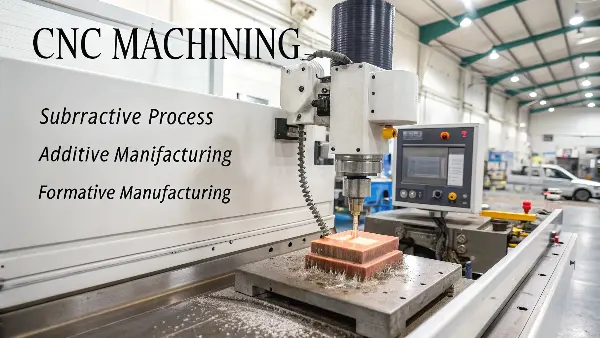
This question might seem academic, but it gets to the heart of how we define "making things" today. I’ve had conversations with younger engineers who see 3D printing as the future and view CNC as old-school. But that’s a misunderstanding of what manufacturing is. Manufacturing isn’t about one specific technique; it’s the process of converting raw materials into finished goods. CNC machining is a powerful and essential way to do that.
Subtractive vs. Additive: Two Sides of the Same Coin
The debate often centers on subtractive versus additive processes. It helps to think of them as complementary tools in a complete manufacturing toolkit, not competitors.
- Subtractive Manufacturing (CNC Machining): This is like sculpting. You start with a block of material (metal, plastic, wood) and precisely cut away everything that isn’t the final part. Its strengths are unmatched precision, excellent surface finishes, and the ability to work with a huge range of engineering-grade materials. This is crucial for creating strong, durable parts like our injection molds.
- Additive Manufacturing (3D Printing): This is like building with LEGOs. You start with nothing and add material layer by layer to build the final part. Its strength lies in creating incredibly complex internal geometries and its speed for one-off prototypes. However, it often struggles with material strength and surface finish compared to CNC.
In our work, we use both. We might 3D print a quick concept model to check form and fit. But when it’s time to create the high-strength, high-precision steel mold that will produce a million plastic parts, CNC machining is the only way to go.
A Foundational Process
CNC is not just a manufacturing process; it is a foundational one. Think about it: the very machines used for other types of manufacturing are often built with CNC-machined parts. The molds for injection molding, the dies for stamping, and the components for assembly line robots all rely on the precision of CNC. It’s a keystone technology that supports the entire manufacturing ecosystem.
| Process Type | Core Action | Common Use Case | Key Strength |
|---|---|---|---|
| CNC Machining (Subtractive) | Removing material from a block | High-strength functional parts, molds, tooling | Precision, Material Properties, Surface Finish |
| 3D Printing (Additive) | Adding material layer by layer | Complex prototypes, custom jigs, intricate shapes | Geometric Freedom, Speed for one-offs |
| Injection Molding (Formative) | Shaping molten material in a cavity | High-volume production of plastic parts | Speed at Scale, Low Part Cost |
So yes, CNC machining is manufacturing. It’s a sophisticated, technology-driven form of it that is essential for producing the high-quality goods our world depends on.
How can CNC machines be used for greener manufacturing?
As a project manager, you’re constantly balancing cost, quality, and speed. Now, sustainability is a fourth, equally important pillar. The pressure is on to reduce environmental impact, but it’s hard to see how a process that creates metal chips can be "green."
CNC machines contribute to greener manufacturing primarily by optimizing material use and reducing waste. Advanced software calculates the most efficient toolpaths, minimizing scrap. The high precision reduces faulty parts, saving energy and materials. Furthermore, CNC enables the repair and remanufacturing of old components, extending product lifecycles and supporting a circular economy.
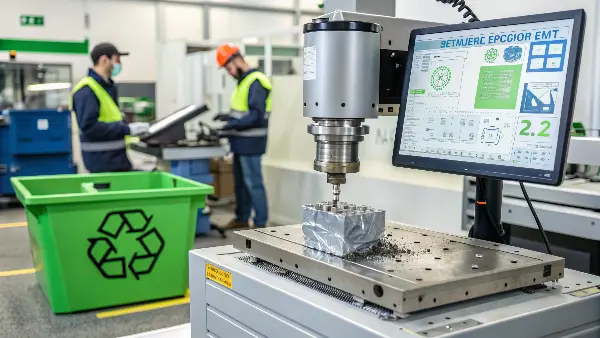
The image of a machine carving away material doesn’t immediately scream "eco-friendly." For years, manufacturing was seen as inherently wasteful. But that’s a dated perspective. Modern CNC technology, when used intelligently, is a powerful tool for sustainability. At CavityMold, we’re not just focused on precision; we’re actively using our CNC capabilities to make our operations, and our clients’ projects, greener. It comes down to being smarter with materials, energy, and the product lifecycle.
Maximizing Material, Minimizing Waste
The most obvious contribution is waste reduction. Old manual processes resulted in significant scrap material due to human error or inefficient cutting strategies. Today’s CAM (Computer-Aided Manufacturing) software does something amazing: it simulates the entire machining process before a single cut is made. This allows us to optimize toolpaths to get the most parts out of a single block of raw material. This "nesting" of parts drastically reduces the amount of scrap produced. The metal chips that are created are also highly recyclable. We collect all our aluminum and steel scrap, and it goes directly back into the supply chain to be melted down and reused, creating a closed loop.
Energy Efficiency and Lean Operations
The machines themselves are also evolving. Newer CNC models are designed for energy efficiency, with intelligent power management systems that reduce electricity consumption during idle times. But the bigger impact comes from CNC’s role in enabling lean manufacturing. Because we can produce parts quickly and on-demand, our clients don’t need to order massive batches that sit in a warehouse. This just–in-time approach reduces the energy and resources tied up in inventory, transportation, and storage, shrinking the carbon footprint of the entire supply chain.
Enabling the Circular Economy
This is the part that I find most exciting and is often overlooked. CNC machining is a key enabler of the circular economy. Instead of throwing away a worn-out or broken machine part, we can use CNC to repair it. We can precisely machine away the damaged area and then add a new piece of material via welding, which is then machined back to the original specification. This remanufacturing process uses a fraction of the energy and raw material required to create a new part from scratch. It extends the life of expensive equipment, saves our clients money, and is a huge win for the environment. It’s a shift from a "take-make-dispose" model to a "maintain-repair-reuse" culture.
Conclusion
CNC machining is not just an incremental improvement; it is a fundamental pillar of modern manufacturing. It delivers unmatched precision, accelerates development from design to production, and unlocks innovative and complex geometries. By enabling greener practices and more efficient supply chains, its impact goes far beyond the factory floor.