
Struggling to manage your injection molding project and keep it on track? It’s easy to get lost in the technical details, leading to costly delays and quality issues. A clear, step-by-step roadmap is what you need to navigate the process smoothly from concept to final product.
The injection molding process involves six key steps: product design review (DFM), mold design and engineering, mold manufacturing (tooling), material preparation, the injection molding cycle itself (clamping, injection, cooling, ejection), and finally, post-processing and quality control. Each stage builds on the last to ensure a high-quality, repeatable outcome.
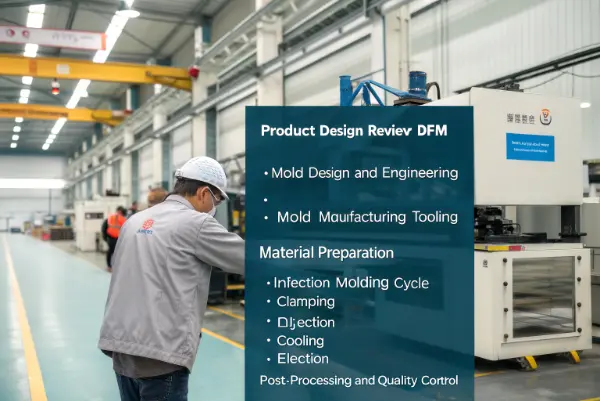
Navigating the path from a simple idea to thousands of finished plastic parts can feel complex. But it doesn’t have to be. For over a decade, I’ve helped project managers just like you break down this process into manageable steps. The key is understanding how each stage connects to the next. Let’s walk through this journey together, step by step, so you can master your next project with confidence.
How Crucial is Product Design for Successful Molding?
Have you ever finalized a product design only to discover it’s impossible to manufacture affordably? This frustrating setback leads to expensive mold reworks and pushes your project weeks behind schedule. The solution is to integrate Design for Manufacturability (DFM) from the very beginning.
Optimizing your product design with DFM principles is the most critical first step. It ensures the part can be molded efficiently, reduces costs, and prevents future production headaches. This involves analyzing factors like wall thickness, draft angles, ribs, and undercuts before any steel is ever cut for the mold.
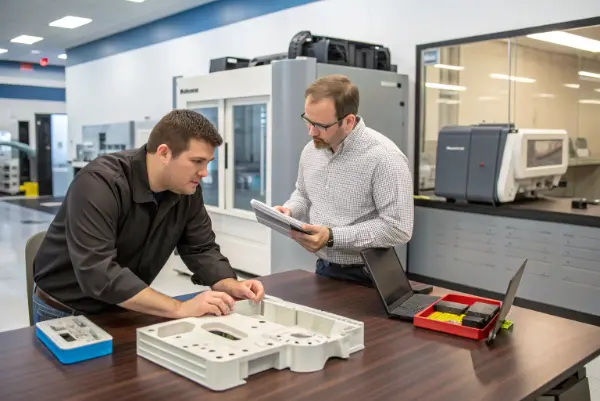
I’ve seen it happen too many times. A brilliant design looks perfect on screen, but it ignores the fundamental physics of how molten plastic behaves. That’s where a detailed DFM analysis becomes your best friend. It’s a collaborative review between your design team and us, the mold maker, to catch potential problems early. We’re not trying to change your product’s vision; we’re trying to make it a reality in the most efficient way possible.
Consistent Wall Thickness
This is probably the number one rule in plastic part design. When plastic cools, it shrinks. If one section of your part is much thicker than another, it will cool and shrink at a different rate. This causes issues like sink marks (small depressions on the surface) or warping, where the part literally twists out of shape. We aim for uniform thickness everywhere. If thickness variations are unavoidable, the transition should be gradual, not abrupt.
Draft Angles
Imagine trying to pull a perfectly straight-sided cup out of a bucket of hardened sand. It would be difficult, right? The same principle applies here. A draft angle is a small taper, usually 1 to 2 degrees, applied to the vertical walls of the part. This tiny angle prevents the part from scraping against the mold surface during ejection, avoiding scratches and reducing wear on the mold itself. It’s a small detail that makes a huge difference in part quality and production speed.
Undercuts and Complex Features
An undercut is any feature that would prevent the part from being ejected straight out of the mold, like a side hole or a snap-fit clip. While undercuts are often necessary for a part’s function, they add significant complexity and cost to the mold. We need to build special mechanisms, like side-actions or lifters, to create these features. During DFM, we look at these and ask: "Is this undercut absolutely essential, or can we achieve the same function in a simpler way?" Sometimes a small design tweak can eliminate a complex mold action, saving you thousands of dollars.
What Goes into Designing a High-Quality Injection Mold?
You’ve perfected the part design, but now the success of your project rests on the tool that will create it. A poorly designed mold is a recipe for disaster. It can lead to inconsistent part quality, slow production cycles, and a tool that wears out long before its time.
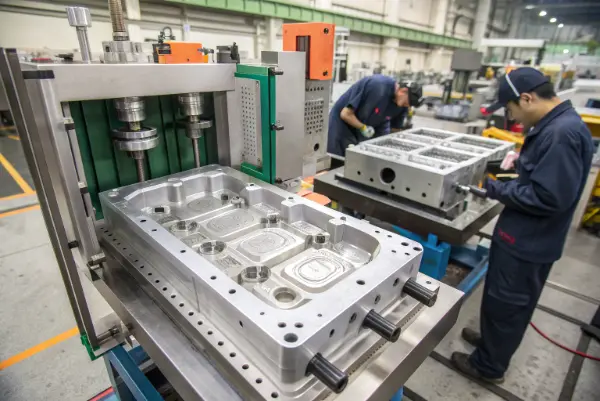
A high-quality mold design is a detailed engineering blueprint. It meticulously plans the core and cavity, the runner system that delivers plastic, the cooling channels that solidify the part, and the ejection system that removes it. We use advanced tools like Moldflow analysis to simulate everything, catching problems before we machine any metal.
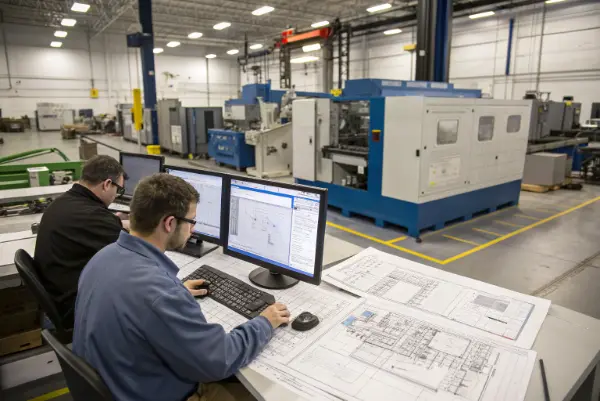
I think of mold design as creating a small, highly precise factory that produces just one part. Everything has to work in perfect harmony. The goal isn’t just to make a part that looks right once; it’s to make a tool that can produce hundreds of thousands of identical parts, quickly and reliably. This requires a deep understanding of materials, thermodynamics, and mechanical engineering. It’s a craft that combines science and experience. I remember one project where a competitor’s mold had cooling channels that were too far from a thick section of the part. The result was a warped part every single time. We redesigned the mold with conformal cooling, and the problem vanished. That’s the power of thoughtful mold design.
Core and Cavity
This is the heart of the mold. The cavity is the hollow part that forms the external surface of your product, while the core creates the internal features. These two halves are machined from hardened steel with extreme precision—often down to a few microns. The choice of steel is critical; it depends on the plastic material being used, the surface finish required, and the expected production volume.
Runner and Gate System
The runner is a channel that guides molten plastic from the nozzle of the injection molding machine to the part cavity. The gate is the specific point where the plastic enters the cavity. The design of this system is crucial for part quality.
| Gate Type | Description | Best For |
|---|---|---|
| Edge Gate | Enters at the parting line; leaves a small mark that must be manually trimmed. | Simple, low-cost applications. |
| Submarine Gate | Enters below the parting line and automatically shears off during ejection. | High-volume, automated production. |
| Hot Runner | A heated runner system that keeps plastic molten all the way to the gate. | Eliminates runner waste, faster cycles. |
Cooling System
This is one of the most underrated parts of mold design. Cooling typically accounts for over two-thirds of the entire cycle time. Efficient cooling channels, filled with circulating water or oil, must be placed strategically to draw heat out of the part uniformly. This prevents warping and allows for faster production.
How Does the Actual Injection Molding Cycle Work?
With a finished mold ready to go, it’s time to start production. But what actually happens inside that massive machine? Not understanding the cycle can lead to unrealistic expectations for production times and quality control. It’s a fast, repetitive process that needs to be perfectly tuned.
The injection molding cycle is a four-stage process that repeats to produce each part. First, the mold is clamped shut under immense pressure. Second, molten plastic is injected into the mold cavity. Third, the plastic cools and solidifies. Finally, the mold opens and the finished part is ejected.
Watching an injection molding machine in action is impressive. It’s a powerful and precise dance of hydraulic and mechanical movements. The entire cycle for a small part might take only 20 or 30 seconds. But within that short time, so many variables have to be perfectly controlled: temperature, pressure, speed, and timing. As a project manager, you don’t need to be an expert on every setting, but understanding the basic sequence helps you appreciate why small adjustments can have a big impact on the final product. It also helps you understand what we mean when we talk about "dialing in the process" to get your parts just right.
Stage 1: Clamping
Before any plastic is injected, the two halves of the mold must be securely closed. A powerful hydraulic or all-electric clamping unit pushes the mold halves together and holds them shut with hundreds or even thousands of tons of force. This force is essential to counteract the immense pressure of the injected plastic, which would otherwise try to push the mold apart and cause "flash"—thin, unwanted plastic seeping out at the parting line.
Stage 2: Injection
Plastic pellets are fed from a hopper into a heated barrel. A large reciprocating screw inside the barrel melts the plastic and conveys it forward. Once enough molten plastic has accumulated at the front of the screw, it rapidly pushes forward like a plunger, injecting the plastic into the mold cavity under high pressure. This happens very quickly, often in just a few seconds. The injection pressure and speed are critical parameters we set to ensure the cavity is filled completely without defects.
Stage 3: Cooling
As soon as the cavity is filled, the cooling stage begins. The molten plastic inside the mold begins to transfer its heat to the steel mold walls, where cooling channels are circulating fluid. The part solidifies and takes its final shape during this phase. This is usually the longest part of the cycle, and its duration is determined by the wall thickness of the part and the thermal properties of the plastic.
Stage 4: Ejection
Once the part has cooled enough to be rigid, the clamping unit opens the mold. The ejector system—a series of pins or plates at the back of the mold—then pushes forward to eject the finished part, which falls into a collection bin. The cycle is now complete and ready to begin again immediately.
What Happens After a Part Leaves the Mold?
Your part has just been ejected from the machine, but the job isn’t finished yet. Believing the process is over once the part is molded can lead to overlooking critical final steps. These finishing touches and quality checks are what separate an acceptable part from a great one.
After ejection, parts move to post-processing and quality control. This can include trimming gate remnants, assembly, decorating, or other secondary operations. At the same time, rigorous quality checks are performed to ensure every part meets the required specifications for dimensions, appearance, and function before being packaged for shipment.
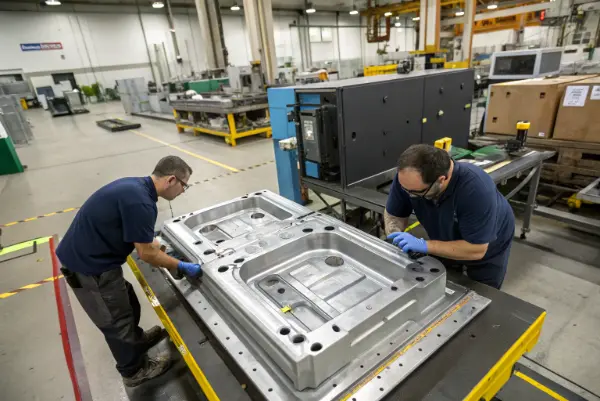
This final stage is all about ensuring that the parts you receive are exactly what you approved. At CAVITYMOLD, we don’t consider the project done until every part passes our quality assurance checks. It’s the last line of defense against any potential issues. I always emphasize to my team that the first part and the 100,000th part must be identical. This requires a systematic approach to inspection and a clear understanding of what the customer defines as a "good" part. We work with our clients to establish clear quality standards, so there are no surprises when the boxes arrive at their facility.
Secondary Operations
Many parts require additional work after they are molded. This can be as simple as an operator manually trimming the small nub left by the gate, or it can be much more complex. Common secondary operations include:
- Assembly: Snapping multiple molded parts together.
- Ultrasonic Welding: Using high-frequency vibrations to create a strong, permanent bond between two plastic pieces.
- Pad Printing/Silk Screening: Applying logos, text, or graphics to the surface of the part.
- Painting or Plating: Adding a decorative or functional coating to the part.
- Threading: Adding threaded inserts for screws.
These operations should be planned for from the beginning, as they can affect the part design and overall project cost.
Quality Control and Inspection
Quality control isn’t just a final step; it happens throughout the entire production run.
- First Article Inspection (FAI): The very first parts produced from a new mold are meticulously measured and inspected against the original CAD model and drawings. We submit an FAI report to you for approval before starting mass production.
- In-Process Checks: During the production run, our operators and quality technicians regularly pull parts from the line to check critical dimensions and visual appearance. This allows us to catch any process drift before it results in a large number of bad parts.
- Final Inspection: A final random sample is inspected before the parts are packaged and shipped, ensuring the entire batch meets the agreed-upon quality standards. We use tools like calipers, micrometers, and Coordinate Measuring Machines (CMM) for precise measurements.
Conclusion
From the initial DFM analysis to final quality control, each step of the injection molding process is connected. Understanding this workflow helps you manage projects effectively, avoid common pitfalls, and partner with your manufacturer to create high-quality parts efficiently. It turns a complex process into a clear path to success.