
Choosing the right surface finish for your plastic part can feel overwhelming. A wrong decision can ruin the product’s look, feel, and even its function. This simple mistake can lead to costly re-tooling and project delays, putting your entire launch at risk.
To select the perfect surface finish, you must balance four key factors: aesthetics, function, plastic material, and cost. Start by defining the desired look and feel (glossy, matte, textured). Then consider functional needs like grip or paint adhesion. Finally, evaluate how your material choice and budget constraints will impact the available finishing options.
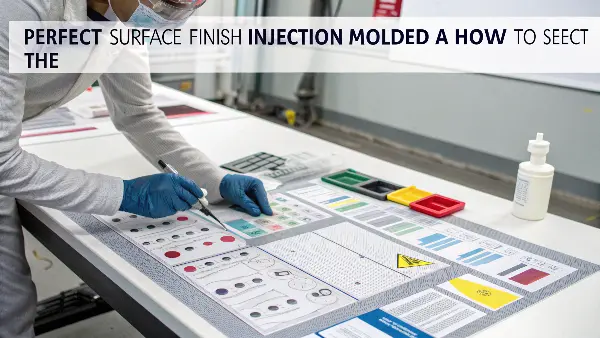
Choosing a surface finish is one of the most critical decisions you’ll make in product development. It’s not just about making the part look good; it impacts everything from the user experience to the manufacturing cost. I’ve seen projects succeed or fail based on this single choice. Let’s break down how you can make the right call for your project. We’ll walk through the standards, the link between materials and finishes, and how function and cost play a huge role.
What Are the Standard Surface Finish Standards You Should Know?
You’re discussing a project with a mold maker, and they mention "SPI A-2" or "VDI 30." If these terms are unfamiliar, you risk serious miscommunication. This confusion can lead to a final product that has a completely different texture than you imagined, forcing expensive and time-consuming mold corrections.
The two primary standards for injection mold finishes are the SPI (Society of the Plastics Industry) standard, common in North America, and the VDI 3400 standard, prevalent in Europe. SPI uses letter-number grades (e.g., A-1 for high gloss, D-3 for dull) to define finishes from smooth to rough. VDI uses numbers (e.g., VDI 12 for rough, VDI 45 for smooth) to specify textured finishes.
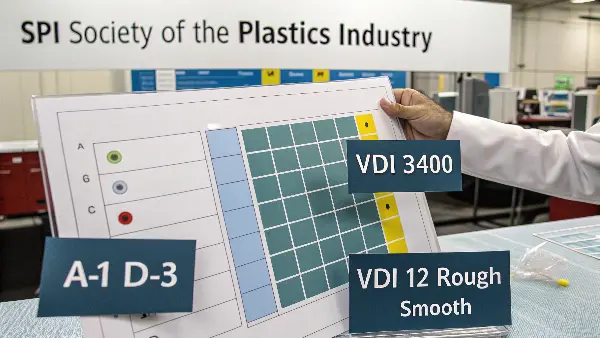
Understanding these standards is like learning the language of mold making. It ensures that what you specify is exactly what you get. When I work with a new client, one of the first things we do is align on the finish standard. This prevents any guesswork. It’s the difference between saying "I want it a bit shiny" and specifying "SPI B-1." One is a wish; the other is a technical instruction.
SPI (Society of the Plastics Industry) Finishes
The SPI standard categorizes finishes into four main groups, from mirror-smooth to rough blasted textures.
- Grade A: Diamond Buffed. These are the highest-quality, mirror-like finishes. They require the mold to be polished with diamond paste. This is for optically clear parts like lenses or high-end cosmetic cases.
- Grade B: Paper Polished. These finishes are created using fine-grit polishing paper. They range from a semi-gloss (B-1) to a satin finish (B-3). They are common for consumer products that need a quality look without the cost of a mirror polish.
- Grade C: Stone Polished. Created with fine polishing stones, these finishes have a low-gloss, matte appearance. They are good for hiding minor imperfections and fingerprints.
- Grade D: Blasted Finishes. These finishes are made by blasting the mold surface with materials like glass beads or sand. They create rough, non-reflective textures and are often used for industrial parts or areas needing a non-slip grip.
VDI 3400 Finishes
The VDI standard is especially good for defining textured finishes achieved through Electrical Discharge Machining (EDM). The numbers directly correspond to the roughness of the EDM process.
| VDI Reference | Surface Roughness (Ra) | Typical Application |
|---|---|---|
| VDI 12 | 0.40 µm | Very rough texture, industrial components |
| VDI 24 | 1.60 µm | Medium-rough texture, good for grip |
| VDI 30 | 3.15 µm | Common satin texture, aesthetically pleasing |
| VDI 36 | 5.60 µm | Finer texture, subtle matte feel |
| VDI 45 | 18.0 µm | Smoothest VDI finish, approaching a polish |
As an engineer, having these standards is my safety net. When a project manager like Alex in Australia asks for a specific feel, I can send him a sample plaque with different VDI or SPI grades. He can touch and see them, and we can lock in the exact specification. This simple step removes all ambiguity and ensures we’re both aiming for the same target.
How Does Your Plastic Material Choice Impact the Final Surface Finish?
You’ve selected a perfect, high-gloss SPI A-1 finish for your mold. But when the first parts come out, they look dull and cloudy. The problem isn’t the mold; it’s the material. Certain plastics simply cannot achieve the finish you specified, wasting time and money on polishing.
Your choice of plastic resin is critical to achieving the desired surface finish. Harder, amorphous plastics like ABS, PC, and PMMA are excellent for replicating high-gloss, polished finishes. Softer, semi-crystalline materials like PP, PE, and POM tend to shrink and won’t reproduce fine details as well, making them better suited for matte or textured finishes. They can’t hold a mirror polish.
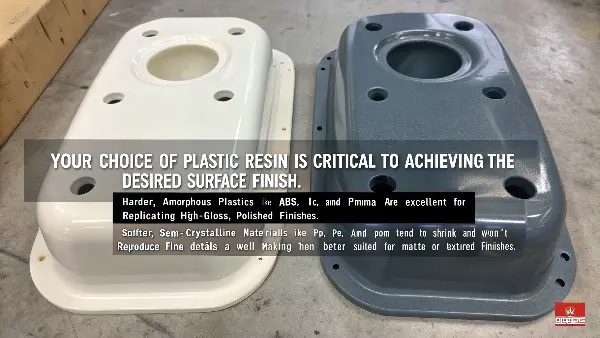
I learned this lesson the hard way early in my career. We spent a week polishing a mold to a mirror finish, only to find the client’s chosen polypropylene (PP) material made the parts look mediocre. The material’s molecular structure just couldn’t replicate the steel’s surface. Now, material selection is one of the first conversations I have with a client about cosmetics. It’s a fundamental link you can’t ignore. The material and the finish must work together, not against each other.
Material Properties and Finish Compatibility
Different plastics behave differently in the mold. Their hardness, shrinkage rate, and melt flow all affect how well they copy the mold’s surface.
- Amorphous Plastics (ABS, PC, Acrylic): These materials have a random molecular structure. They transition from a solid to a liquid state more gradually, allowing them to fill the mold cavity very precisely before solidifying. This makes them ideal for reproducing fine details and achieving a high-gloss, Class A finish. They have low mold shrinkage, which helps maintain the part’s shape and surface integrity.
- Semi-Crystalline Plastics (PP, PE, Nylon, POM): These plastics have an orderly, crystalline molecular structure. They have a sharp melting point and tend to shrink significantly as they cool and crystallize. This high shrinkage can pull the plastic away from the mold surface, preventing it from perfectly replicating very fine or glossy textures. That’s why they are better for matte or textured finishes (like SPI Grade C or D), which are also more effective at hiding sink marks common with these materials.
The Role of Fillers
Adding fillers like glass fibers or talc to a plastic will also significantly change its surface finish properties.
| Filler Type | Impact on Surface Finish | Best For |
|---|---|---|
| Glass Fibers | Reduces gloss, creates a more abrasive surface. Fibers can be visible on the part. | Functional parts where strength is key |
| Talc / Minerals | Can improve stiffness and reduce sink, but also lowers gloss. Provides a soft, matte feel. | Automotive interiors, appliance housings |
| None (Unfilled) | Allows the base resin’s properties to shine. Best for achieving high-gloss finishes. | Aesthetic parts, lenses, cosmetic packaging |
For a project manager like Alex, this is crucial information. If his consumer electronic device needs a premium, glossy feel, he knows he should start with a material like ABS or PC. If it’s an internal structural component, a glass-filled Nylon with a standard textured finish (like SPI C-1) would be a more practical and cost-effective choice. Matching the material to the cosmetic goal from the start saves headaches later.
How Do Functional Needs Dictate Your Surface Finish Selection?
You designed a beautiful handheld device with a sleek, glossy finish. It looks fantastic. But when customers use it, they complain that it’s slippery and hard to hold. The focus on aesthetics completely undermined the product’s usability. The finish failed its most basic functional test.
Your surface finish choice must support the product’s function. A textured finish (e.g., VDI 30 or SPI D-1) can provide essential grip for handheld devices or hide fingerprints on high-touch surfaces. A smooth, polished finish is necessary for parts that form a seal or require low friction. The function, not just the look, should guide your decision.
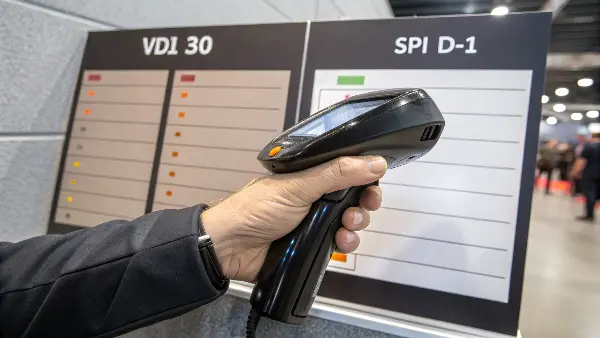
I always ask my clients, "How will this part be used every day?" The answer tells me so much about the right surface finish. For a medical device that needs to be cleaned constantly, a very smooth, non-porous finish is non-negotiable to prevent bacteria from growing. For the sole of a shoe, a rough, grippy texture is a safety feature. Thinking about function first ensures the product doesn’t just look good on a shelf—it works well in the real world.
Matching Finish to Function
The right finish can add tremendous value beyond just looks. It can improve safety, durability, and a product’s interaction with other parts. Here are some key functional considerations.
- Grip and Ergonomics: For any part that will be held, a textured surface is often essential. Light textures (like VDI 33) or heavier ones (VDI 24) create friction and make a product feel more secure in the hand. This is crucial for tools, handles, and handheld electronics. On the other hand, a part that needs to slide, like a drawer rail, would require a very smooth finish to reduce friction.
- Wear and Durability: Matte and textured finishes are excellent at hiding scuffs, scratches, and fingerprints that naturally occur with use. A high-gloss part might look stunning out of the box, but it can quickly look worn and old. This is why you see textured finishes on luggage, car dashboards, and office equipment.
- Paint or Label Adhesion: If you plan to paint the part or apply a label, you need a surface that promotes good adhesion. A light bead blast or a specific textured finish (like SPI D-2) creates more surface area for the paint or adhesive to grab onto. A mirror-polished surface is often too slick for paint to stick to reliably.
- Draft Angle Requirements: The finish directly impacts the required draft angle for ejecting the part from the mold.
| Finish Type | Typical Draft Angle Required | Why It’s Needed |
|---|---|---|
| SPI A-1 (Mirror Polish) | 0.5 – 1 degree | Very little friction, so part releases easily. |
| SPI B-2 (Semi-Gloss) | 1 – 2 degrees | Slight friction requires a bit more angle. |
| SPI C-1 (Matte) | 2 – 3 degrees | More surface contact area requires a steeper angle for release. |
| VDI 30 (Light Texture) | 3 – 5 degrees or more | The texture creates undercuts that can cause drag during ejection. |
Failing to account for the draft needed for your chosen finish is a classic design error. It can cause drag marks, scuffs, or even prevent the part from ejecting at all. For Alex, whose company makes electronic components, this is a daily consideration. The finish on an outer casing needs to balance a premium feel with durability, while the internal battery cover might need a specific texture to prepare it for an EMI shielding coating. Each function demands a different finish.
What Is the Real Connection Between Surface Finish and Mold Cost?
You want the best possible look for your product: a flawless, mirror-like finish. You approve the quote for the mold. Later, you are shocked by the final invoice. Polishing the mold to that perfect shine took hundreds of extra hours of skilled labor, dramatically increasing the cost.
The finer and more polished the surface finish, the higher the mold cost. An SPI A-1 mirror polish requires extensive, multi-stage hand polishing by a skilled technician, which is very time-consuming and expensive. In contrast, a standard textured finish like SPI C-1 or a bead-blasted SPI D-1 is much faster to apply and therefore significantly more affordable.
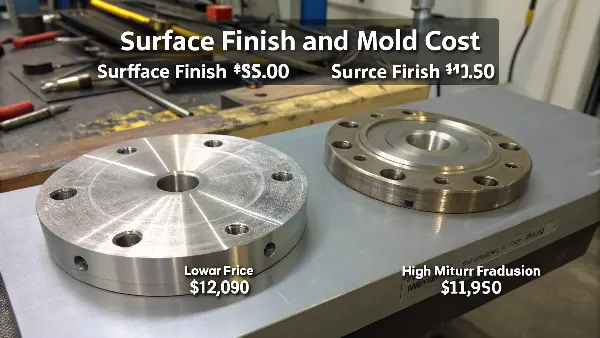
Cost is always a factor, and surface finish is one of the biggest levers you can pull to manage your tooling budget. I often advise clients to reserve the most expensive finishes only for the most critical cosmetic surfaces. Ask yourself, "Does this surface truly need a mirror polish, or would a high-quality satin finish (like SPI B-1) achieve 95% of the goal for 50% of the cost?" This practical mindset helps keep projects on budget without sacrificing quality where it matters most.
Breaking Down the Cost
The cost of a surface finish is directly tied to the labor, tools, and time required to achieve it.
- High-Gloss Finishes (SPI A-Grade): This is the most expensive category. It involves a meticulous process starting with grinding and stoning, followed by polishing with progressively finer sandpaper grits, and finishing with diamond paste. This can add days or even weeks to the mold-making process, and it must be done by a highly paid expert. Any mistake means starting over.
- Semi-Gloss Finishes (SPI B-Grade): This offers a good balance of quality and cost. The process is similar to Grade A but stops at polishing with fine-grit paper. It delivers a premium look without the extreme labor cost of a diamond polish, making it a very popular choice for many consumer products.
- Matte Finishes (SPI C-Grade): These are achieved by polishing with stones. The process is much quicker than paper polishing. It provides a uniform, non-reflective finish that is excellent at hiding imperfections. It’s a very cost-effective choice for parts where a perfect gloss is not needed.
- Textured Finishes (SPI D-Grade / VDI): The cost here can vary. A simple bead blast (SPI D-1) is very fast and cheap. However, complex, multi-level textures or patterns applied via chemical etching or laser engraving can become quite expensive. Standard EDM textures (VDI) are generally an affordable way to get a consistent, functional texture.
Cost vs. Benefit Analysis
When planning your budget, it’s helpful to think in terms of return on investment for your finish.
| Finish Grade | Relative Cost | Typical Use Case | Is it Worth It? |
|---|---|---|---|
| SPI A-1 | Very High | Lenses, light pipes, luxury packaging | Only if optical clarity or a true mirror reflection is a primary product requirement. |
| SPI B-1 | Medium | High-quality electronic housings, consumer goods | Often the best value. Provides a premium look without the extreme cost of A-Grade. |
| SPI C-1 | Low | Internal parts, appliance housings, utility products | Excellent for functional parts or where hiding wear and tear is important. |
| SPI D-1 | Very Low | Industrial parts, surfaces needing a non-slip feel | The most cost-effective option for non-cosmetic surfaces. |
For a project manager like Alex, this table is a powerful tool. He can look at his bill of materials and assign a finish to each part based on its visibility and function. The main outer shell might get a B-1 finish, while an internal mounting bracket gets a C-1. This tiered approach optimizes the budget, directing the money where the customer will see and feel the value.
Conclusion
Choosing the right surface finish is a process of balancing aesthetics, function, material, and cost. By understanding the standard finish grades and considering how your material choice and functional needs impact the outcome, you can make an informed decision that elevates your product and keeps your project on budget.