
Feeling overwhelmed by the custom plastic injection molding process? The high stakes and technical jargon can make you feel lost, potentially leading to costly mistakes that derail your project timeline. Understanding the core principles is the first step toward making informed, confident decisions for your manufacturing needs.
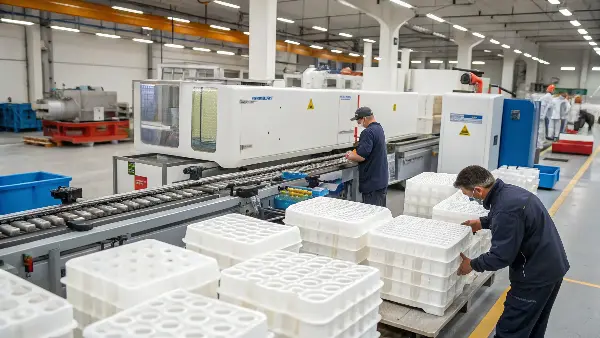
Custom plastic injection molding is a manufacturing process used to produce plastic parts in large volumes. It involves designing and creating a unique mold, or tool, specifically for your part. Molten plastic resin is then injected into this mold cavity under high pressure. Once cooled and solidified, the finished part is ejected. This method is unparalleled for its ability to create complex, identical parts with high precision at a low per-unit cost for mass production.
I’ve spent years in this industry, and I’ve seen firsthand how a solid grasp of the basics can transform a project from a stressful gamble into a streamlined success. It’s not about becoming a molding expert overnight. It’s about knowing the right questions to ask and understanding the key factors that impact your project’s quality, budget, and timeline. Stick with me, and I’ll walk you through the essentials, sharing insights from my experience to help you navigate your next project with confidence. Now, let’s get into the details.
So, What Exactly Is Custom Plastic Injection Molding?
You hear the term "custom molding" all the time, but what does it really mean for your specific project? This lack of clarity can cause hesitation during the critical planning phase, leaving you unsure if it’s the right choice. Let’s break down the process from start to finish so you know exactly what’s involved.
Custom plastic injection molding is a process where we create a unique, dedicated mold (a tool) based on your specific part design. We then inject molten plastic into this mold at high pressure to produce your parts. This method is perfect for achieving complex shapes and tight tolerances consistently across thousands or even millions of units. It’s the go-to manufacturing solution when precision, repeatability, and high volume are critical for your product’s success.
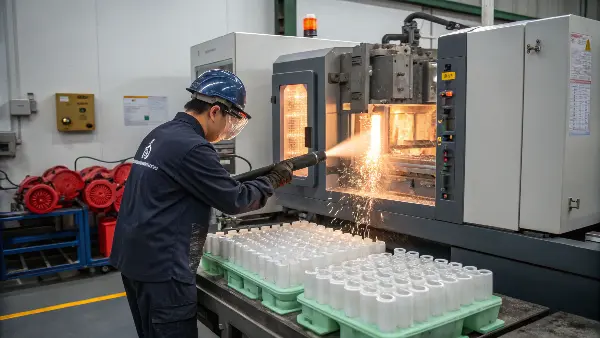
At its core, the process is a cycle that repeats with incredible speed and precision. I remember working with a project manager, much like Alex, who was developing a new casing for a handheld medical device. He was new to injection molding and was amazed at how we could take his detailed CAD file and turn it into a physical, functional part in a matter of weeks. The magic lies in the mold itself, which is the heart of the operation.
The Molding Cycle Step-by-Step
The custom injection molding process can be broken down into four primary stages that happen in a continuous cycle. Understanding this cycle helps you appreciate why it’s so efficient for high-volume production.
- Clamping: The two halves of the mold, the core and the cavity, are securely closed by the clamping unit of the molding machine.
- Injection: Plastic pellets are melted and injected into the mold cavity under immense pressure. The pressure ensures the mold is completely filled, capturing every fine detail of your part design.
- Cooling: Once the cavity is filled, the plastic is allowed to cool and solidify, taking the shape of the mold. This is often the longest part of the cycle and is critical for part stability and dimensions.
- Ejection: After cooling, the mold opens, and the part is pushed out by ejector pins. The cycle is now complete and ready to begin again, often taking just seconds.
Key Factors in Custom Molding
When planning a custom molding project, several elements come into play that will directly influence the outcome.
| Factor | Description | Why It Matters for Your Project |
|---|---|---|
| Part Design | The complexity, size, and geometry of your part. | More complex designs with undercuts or thin walls require a more intricate (and expensive) mold. |
| Material Choice | The type of plastic resin used for your part. | Material selection affects strength, flexibility, heat resistance, and cost. We help you choose the right one. |
| Mold Design | The engineering of the mold, including number of cavities. | A multi-cavity mold produces more parts per cycle, lowering per-unit cost but increasing the upfront tool cost. |
| Production Volume | The total number of parts you need. | This dictates the mold material (e.g., aluminum for low volume, steel for high volume) and overall project cost. |
How Can You Accurately Estimate the Cost of a Custom Injection Mold?
Trying to budget for a custom injection mold can feel like a guessing game, right? An inaccurate estimate can throw your entire project into financial chaos, causing delays and stressful conversations with stakeholders. Let’s break down the factors that truly drive the price so you can build a realistic budget.
The cost of a custom injection mold can range from a few thousand to over $100,000. This wide range is determined by several key factors: the size and complexity of your part, the material used for the mold itself (like aluminum versus hardened steel), the number of cavities in the mold, and the surface finish requirements. Getting an accurate quote requires a detailed 3D CAD model and clear specifications about your production needs.
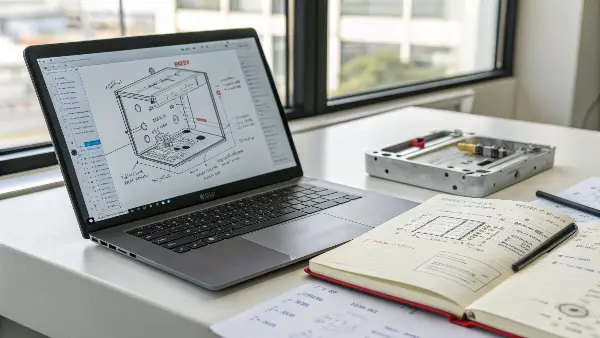
I always advise clients that the mold is an investment, not just a cost. The initial price tag might seem high, but it’s directly linked to the quality and consistency of your final product. A well-designed, durable mold will pay for itself over a long production run by minimizing defects and downtime. One time, a client tried to save money with a cheaply made mold from an unverified supplier. It ended up costing them more in the long run due to constant repairs and low-quality parts. We helped them build a proper P20 steel mold, and their production issues vanished.
Breaking Down the Main Cost Drivers
Several elements contribute to the final price of the mold. Understanding them helps you see where your money is going and where you might have opportunities to optimize for cost.
- Part Complexity: The more intricate your part design is, the more complex the mold needs to be. Features like undercuts, threads, or very tight tolerances require additional mechanisms like side-actions or lifters, which add to the mold’s manufacturing time and cost.
- Mold Material: The material used to build the mold is a major factor. Aluminum molds are cheaper and faster to make but wear out more quickly, making them suitable for prototyping or low-volume runs (1,000 to 10,000 parts). Hardened tool steels like P20 or H13 are more expensive but are built to last for hundreds of thousands or even millions of cycles.
Other Important Cost Factors
Beyond the primary drivers, other details also influence the budget. Thinking about these early can help you get a more precise quote.
| Factor | Impact on Cost | Why It’s Important |
|---|---|---|
| Number of Cavities | High | A single-cavity mold makes one part per cycle. A multi-cavity mold makes several, which increases mold cost but drastically lowers the per-part price and speeds up production. |
| Part Size | Medium | Larger parts require a larger mold, which means more material, more machining time, and a larger molding press to run it. |
| Surface Finish | Medium | A basic, non-cosmetic finish is standard. A high-gloss, mirror-like polish or a specific texture requires significant manual labor and specialized techniques, increasing the cost. |
| Injection System | Low to Medium | A simple cold runner system is less expensive. A hot runner system costs more upfront but reduces material waste and can improve cycle times, saving money in the long run on high-volume projects. |
What Factors Influence the Hourly Rate of an Injection Molding Machine?
You’ve budgeted for the mold, but what about the actual production cost? The hourly rate for an injection molding machine can seem mysterious, making it hard to predict your final per-part price. If you don’t understand these rates, you could end up with unexpected production costs that eat into your profit margins.
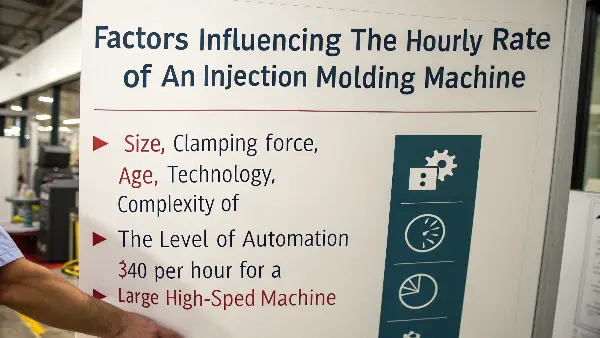
The hourly rate for a plastic injection molding machine is primarily determined by its size, specifically its clamping force (tonnage). Larger machines that can handle bigger molds cost more to run. Other key factors include the machine’s age and technology, the complexity of the job being run, and the level of automation involved. Rates can vary from about $40 per hour for a small, older press to over $200 for a large, high-speed machine.
Think of machine time as a resource you’re renting. The rate isn’t just about the machine itself; it also covers the overheads of our facility, the energy consumed, and the expertise of the technician running the job. For Alex’s project manager persona, understanding this helps in supplier negotiations. I once explained this to a client who was comparing quotes. One supplier was much cheaper per hour, but they were using a slow, inefficient machine. Our higher hourly rate was attached to a faster, automated machine that produced parts more quickly, resulting in a lower final cost per part.
The Impact of Machine Tonnage
The most significant factor in machine rate is its tonnage, which refers to the clamping force it can exert to keep the mold closed during injection. The right tonnage is determined by the size of your part and the material you’re using.
- Small Machines (Under 100 Tons): These are used for small, simple parts. They consume less energy and take up less floor space, so their hourly rates are the lowest. They are ideal for things like bottle caps, small gears, or electrical connectors.
- Mid-Sized Machines (100 – 500 Tons): This is a very common range, suitable for a wide variety of consumer and industrial products, such as electronic enclosures, automotive components, and household goods.
- Large Machines (500+ Tons): These are massive machines required for large parts like automotive bumpers, garbage bins, or large panels. They have a very high operating cost due to their size and energy consumption, leading to the highest hourly rates.
Beyond Tonnage: Other Rate-Defining Factors
While tonnage sets the baseline, other variables fine-tune the final hourly rate for your specific project.
| Factor | How It Influences the Rate | Practical Example |
|---|---|---|
| Shot Size | A larger shot size (the amount of plastic injected per cycle) may require a more powerful machine. | A project needing a large volume of plastic per part will tie up a larger, more expensive machine. |
| Cycle Time | A faster cycle time means more parts are produced per hour, making the machine time more productive. | While the hourly rate is fixed, a 15-second cycle is far more cost-effective than a 45-second cycle. |
| Labor & Automation | Jobs that require manual part removal or secondary operations have higher costs. | A fully automated cell with a robot removing parts is more efficient and can sometimes justify a higher machine rate due to its consistency and speed. |
| Material Type | High-temperature or abrasive materials can cause more wear on the machine and require specialized equipment. | Running a material like glass-filled nylon might command a slightly higher rate due to the increased maintenance required. |
Are There Cheaper Alternatives to Injection Molding for Your Project?
Injection molding is fantastic for high volumes, but the steep upfront mold cost can be a barrier for new products or small batches. Investing tens of thousands of dollars is a huge risk if you’re not yet sure of market demand. This often leaves you searching for a more budget-friendly way to get your product made.
Yes, there are several cheaper alternatives to injection molding, especially for prototyping and low-volume production. 3D printing (additive manufacturing) is excellent for creating initial prototypes quickly and without tooling costs. Urethane casting is another great option for producing a small batch of high-quality parts (typically 10-100 units). For simple, flat parts, CNC machining plastic stock can also be more economical than building a mold.
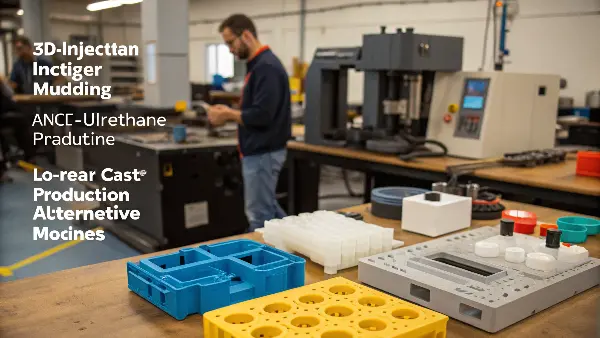
Deciding on the right manufacturing process is all about balancing cost, volume, speed, and quality. I’ve guided many clients through this decision. I remember a startup that needed 50 units of a new enclosure for a trade show. The injection mold quote was over their budget and timeline. We recommended urethane casting instead. It gave them beautiful, production-quality parts in just two weeks for a fraction of the cost of a steel mold. It was the perfect bridge solution before they committed to mass production. This is why we don’t just make molds; we provide solutions.
When to Consider an Alternative Process
The key is to match the process to your project’s current stage and goals. Injection molding is the undisputed champion for mass production, but other methods shine in different scenarios. You should consider an alternative if you are:
- Prototyping: You need to test form, fit, and function. Speed and low cost are more important than creating thousands of identical parts.
- Low-Volume Production: You only need a few dozen or a few hundred parts for market testing, a pilot run, or a niche product line.
- Uncertain Demand: You haven’t validated your product idea yet and want to avoid a massive tooling investment until you know it will sell.
- Facing a Tight Deadline: You need parts in your hands in a matter of days, not the weeks or months it takes to create a production mold.
Comparing the Top Alternatives
Let’s look at the most common alternatives and see how they stack up against each other. Each has its own set of strengths and weaknesses.
| Manufacturing Process | Best For | Pros | Cons |
|---|---|---|---|
| 3D Printing (FDM, SLA, SLS) | Rapid prototypes, complex geometries, one-off parts. | No tooling cost, very fast turnaround (days), easy design changes. | Higher per-part cost, limited material options, sometimes weaker parts, visible layer lines. |
| Urethane Casting | High-quality prototypes and low-volume runs (10-100 parts). | Excellent surface finish, simulates production-grade materials, much cheaper tooling (silicone molds). | Silicone molds have a limited lifespan, higher per-part cost than injection molding, slower than 3D printing. |
| CNC Machining | High-precision parts with excellent strength, simple to moderately complex designs. | Uses production-grade plastics, extremely high accuracy, great for functional testing. | Can be expensive for complex parts due to machine time, generates material waste, not ideal for intricate internal features. |
Ultimately, choosing the right path depends on your specific needs. Sometimes, a blended approach is best—using 3D printing for early prototypes, urethane casting for market samples, and finally, custom injection molding for full-scale production.
Conclusion
Navigating custom plastic injection molding is about understanding the fundamentals—from the process itself to its costs and alternatives. By grasping these key concepts, you can make smarter, more cost-effective decisions for your projects, ensuring you choose the right manufacturing path to turn your vision into a successful product.