
Struggling to get the right look for your HDPE parts? It’s a fantastic material, but its waxy surface can make achieving a premium finish feel impossible. You need a solution that delivers on aesthetics and function without blowing your budget or timeline.
The best finishing options for HDPE parts start with the mold itself, using textures like SPI or VDI standards to create the desired surface. For color, integrating masterbatches during molding is most effective. Since HDPE has low surface energy, post-molding treatments like flame or plasma are necessary to prepare the surface for painting, printing, or bonding, ensuring durable adhesion and a high-quality final appearance.
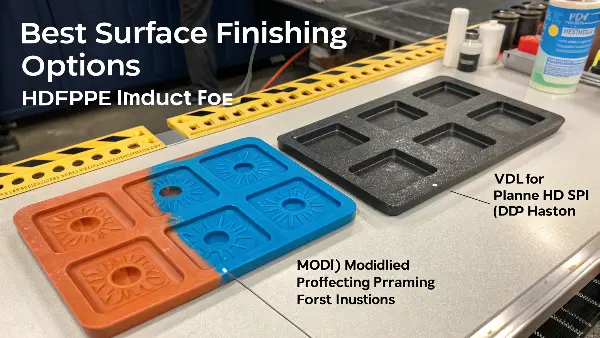
Getting the finish right on High-Density Polyethylene (HDPE) is a common challenge I see with new clients. This material is a workhorse—tough, chemical-resistant, and affordable. But that same slick, non-stick quality that makes it great for containers also makes it tricky for finishes to grab onto. It’s not as simple as picking a paint off the shelf. But don’t worry, with the right knowledge, you can absolutely achieve a fantastic finish. Let’s break down the key areas you need to master: texture, color, and special treatments.
How Do You Achieve Perfect Textures on HDPE Parts Directly from the Mold?
Have you ever specified a texture only to have the final part come out looking uneven or feeling wrong? It’s a frustrating setback when a shiny, cheap-looking surface ruins an otherwise well-designed product. You need a reliable way to get consistent, appealing textures every time.
Perfect textures are achieved by preparing the steel mold surface before molding begins. Techniques like electrical discharge machining (EDM) are used to create standardized VDI textures, while chemical etching can produce more custom patterns. The chosen texture is transferred directly to the HDPE part during the injection process. Proper draft angles are critical to ensure the part releases cleanly without scuffs or drag marks.
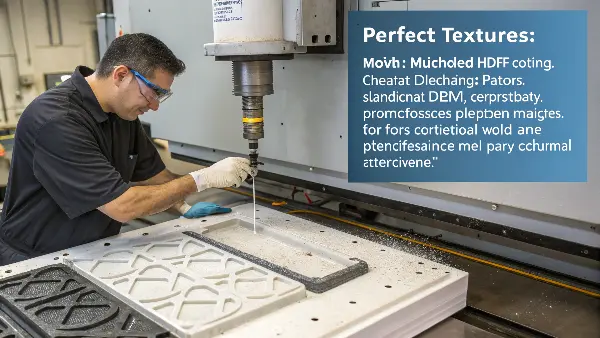
Texture is your first and most powerful tool for finishing HDPE. It’s done right in the mold, making it incredibly cost-effective. We’re not adding a process; we’re building the finish into the tool itself. The two most common standards we use in the industry are the SPI (Society of the Plastics Industry) in the U.S. and VDI 3400 in Germany.
For a project manager like Alex, understanding these standards is key to clear communication. When you request a "light matte texture," it’s subjective. When you request a "VDI 27," I know exactly what you mean.
SPI vs. VDI Standards
SPI finishes are generally graded from high gloss (A-1) to dull matte (D-3). VDI finishes range from 12 (rough) to 45 (smoother, but still matte). For HDPE, we almost always work in the matte range. The material’s natural properties don’t lend themselves well to a perfect mirror finish (SPI-A1), which would show every tiny flow line and imperfection. Matte textures are much more forgiving and practical.
I remember a project for a client making outdoor equipment cases. They initially wanted a very light texture. We advised them to go for a slightly heavier one, around a VDI 30. Why? Because HDPE is relatively soft and scuffs easily. A more pronounced texture hides minor scratches and scuffs from everyday use, keeping the product looking better for longer.
Here is a simplified table to help you visualize the common texture ranges for a material like HDPE:
| Texture Standard | Grade Example | Description & Typical Use Case |
|---|---|---|
| VDI 3400 | VDI 24 | Medium-light matte texture. Good for hiding fingerprints and minor imperfections. Often used for consumer electronic housings or parts that are handled frequently. |
| VDI 3400 | VDI 30 | Medium-heavy matte texture. Excellent for hiding scuffs and flow marks. Ideal for industrial parts, toolboxes, or outdoor products that will see rough handling. |
| SPI | SPI-C1 | Light matte finish, achieved with 600-grit stone. A step up from a basic tool finish, provides a clean, non-glossy look suitable for internal components or areas where aesthetics are secondary. |
| SPI | SPI-D3 | Dull or rough matte texture, achieved by dry blasting with fine glass beads. Creates a uniform, non-reflective surface. Great for utility parts where grip or a very low-gloss appearance is needed. |
The crucial takeaway is that texture needs to be paired with the right draft angle. The deeper the texture, the more draft you need to prevent the part from scraping against the mold wall during ejection. This is a non-negotiable part of the design process.
What’s the Secret to Vibrant and Consistent Color in HDPE Molding?
Are you tired of receiving colored parts that don’t quite match your brand’s Pantone shade? Or worse, parts with ugly swirls and streaks that scream "low quality"? Inconsistent color can undermine your product’s perceived value and lead to costly rejections.
The secret is using a high-quality color masterbatch with a carrier resin that is fully compatible with HDPE. The masterbatch pellets must be mixed with the natural HDPE resin at a precise ratio before molding. Ensuring proper drying, screw mixing, and processing temperatures in the injection molding machine is critical to activating the pigment evenly and preventing color defects.
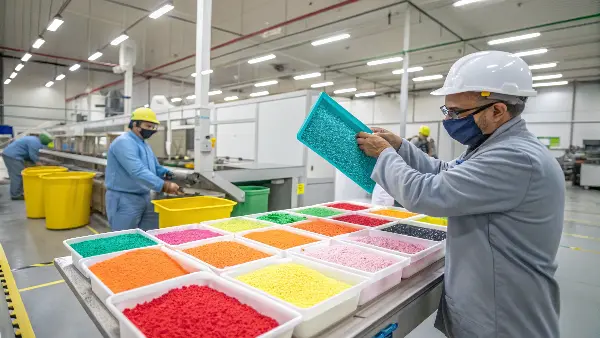
Coloring HDPE is almost always done during the molding process itself. Painting is possible, but as we’ll discuss later, it’s a whole other challenge. Integrating color directly is more durable and cost-effective. The two main ways we do this are with masterbatch or pre-compounded resin.
I once worked with a startup developing a line of colorful children’s toys. Their branding was built on a very specific set of bright, playful colors. They were worried about consistency across a large production run. We opted to work with a trusted supplier to create custom masterbatches for each of their brand colors. By controlling the let-down ratio (the percentage of masterbatch mixed with the natural resin) and dialing in the machine settings, we were able to deliver thousands of parts with perfect color consistency. The client was thrilled.
Masterbatch vs. Pre-Compounded Resin
For most projects, masterbatch is the way to go. It offers flexibility and is generally more cost-effective, especially if you need multiple colors. Pre-compounded resin, where the color is already mixed in by the material supplier, is great for massive runs of a single color where absolute consistency is paramount.
Let’s break down the pros and cons:
| Feature | Masterbatch | Pre-Compounded Resin |
|---|---|---|
| Cost | Lower cost, especially for smaller to medium runs. You only buy the concentrate and natural resin. | Higher upfront material cost. |
| Flexibility | Very high. You can switch colors easily by cleaning the machine and changing the masterbatch. | Low. You are locked into one color per batch of material. |
| Lead Time | Shorter. Natural HDPE and common masterbatches are often in stock. | Longer, as the resin supplier needs to create a custom compound for you. |
| Color Control | Excellent, but requires precise mixing at the machine. The let-down ratio is critical. | The absolute best. Color is perfectly uniform throughout the material before it even gets to us. |
| Inventory | Simpler. You stock natural resin and small bags of masterbatch. | Complex. You have to stock large quantities of each specific color you need. |
The "secret" really comes down to process control. It’s not just about dumping some colored pellets in. The carrier resin in the masterbatch must be compatible with HDPE to ensure it melts and flows together perfectly. We also have to be meticulous about drying the material. Even a small amount of moisture can cause splay or streaks on the final part. It’s this attention to detail that separates an amateur from a professional molder.
Can You Really Paint or Print on HDPE Parts Effectively?
Have you ever tried applying a label to an HDPE container only to have it peel right off? Or perhaps you’ve seen paint flake away from a plastic part after just a few weeks. It’s a common and frustrating problem caused by HDPE’s non-stick nature.
Yes, you can absolutely paint and print on HDPE, but only after modifying its surface. Because HDPE has very low surface energy (it’s non-polar), inks and paints won’t stick. You must first use a surface treatment like flame, corona, or plasma to increase the surface energy. This treatment oxidizes the surface, creating microscopic "hooks" for primers and inks to grab onto, ensuring a durable and permanent bond.
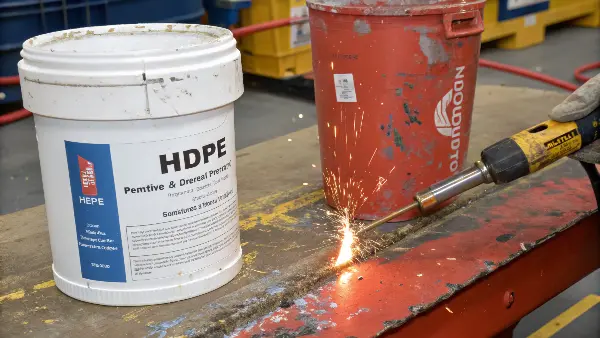
This is one of the biggest hurdles project managers face with HDPE. Its chemical structure, full of long hydrocarbon chains, makes its surface very stable and non-reactive, which is often described as having low surface energy. Think of it like a freshly waxed car—water beads up and rolls right off. Ink and paint do the same thing on untreated HDPE.
To make anything stick, we have to rough up that surface on a molecular level. This is done through surface treatment. I’ve found that explaining this to my clients helps them understand why it’s a necessary extra step and not just an optional add-on. For a project requiring printed logos on a series of HDPE bottles, we couldn’t skip this. We used a flame treatment process, which involves passing a controlled, gas-rich flame over the surface. It happens in a split second, but it completely changes the surface chemistry. After treatment, a special primer was applied, followed by pad printing the logo. The result was a crisp, clear logo that could not be scratched off.
Comparing Surface Treatment Methods
Flame, Corona, and Plasma are the three main industrial methods we use. Which one we choose depends on the part’s size, shape, and the scale of production.
| Treatment Method | How It Works | Best For | Considerations |
|---|---|---|---|
| Flame Treatment | A controlled flame is passed over the surface, oxidizing it and increasing surface energy. | Simple, large, or robust 3D parts. It’s a fast and cost-effective method for high-volume production. | Can be difficult to control on small or heat-sensitive parts. Requires good ventilation and safety protocols. |
| Corona Treatment | High-voltage electricity energizes the air in a small gap, creating a "corona" that treats the surface. | Flat or cylindrical surfaces, like films and sheets. Very fast and common in the packaging industry. | Less effective on complex 3D shapes, as the electrode needs to be close to the entire surface. |
| Plasma Treatment | A gas (like argon or even air) is energized in a vacuum chamber, creating a plasma that cleans and activates the surface. | Complex, high-value 3D parts, including those used in medical or electronic applications. | Highest level of treatment and very uniform, but it’s a slower batch process and has higher equipment costs. |
After one of these treatments, the surface is ready. You can now use pad printing for logos on curved surfaces, screen printing for larger flat areas, or even digital printing for complex graphics. For painting, applying a specialized polyolefin primer is the critical next step before the topcoat. Without the surface treatment and the right primer working together, your paint job is destined to fail.
Are There Advanced Finishing Options Beyond Texture and Color?
What if your product needs more than just a nice texture or color? Maybe you need permanent branding that can’t wear off, or a finish that adds a specific function, like a soft-touch feel. Relying on basic finishes can limit your product’s potential and leave you behind competitors.
Yes, several advanced options exist. In-Mold Labeling (IML) integrates a printed label directly into the part during molding for ultimate durability. Laser marking can etch permanent serial numbers or logos onto the surface. And for unique functional properties, overmolding allows you to add a second material, like a soft-touch TPE, for improved ergonomics and grip.
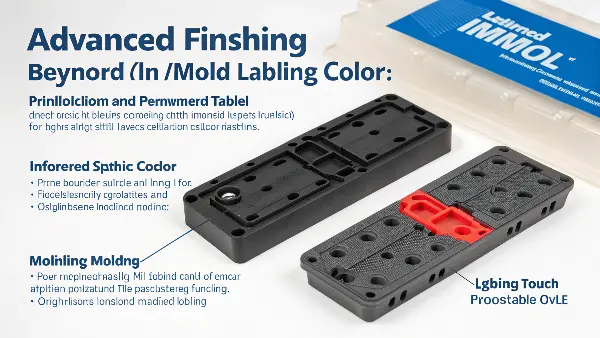
Sometimes, a project’s requirements push us beyond the standard playbook. These advanced methods can solve tough challenges and add significant value to a product. They often involve more complex tooling or secondary processes but deliver results that are impossible to achieve otherwise.
One of my favorite examples is a project we did for a manufacturer of premium water bottles. They wanted a design that was seamless, vibrant, and completely dishwasher-safe. Stickers would peel, and printing could fade over time. The solution was In-Mold Labeling (IML). We worked with a label supplier to print their graphics on a thin polypropylene film. A robot places this label into the open mold right before the hot HDPE is injected. The HDPE plastic fuses with the label, making it an integral part of the bottle. The graphics will never peel, scratch, or fade because they are literally inside the plastic. It’s a more complex process upfront but the result is unmatched in durability and quality.
Exploring Advanced Techniques
Let’s look at a few of these powerful options in more detail. Each one is a specialized solution for a specific need.
| Advanced Technique | Description | Best Use Case | Key Benefit |
|---|---|---|---|
| In-Mold Labeling (IML) | A pre-printed plastic label is placed into the mold, and the molten HDPE fuses with it during injection. | High-volume packaging, containers, and durable goods requiring permanent, high-quality graphics (e.g., food containers, premium water bottles). | Extreme durability. The label is scratch-proof, waterproof, and cannot be removed. |
| Laser Marking | A focused laser beam alters the surface of the plastic or a special additive within it to create a permanent, high-contrast mark. | Marking serial numbers, barcodes, QR codes, or subtle logos on medical devices, electronics, or automotive parts. | A permanent, clean, and fast marking process with no inks or solvents. Excellent for traceability. |
| Overmolding | A two-step injection molding process. First, the rigid HDPE part (substrate) is molded. Then, a second material, often a soft TPE, is molded over or around it. | Adding soft grips to tool handles, creating integrated gaskets, or improving the feel and ergonomics of a product. | Combines the properties of two different materials in a single part without adhesives. Creates a strong chemical bond. |
| Heat Transfer Labeling | A pre-printed graphic on a carrier film is transferred to the part’s surface using heat and pressure. | A good alternative to IML for multi-color graphics on pre-molded parts. Common on sporting goods and toys. | Excellent for high-resolution, photorealistic images. More flexible than IML as it’s a post-molding process. |
Choosing one of these advanced methods requires close collaboration between your design team and us, your molding partner. For example, overmolding requires a special two-shot mold or a manual process, and the material pairing between the HDPE and the TPE is critical for good adhesion. Laser marking might require a special additive in the HDPE masterbatch to produce a dark, crisp mark. By discussing your end goal early in the design phase, we can build the right solution from the ground up.
Conclusion
In short, successfully finishing HDPE parts comes down to choosing the right method for your goal. Rely on built-in mold textures for durability, use high-quality masterbatches for consistent color, and never forget that proper surface treatment is essential before any painting or printing. With these insights, you’re well-equipped to make the right call.