
Launching a new product is tough. You have a great design, but turning it into thousands of physical units feels like a huge challenge. The high costs and complexity of manufacturing can stop a great idea in its tracks. You need a reliable way to scale production efficiently.
Yes, injection molding is an excellent choice for new products planned for mass production. It offers high precision, repeatability, and a low cost per part at high volumes. By investing in a durable steel mold, you can manufacture thousands or even millions of identical parts with consistent quality, making it ideal for scaling your product successfully.
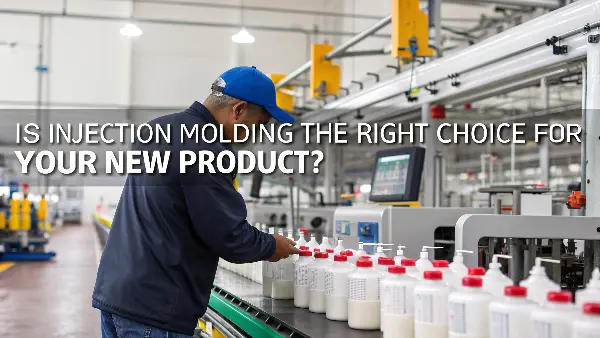
Bringing a new product to market is a journey I know well. You need to move from a prototype to a final, polished product that you can produce in large quantities. The manufacturing method you choose is one of the biggest decisions you’ll make. It affects your costs, your timeline, and the final quality of your product. This guide will walk you through the key aspects of using injection molding, helping you understand if it fits your project and how to prepare for success. Let’s get started.
How is injection molding used to make products?
You have a perfect 3D model on your screen, but how do you make thousands of them? It feels like magic, but the process is complex. Misunderstanding it can lead to costly mistakes and delays, putting your entire product launch at risk. You need clarity on the manufacturing process.
Injection molding works by injecting molten plastic into a custom-made metal mold under high pressure. The plastic cools and solidifies inside the mold, taking its shape. The machine then opens the mold and ejects the finished part. This cycle repeats rapidly, allowing for the mass production of identical plastic parts with incredible precision and speed.
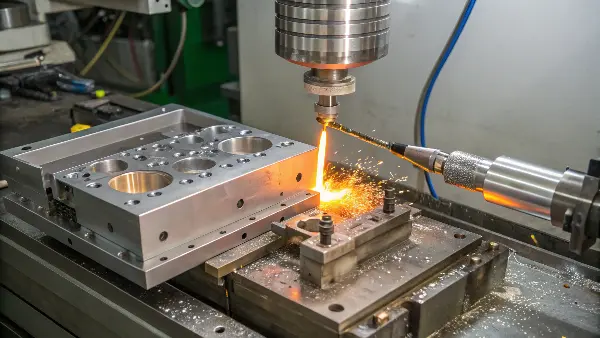
At its heart, injection molding is a simple concept that we’ve refined over decades. I think of it as a highly advanced and automated production system. It’s not just about squirting plastic into a box; it’s a precise engineering process that requires careful control over pressure, temperature, and time. This method is the backbone of modern manufacturing for a reason. It’s how we get everything from car parts to medical devices to the phone case in your pocket. The whole process is built around two key components of the injection molding machine.
The Injection Unit
This part of the machine is responsible for melting the plastic and injecting it into the mold. It works a bit like a giant hot-glue gun. Raw plastic pellets are fed from a hopper into a barrel. Inside the barrel, a large reciprocating screw transports the pellets forward. As they move, heaters surrounding the barrel melt the plastic, and the screw’s motion mixes it into a consistent, liquid state. Once enough molten plastic is ready, the screw acts like a plunger, ramming forward and injecting the plastic into the mold with extreme force.
The Clamping Unit
While the injection unit pushes, the clamping unit holds the mold shut. This is critical because the injection pressure is incredibly high. The clamping unit uses a powerful hydraulic press to hold the two halves of the mold together, ensuring no molten plastic leaks out. After the plastic is injected and has cooled down, this unit opens the mold so the finished part can be ejected. The force this unit can apply, known as clamping tonnage, is one of the main ways we classify the size of an injection molding machine. Bigger parts with more surface area require machines with higher tonnage.
What are the 4 steps of injection molding?
You know the basics, but what actually happens inside the machine? The process can seem like a black box, making it hard to troubleshoot issues. Without understanding each step, you can’t optimize your cycle time or part quality. This lack of knowledge can be a major roadblock to efficient production.
The four main steps of injection molding are clamping, injection, cooling, and ejection. First, the mold is clamped shut. Second, molten plastic is injected into the mold cavity. Third, the plastic cools and hardens into the final shape. Finally, the mold opens, and the part is ejected. This four-step cycle repeats to produce parts quickly and consistently.
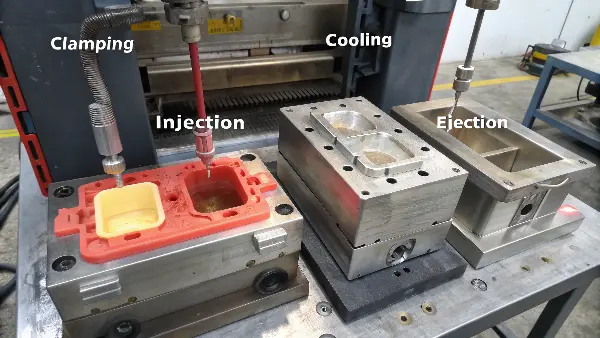
I remember a project where we were trying to reduce the cycle time for a small consumer electronics housing. We focused so much on the injection speed, but the real issue was in the cooling step. By making a small adjustment to the cooling channel design in the mold, we shaved off a few crucial seconds per part. Over a run of 100,000 units, that saved our client a significant amount of money. It taught me that mastering each of these four steps is essential for an efficient process. Let’s break them down.
1. Clamping
Before anything else happens, the two halves of the mold tool must be securely closed. The clamping unit of the molding machine pushes them together with immense force. This force is necessary to counteract the pressure of the molten plastic being injected. If the clamp isn’t strong enough, the plastic can seep out of the mold, creating a flaw called "flash." The size of the part and the type of plastic used determine how much clamping force is needed.
2. Injection
With the mold clamped shut, the injection phase begins. The pre-melted plastic, which is at a specific temperature and consistency, is forced from the barrel into the mold. This happens very quickly. The speed and pressure are carefully controlled to ensure the mold cavity fills completely and evenly. We call this the "shot size"—the amount of plastic injected. Getting this just right is key to avoiding defects like sink marks or short shots where the part is incomplete.
3. Cooling
Once the mold is filled, the cooling phase starts. The mold itself has internal cooling channels where a fluid, usually water, circulates to draw heat away from the plastic. The plastic must cool down and solidify into its final shape. This is often the longest part of the cycle. The cooling time depends on the type of plastic, the thickness of the part’s walls, and the mold’s temperature. If you cool it too fast, the part can warp. If you cool it too slow, you waste time and money.
4. Ejection
After the part is sufficiently cool and solid, the clamping unit opens the mold. An ejection mechanism, typically a series of pins or a plate, pushes the finished part out of the mold cavity. The machine is then ready for the next cycle to begin. The clamping, injection, cooling, and ejection process repeats over and over, producing identical parts with each cycle.
| Step | Key Action | Critical Factors | Common issues |
|---|---|---|---|
| Clamping | Securely closing the two mold halves | Clamping tonnage, mold alignment | Flash, part damage |
| Injection | Forcing molten plastic into the mold | Injection pressure, speed, temperature | Short shots, burn marks |
| Cooling | Solidifying the plastic part | Cooling time, mold temperature, part thickness | Warping, sink marks |
| Ejection | Pushing the finished part out of the mold | Ejector pin force, placement | Ejector marks, part sticking |
How to design a product for injection molding?
You’ve designed a beautiful and functional product. But a great design on paper doesn’t always work for manufacturing. If your part isn’t designed for injection molding from the start, you’ll face expensive mold revisions, production delays, and poor-quality parts. It’s a frustrating and costly problem.
To design for injection molding, you must follow Design for Manufacturability (DFM) principles. This means keeping wall thickness uniform, adding draft angles for easy ejection, avoiding undercuts that complicate the mold, and placing features like ribs and bosses correctly. DFM ensures your part can be reliably and cost-effectively produced without defects.
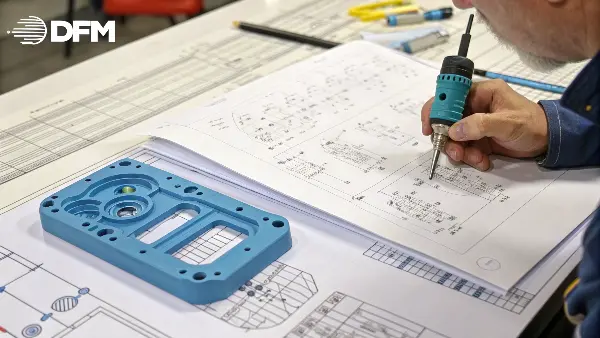
One of the biggest lessons I’ve learned over the years is that a successful injection molding project starts long before we cut any steel for the mold. It starts with the part design itself. I’ve seen brilliant engineers create amazing products, but they overlooked basic DFM rules. The result? We had to work together to redesign parts, which added weeks to the project timeline. Thinking about how the part will be made from day one is the single most important thing you can do to ensure a smooth journey from concept to production.
Keep Wall Thickness Uniform
This is the golden rule of plastic part design. Molten plastic flows like a thick fluid, and it will always follow the path of least resistance. If your part has thick and thin sections, the plastic can cool at different rates. The thin sections will cool and solidify first, while the thick sections are still molten. As the thick sections cool and shrink, they will pull on the already solid thin sections, causing defects like warping, sink marks (small depressions), and voids (internal bubbles). Aim for a consistent wall thickness throughout your part. If you do need to change thickness, make the transition gradual and smooth.
Add Draft Angles
Imagine trying to pull a perfect cylinder out of a tight-fitting hole. The friction along the sides makes it stick. The same thing happens in a mold. A draft angle is a small taper, typically 1 to 2 degrees, applied to the faces of the part that are parallel to the direction the mold opens. This tiny angle prevents the part from scraping against the mold wall as it’s ejected. It reduces friction, prevents scratches, and makes ejection much easier. Without draft angles, parts can get stuck, requiring more force to eject, which can damage them.
Avoid Unnecessary Undercuts
An undercut is any feature that prevents the part from being directly ejected from the mold. Think of a snap-fit latch or a side hole. These features get "hooked" on the mold. While we can create molds to handle undercuts using complex mechanisms called side-actions or lifters, they add significant cost and complexity to the mold tool. These mechanisms also slow down the molding cycle. Always ask yourself if an undercut is truly necessary. If it is, we can find a solution, but if you can design around it, you will save a lot of time and money.
Is injection molding good for batch production?
You’re ready to produce, but how many? Is it better to make a small batch of 500 or go straight to 50,000? The high initial cost of the mold can be intimidating, especially for a new product. You worry about investing too much upfront before you’ve tested the market.
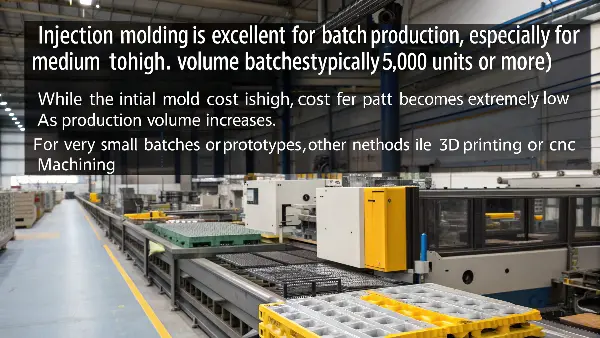
Injection molding is excellent for batch production, especially for medium to high-volume batches (typically 5,000 units or more). While the initial mold cost is high, the cost per part becomes extremely low as production volume increases. For very small batches or prototypes, other methods like 3D printing or CNC machining may be more cost-effective.
I often talk with project managers like Alex who are trying to balance their budget with their production forecast. The key is understanding the crossover point. For a handful of prototypes, 3D printing is fast and cheap. For a few hundred pre-production units, CNC machining might be the answer. But once you need to produce thousands of identical parts with high quality and a low per-unit cost, injection molding becomes the most economical choice. The initial investment in the mold pays for itself over the production run.
Understanding the Cost Breakdown
The costs of an injection molding project can be split into two main categories:
- One-Time Costs: This is primarily the cost of designing and manufacturing the mold tool itself. Molds are typically machined from steel or aluminum and are highly precise, complex pieces of equipment. A simple, single-cavity mold might cost a few thousand dollars, while a complex, multi-cavity hardened steel mold can cost tens of thousands. This is your main upfront investment.
- Per-Part Costs: These are the recurring costs for each part you produce. This includes the raw plastic material, the machine time required to run the cycle, and any labor for post-processing or assembly.
The high one-time cost of the mold is why injection molding isn’t suitable for making just a few parts. But as you produce more parts, that large initial cost is spread out.
Finding the Break-Even Point
Let’s look at an example. Suppose a mold costs $10,000 to make, and the per-part cost (material + machine time) is $0.50.
- For 1,000 parts: The mold cost per part is $10 ($10,000 / 1,000). The total cost per part is $10 + $0.50 = $10.50.
- For 10,000 parts: The mold cost per part is $1 ($10,000 / 10,000). The total cost per part is $1 + $0.50 = $1.50.
- For 100,000 parts: The mold cost per part is $0.10 ($10,000 / 100,000). The total cost per part is $0.10 + $0.50 = $0.60.
As you can see, the cost per part drops dramatically as the batch size increases. The "right" batch size depends on your product’s lifecycle, your sales forecast, and your budget. Working with an experienced partner can help you analyze these costs and make the best decision for your project.
Conclusion
Choosing injection molding for your new product is a major step. It offers incredible benefits for scaling production, ensuring consistent quality, and achieving a low cost per part. By understanding the core process and designing for manufacturability, you can set your project up for success.